
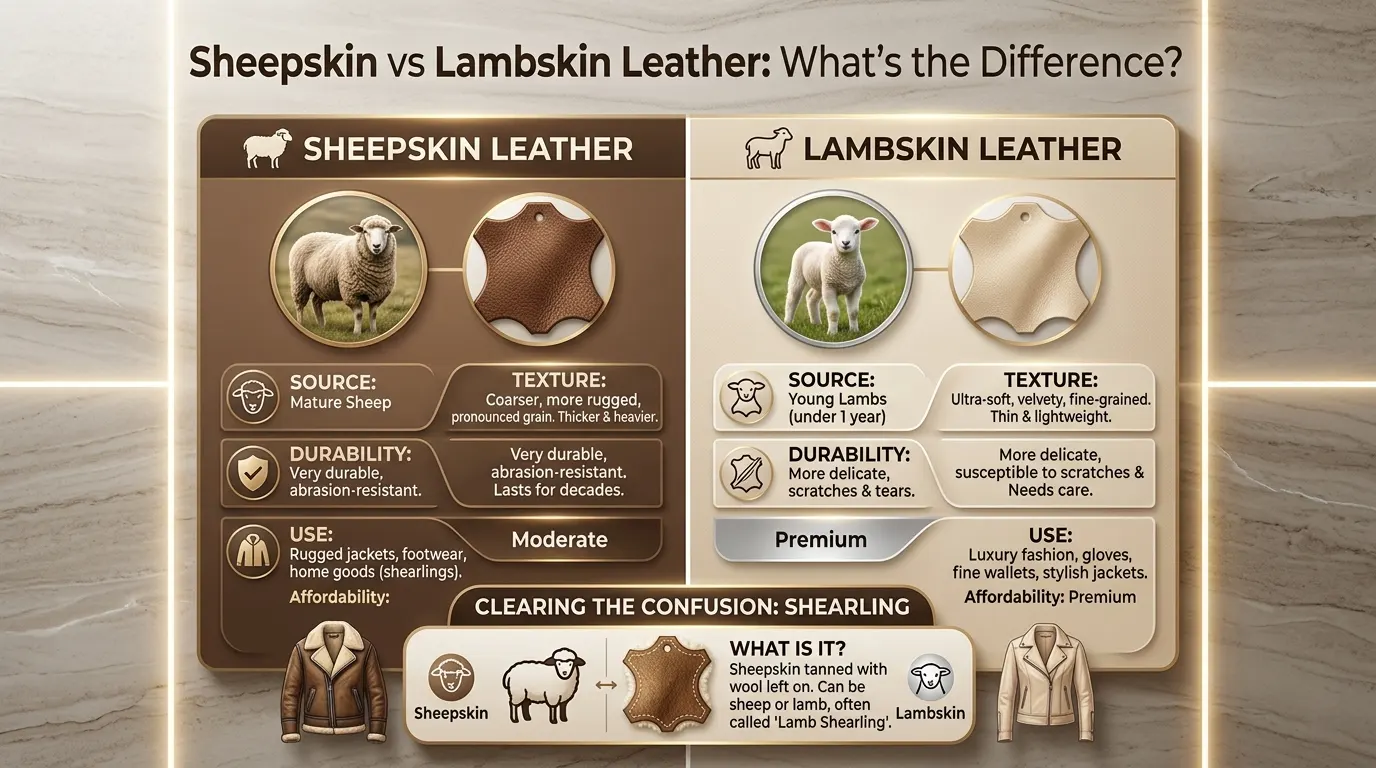
Both come from the same animal. Both feel soft in your hand. Both show up in high-end leather jackets. But sheepskin leather and lambskin leather are not the same thing, and the differences between them matter when you are deciding what to buy.
This guide breaks down exactly what separates the two – how they are made, how they feel, how they hold up over time, and which one is right for what you are looking for. Shearling is covered too, since it comes up every time sheepskin does, and the confusion between the three is worth clearing up.
What Is Sheepskin Leather?
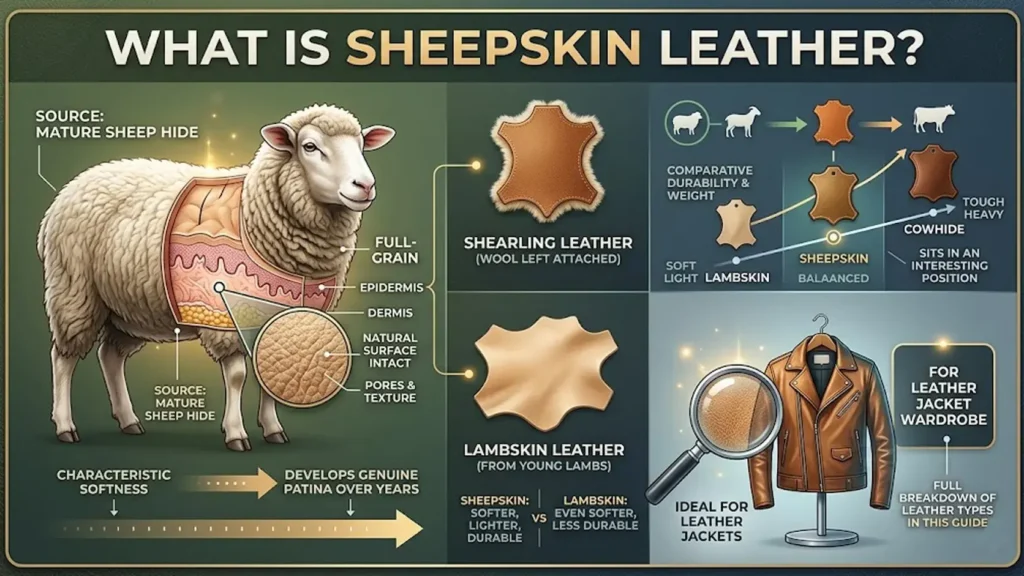
Sheepskin leather comes from the hide of mature sheep. It is a full-grain leather, which means the outer surface of the hide is kept intact rather than sanded or corrected. That natural surface is what gives sheepskin its characteristic softness and its ability to develop a genuine patina over years of wear.
It is sometimes called shearling leather when the wool is left attached during processing – more on that below. When sourced from young lambs rather than mature sheep, it becomes lambskin leather, which is softer but less durable.
Sheepskin sits in an interesting position among leather types. It is softer and lighter than cowhide but tougher and more durable than lambskin. For anyone building a leather jacket wardrobe, understanding where sheepskin sits relative to other materials is worth knowing – the full breakdown of leather types used in jackets is covered in this guide to leather jacket materials.
How Sheepskin Leather Is Made
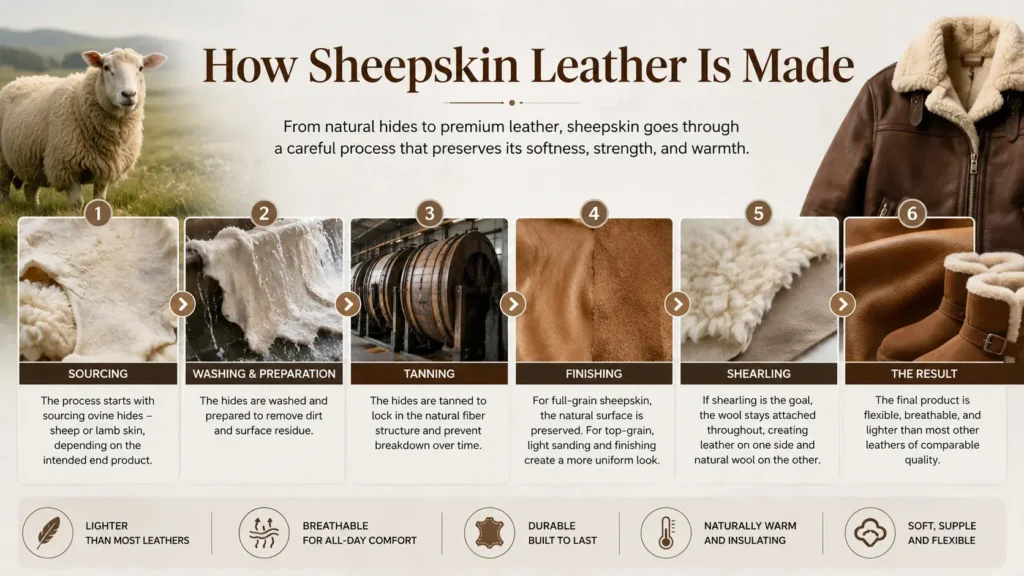
The process starts with sourcing ovine hides – sheep or lamb skin, depending on the intended end product. The hides are washed and prepared to remove dirt and surface residue, then put through a tanning process that locks in the natural fiber structure and stops the hide from breaking down over time. For full-grain sheepskin, nothing is done to the outer surface – it stays exactly as it came from the hide.
For top-grain sheepskin, a light sanding and finishing process creates a more refined, uniform appearance at the cost of some of the natural character.
If shearling is the goal, the wool stays attached to the hide throughout the entire process. The result is leather on one side and natural wool on the other – the warm, plush lining you find inside quality winter jackets and boots.
The final product is flexible, breathable, and lighter than most other leathers of comparable quality.
Characteristics of Sheepskin Leather
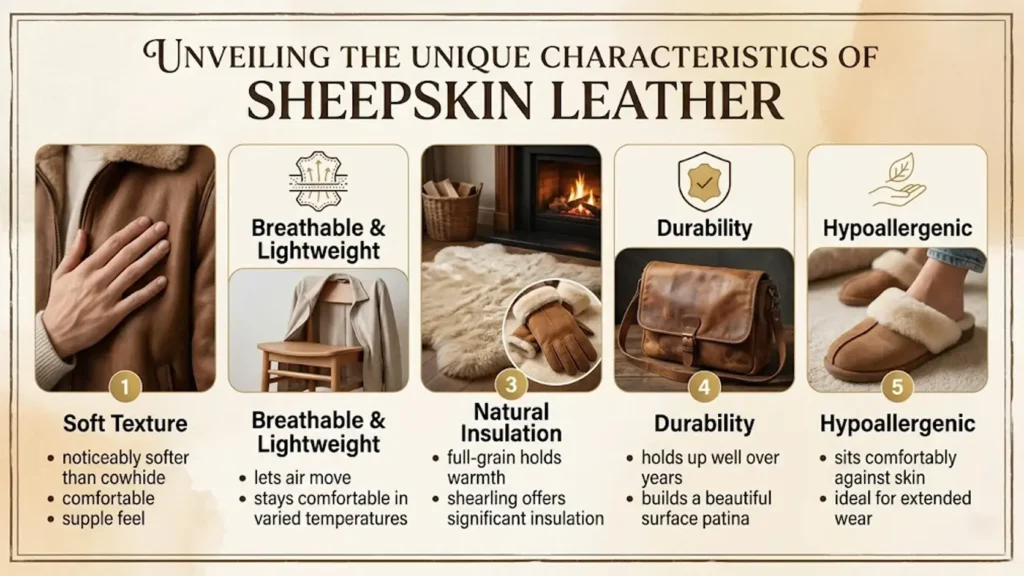
Soft texture: Sheepskin is noticeably softer than cowhide or horsehide. The fiber structure sits closer together compared to heavier hides, which gives the surface a comfortable, supple feel that works well against the skin for extended wear.
Breathable and lightweight: Sheepskin lets air move through it in a way that most synthetic options simply do not. You stay comfortable across a wider temperature range than you would with heavier leathers.
Natural insulation: Full-grain sheepskin holds warmth well on its own. In shearling form, where the wool stays on, that insulation goes up significantly – the wool layer does most of the work.
Durability: Sheepskin is not as rugged as cowhide, but it is not fragile either. With regular care, it holds up well over years of use and builds a surface patina that looks better the longer you own it.
Hypoallergenic: Sheepskin sits comfortably against skin without causing the kind of irritation that synthetic materials sometimes bring. That makes it a practical choice for anything worn close to the body for long periods.
What Is Lambskin Leather?
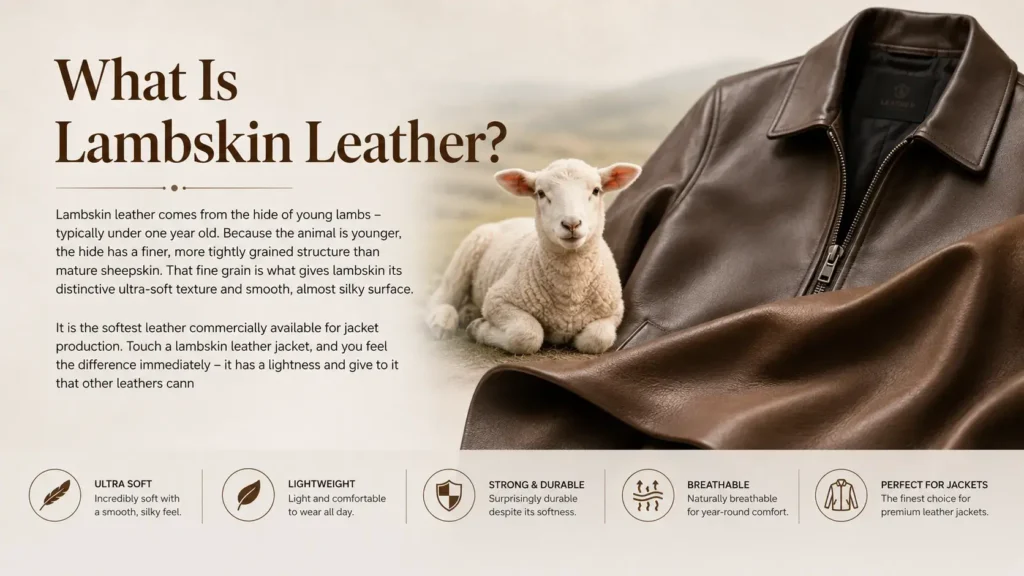
Lambskin leather comes from the hide of young lambs – typically under one year old. Because the animal is younger, the hide has a finer, more tightly grained structure than mature sheepskin. That fine grain is what gives lambskin its distinctive ultra-soft texture and smooth, almost silky surface.
It is the softest leather commercially available for jacket production. Touch a lambskin leather jacket, and you feel the difference immediately – it has a lightness and give to it that other leathers cannot quite replicate. In quality terms, lambskin sits closest to nappa leather in terms of softness and finish.
Why Lambskin Feels Softer
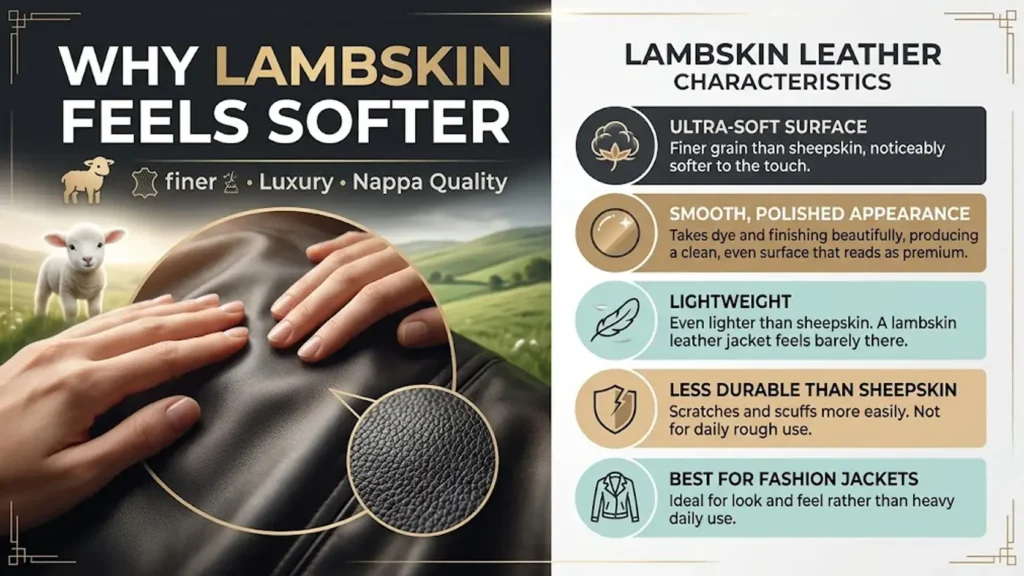
The younger the animal, the finer the grain structure of the hide. A lamb’s skin has not yet developed the slightly coarser texture of a mature sheep. When tanned and finished, that fine grain produces a surface that feels genuinely luxurious – closer to nappa leather in quality terms than standard sheepskin.
This is why lambskin is the material of choice for high-end fashion jackets and luxury accessories. If you are looking for luxury leather jackets or high-quality leather jackets built from premium hides, lambskin is the material worth starting with. The feel justifies the price point in a way that is immediately obvious the moment you put the jacket on.
Lambskin Leather Characteristics
Ultra-soft surface: Finer grain than sheepskin, noticeably softer to the touch.
Smooth, polished appearance: Lambskin takes dye and finishing treatments beautifully, producing a clean, even surface that reads as premium.
Lightweight: Even lighter than sheepskin. A lambskin leather jacket feels barely there compared to cowhide.
Less durable than sheepskin: The same fine fiber structure that gives lambskin its softness also means it picks up scratches and scuffs more easily. It is not a material you treat roughly – daily rough use will show on lambskin faster than on sheepskin or cowhide.
Best for fashion jackets: Lambskin’s combination of softness, lightness, and appearance makes it ideal for jackets you wear for how they look and feel rather than heavy daily use.
Sheepskin vs Lambskin Leather
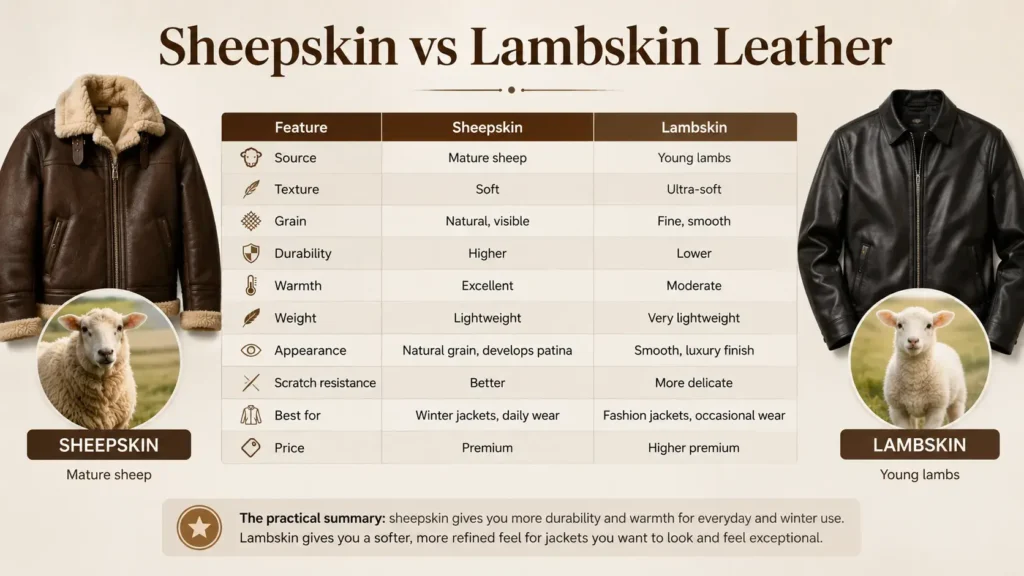
| Feature | Sheepskin | Lambskin |
| Source | Mature sheep | Young lambs |
| Texture | Soft | Ultra-soft |
| Grain | Natural, visible | Fine, smooth |
| Durability | Higher | Lower |
| Warmth | Excellent | Moderate |
| Weight | Lightweight | Very lightweight |
| Appearance | Natural grain, develops patina | Smooth, luxury finish |
| Scratch resistance | Better | More delicate |
| Best for | Winter jackets, daily wear | Fashion jackets, occasional wear |
| Price | Premium | Higher premium |
The practical summary: sheepskin gives you more durability and warmth for everyday and winter use. Lambskin gives you a softer, more refined feel for jackets you want to look and feel exceptional.
What Is Shearling Leather?
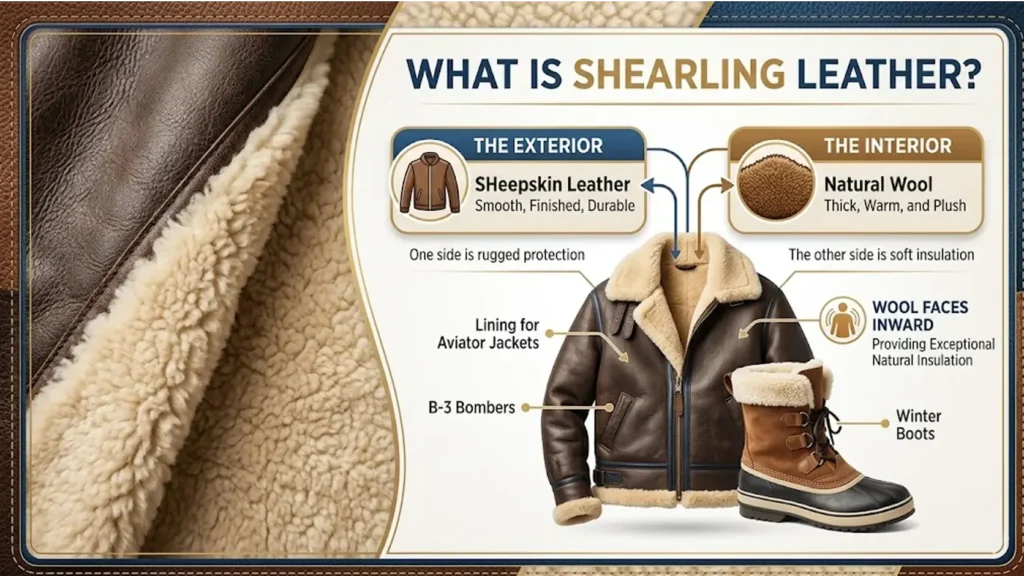
Shearling leather is sheepskin leather where the wool has been left attached during processing. One side is leather – smooth, finished, durable. The other side is natural wool – thick, warm, and plush.
This is what you find lining the inside of quality aviator jackets, B-3 bombers, and winter boots. The wool side faces inward, against the body, providing exceptional natural insulation.
Difference Between Sheepskin and Shearling
Sheepskin leather has the wool removed during processing. What you get is pure leather – soft, flexible, and finished on both sides.
Shearling keeps the wool where it grew. The leather exterior handles wind and surface abrasion. The wool interior holds body heat close. Both come from sheep but they are built for different jobs and feel completely different when worn.
Is Shearling Real Leather?
Yes. Genuine shearling is real leather – full-grain sheepskin with the natural wool kept in place through the tanning process. It takes more work to produce than standard sheepskin, which is reflected in the price.
Worth watching out for: products labeled shearling that use synthetic wool or faux fur on the inside. Real shearling has individual wool fibers that move naturally and breathe. Synthetic versions feel even and slightly plasticky when you run your hand across them – the difference is noticeable once you know what to feel for.
Pros and Cons of Sheepskin Leather
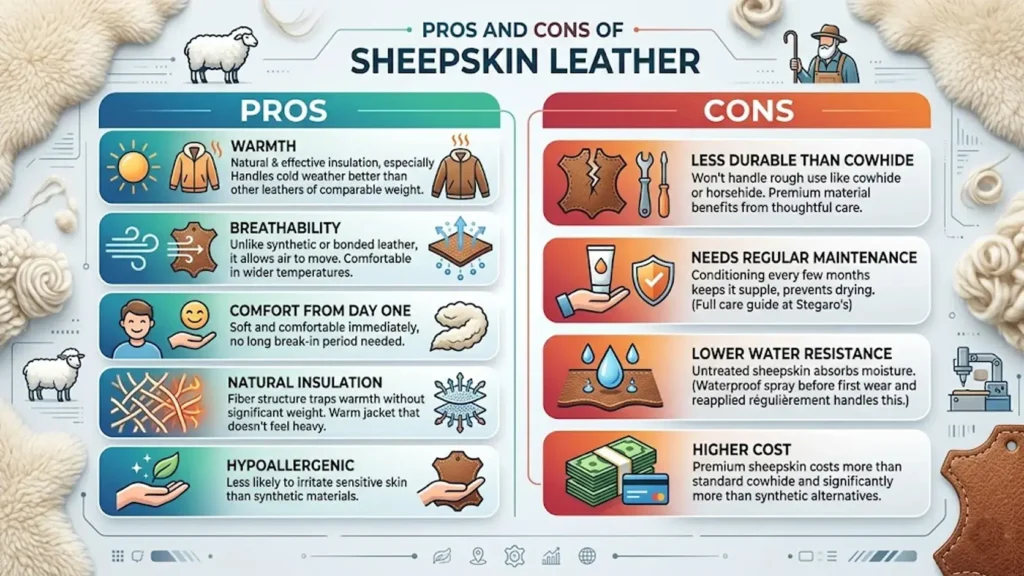
Pros
Warmth. Sheepskin insulates naturally and effectively, especially in shearling form. It handles cold weather better than most other leather types of comparable weight.
Breathability. Unlike synthetic or bonded leather, sheepskin allows air to move through it. It stays comfortable in a wider range of temperatures.
Comfort from day one. Sheepskin does not need a long break-in period. It is soft and comfortable from the first wear.
Natural insulation. The fiber structure of sheepskin traps warmth without adding significant weight – important for anyone who wants a warm jacket that does not feel heavy.
Hypoallergenic. Less likely to irritate sensitive skin than synthetic materials.
Cons
Less durable than cowhide. Sheepskin will not handle the same level of rough use as cowhide or horsehide. It is a premium material that benefits from thoughtful care.
Needs regular maintenance. Conditioning every few months keeps sheepskin supple and prevents drying. A full care guide covering cleaning, conditioning, and storage is available at Stegaro’s leather jacket care guide.
Lower water resistance. Untreated sheepskin absorbs moisture. A waterproof spray applied before first wear and reapplied regularly handles this well.
Higher cost. Premium sheepskin costs more than standard cowhide and significantly more than synthetic alternatives.
Is Sheepskin Leather Good for Jackets?
Best Uses in Fashion
Bomber jackets: The lightweight, soft nature of sheepskin makes it a natural fit for bomber silhouettes. The same softness also works exceptionally well in biker jackets, where sheepskin adds comfort without losing structure. A sheepskin leather bomber feels noticeably different from a cowhide version – softer, lighter, and more comfortable from the first wear.
Aviator jackets: The classic B-3 aviator jacket was originally made from sheepskin with shearling lining. Explore the full range of bomber styles to find the right cut and lining for your wardrobe, thick outer leather against cold air, warm wool against the body. The combination was designed specifically for high-altitude flying, and it still works the same way today.
Shearling coats: Full shearling coats use the wool-on hide for maximum warmth. These are among the warmest outerwear pieces available in genuine leather.
Is It Good for Everyday Wear?
Yes, with some caveats. Sheepskin is comfortable and practical enough for daily wear, but it needs more care than cowhide. It is not the right material for rough outdoor work or heavy physical use. For everyday city wear, commuting, and casual daily outfits, sheepskin works well.
For anyone unsure whether sheepskin is the right material for how they plan to use a jacket, the full guide to identifying quality leather jackets covers what to look for across different leather types.
Which Is Better: Sheepskin or Lambskin?
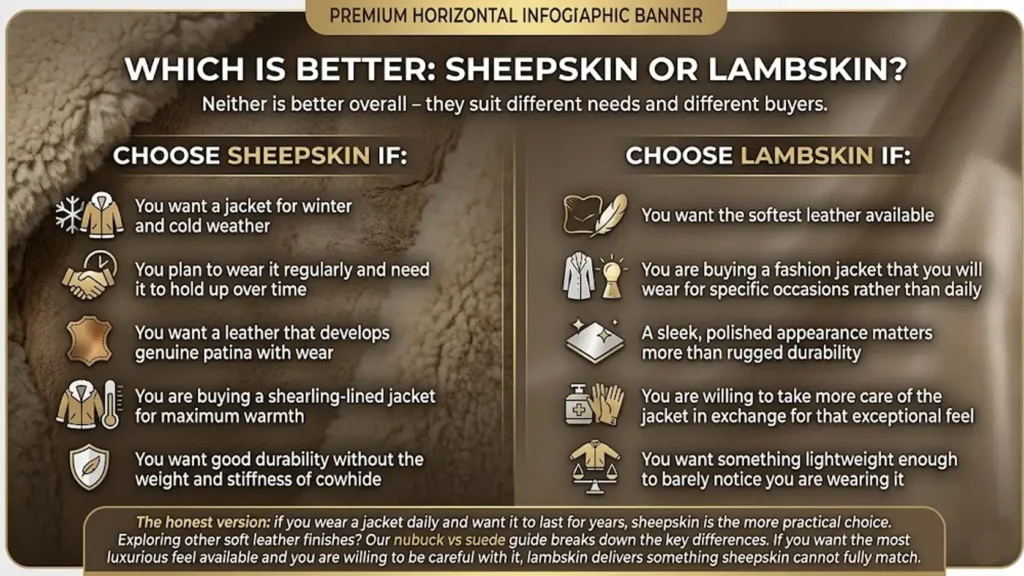
Neither is better overall – they suit different needs and different buyers.
Choose Sheepskin If:
- You want a jacket for winter and cold weather
- You plan to wear it regularly and need it to hold up over time
- You want a leather that develops genuine patina with wear
- You are buying a shearling-lined jacket for maximum warmth
- You want good durability without the weight and stiffness of cowhide
Choose Lambskin If:
- You want the softest leather available
- You are buying a fashion jacket that you will wear for specific occasions rather than daily
- A sleek, polished appearance matters more than rugged durability
- You are willing to take more care of the jacket in exchange for that exceptional feel
- You want something lightweight enough to barely notice you are wearing it
The honest version: if you wear a jacket daily and want it to last for years, sheepskin is the more practical choice. Exploring other soft leather finishes? Our nubuck vs suede guide breaks down the key differences. If you want the most luxurious feel available and you are willing to be careful with it, lambskin delivers something sheepskin cannot fully match.
How to Care for Sheepskin Leather
Cleaning Tips
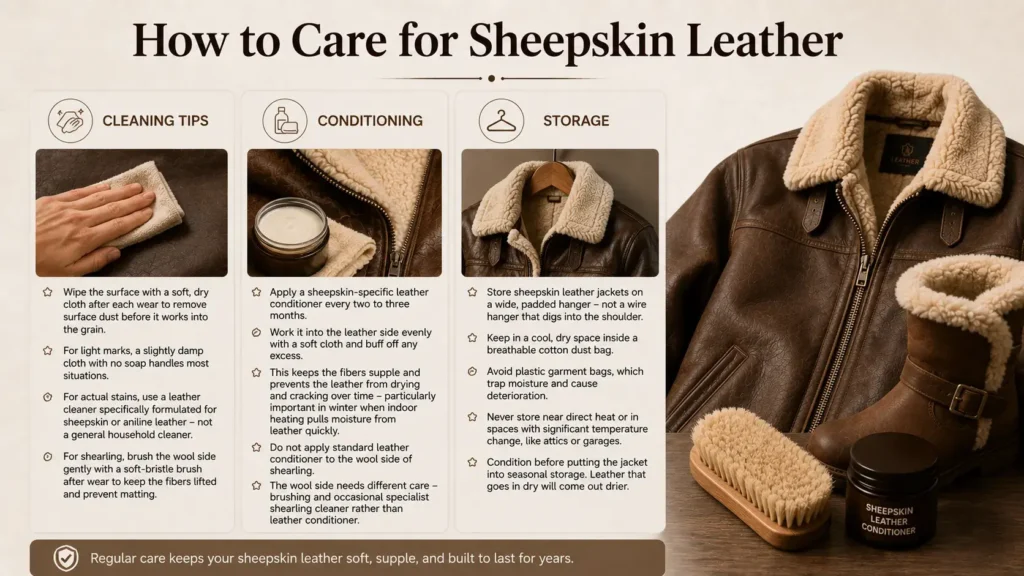
Wipe the surface with a soft, dry cloth after each wear to remove surface dust before it works into the grain. For light marks, a slightly damp cloth with no soap handles most situations. For actual stains, use a leather cleaner specifically formulated for sheepskin or aniline leather – not a general household cleaner.
For shearling, brush the wool side gently with a soft-bristle brush after wear to keep the fibers lifted and prevent matting.
Conditioning
Apply a sheepskin-specific leather conditioner every two to three months. Work it into the leather side evenly with a soft cloth and buff off any excess. This keeps the fibers supple and prevents the leather from drying and cracking over time – particularly important in winter when indoor heating pulls moisture from leather quickly.
Do not apply standard leather conditioner to the wool side of shearling. The wool side needs different care – brushing and occasional specialist shearling cleaner rather than leather conditioner.
Storage
Store sheepskin leather jackets on a wide, padded hanger – not a wire hanger that digs into the shoulder. Keep in a cool, dry space inside a breathable cotton dust bag. Avoid plastic garment bags, which trap moisture and cause deterioration. Never store near direct heat or in spaces with significant temperature change, like attics or garages.
Condition before putting the jacket into seasonal storage. Leather that goes in dry will come out drier.
FAQs
Yes. Sheepskin leather is genuine leather made from the outer hide of sheep. Full-grain sheepskin is among the higher quality leather grades available – it retains the natural grain and fiber structure of the hide without heavy processing.
Yes, particularly in shearling form, where the wool is left attached. Standard sheepskin leather is slightly warmer than lambskin because of its slightly thicker fiber structure. Shearling – sheepskin with wool intact – is significantly warmer than either.
With proper care – regular conditioning, appropriate storage, and protection from heavy moisture – a sheepskin leather jacket lasts ten to fifteen years without losing its structure or softness. It is not as rugged as cowhide, but it holds up well when treated properly.
They come from the same animal, but they are different products. Sheepskin has the wool removed during processing – you get leather on both sides. Shearling keeps the wool attached – leather on the outside, natural wool on the inside. Shearling is warmer and more insulating. Sheepskin is more versatile as a standalone leather.
Lambskin is softer. The finer grain structure of a young animal’s hide produces a noticeably smoother, silkier surface than that of mature sheepskin. Both are soft by leather standards, but lambskin is in a different category in terms of pure tactile luxury.
More expensive than cowhide and significantly more expensive than synthetic alternatives. Less expensive than the highest-grade lambskin. The price reflects the quality – sheepskin is a premium material that justifies the cost through comfort, warmth, and longevity when properly cared for.
Final Thoughts
Sheepskin leather and lambskin leather both come from sheep, both feel soft, and both produce excellent leather jackets. The difference is in what you need from the jacket.
Sheepskin gives you warmth, durability, and a leather that develops real character over the years of wear. Lambskin gives you the softest surface available and a sleek, polished appearance that reads as genuinely luxurious.
For everyday wear and winter jackets, sheepskin is the more practical long-term choice. For a jacket you want to feel exceptional every time you put it on, lambskin is worth the extra care it requires.
Looking for a quality sheepskin or lambskin leather jacket? Browse Stegaro’s leather jacket collection – real hides, built to last.