
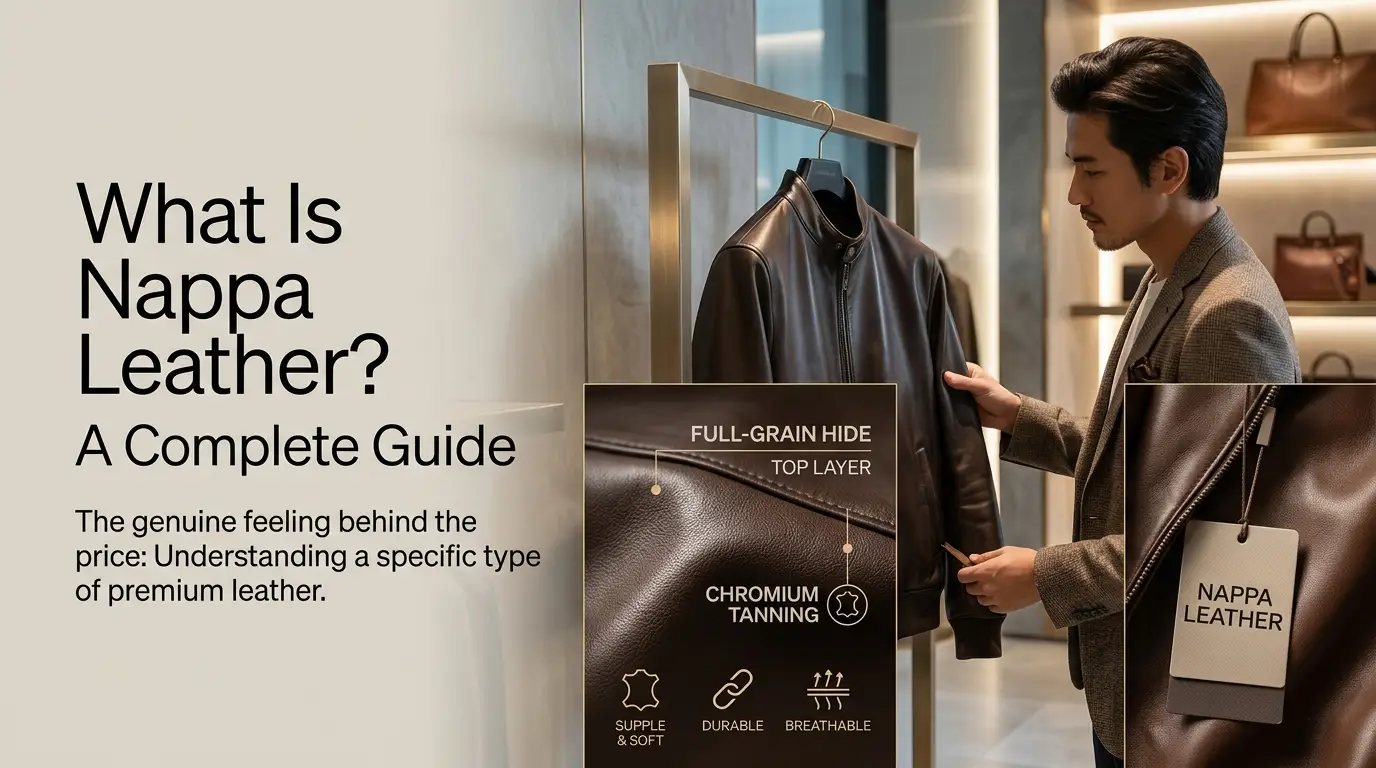
You touch a jacket in a high-end store and it feels different. Not just soft – genuinely different from anything else on the rack. The tag says nappa leather. You put it back because the price is serious money. But you keep thinking about how it felt.
That feeling has a reason behind it. Nappa leather is not just a marketing word. It is a specific type of leather – from a specific part of the hide, processed in a specific way. Understanding what it actually is helps you know whether the price is justified – and in most cases, it is.
What Is Nappa Leather?
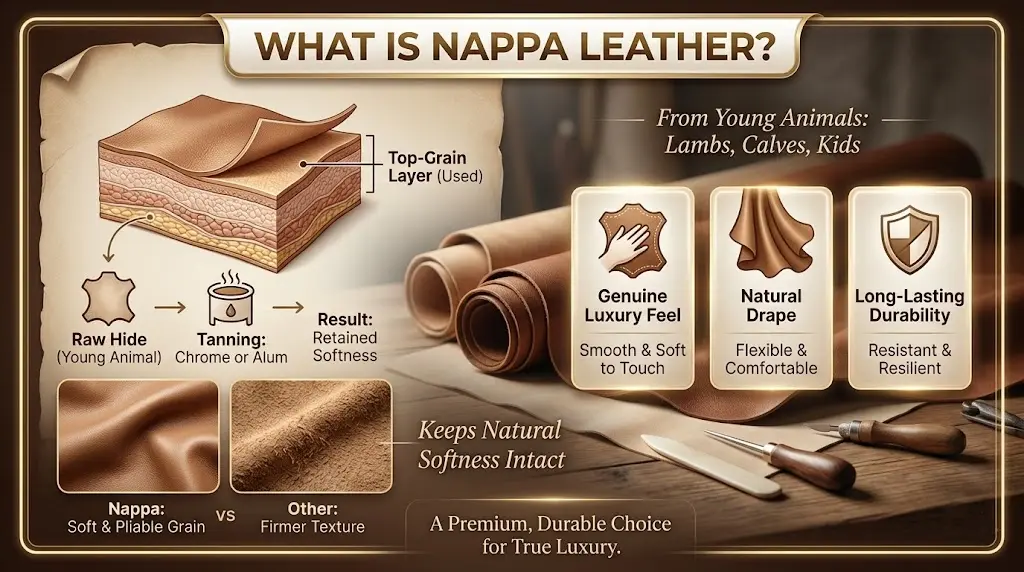
Nappa leather comes from the hides of young animals – lambs, calves, or kid goats most commonly. The hide goes through chrome tanning or alum tanning, which keeps the natural softness intact while making it durable and flexible enough to last years.
The big difference between nappa leather and other types of leather is not just where it sits on the hide – it is what the tanning does to it. The outer grain layer is used, same as full-grain leather, but the whole process is built around keeping the material soft and pliable rather than firm.
The result is leather that feels genuinely luxurious against the skin, drapes naturally, and holds up well over years of use. That combination is harder to find than it sounds.
Where Did Nappa Leather Come From?
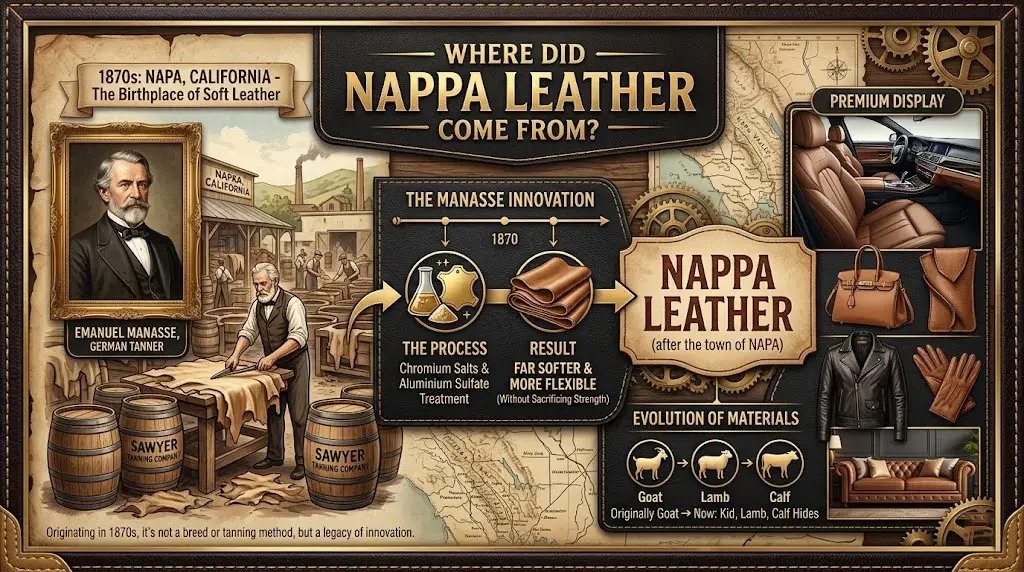
The name comes from Napa, California – not from a type of animal or a tanning method. In the 1870s, a German tanner named Emanuel Manasse was working at the Sawyer Tanning Company in Napa Valley. He discovered that treating hides with chromium salts or aluminium sulfate could produce leather that was far softer and more flexible than traditional methods allowed, without sacrificing strength.
The leather became known as Napa leather after the town, and the name stuck. Over time it expanded beyond kid goatskin – which was the original source – to include lamb and calf hides. Today nappa leather is found in luxury cars, designer bags, high-end jackets, gloves, and premium furniture worldwide.
How Is Nappa Leather Made?
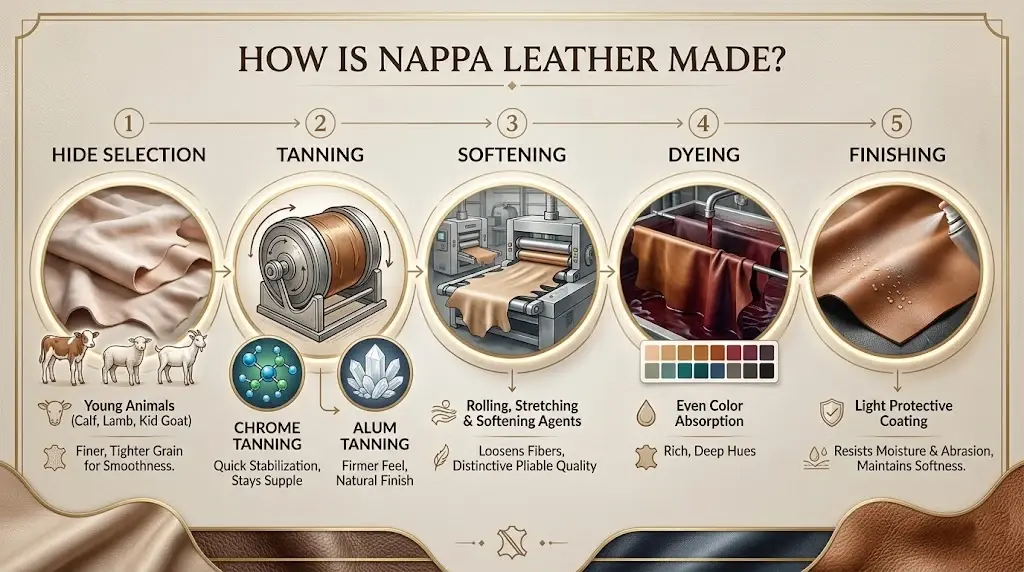
The production process is what makes nappa leather what it is. Each step is done with more care than standard leather production.
Hide selection comes first. Young animals – calves, lambs, kid goats – have finer, tighter skin than older ones. That tighter grain is what gives the finished leather its smooth surface. A hide from an older animal just does not produce the same result.
Tanning is the most important step. Most nappa leather today uses chrome tanning – a process that uses chromium salts to stabilise the hide quickly while keeping it supple. The result is leather that is soft from the start and stays that way. Some nappa leather uses alum tanning instead – an older method that gives a slightly firmer feel with a cleaner, more natural finish.
Softening comes next. The hide gets rolled, stretched, and treated with softening agents to loosen the fibers and get rid of any stiffness left over from tanning. This is where that distinctive pliable quality comes from – the part you notice right away when you pick up a nappa leather jacket.
Dyeing and finishing come last. The leather takes color evenly because of its fine, consistent grain. A light protective surface coating goes on at the end to improve resistance to moisture and light abrasion. It is light enough not to change the feel of the leather but heavy enough to give it practical durability.
What Makes Nappa Leather Different From Other Leather?
Nappa Leather vs Full-Grain Leather
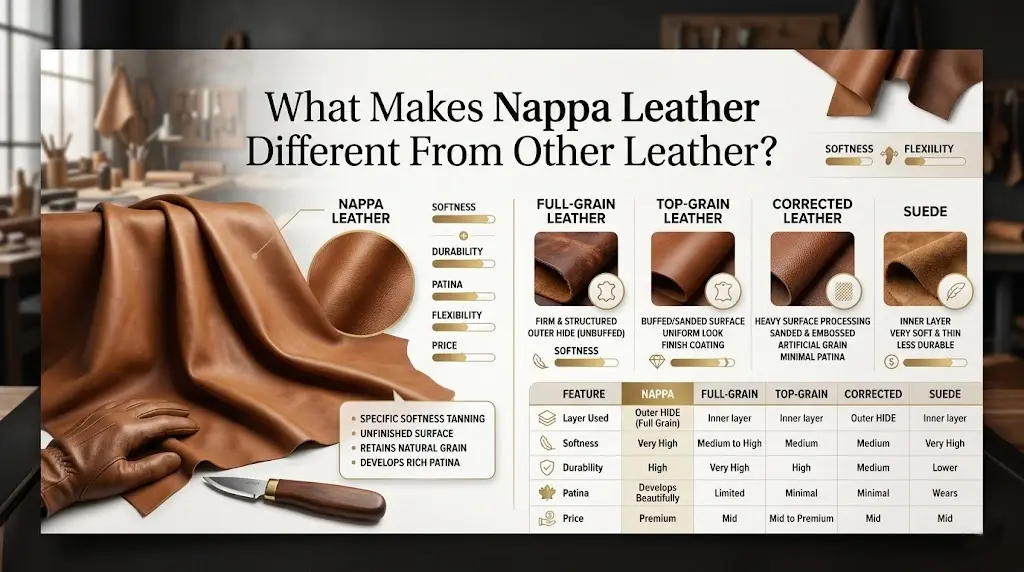
Nappa leather uses the outer layer of the hide and keeps the natural grain, same as full-grain leather. But that is where the similarity ends. Regular full-grain leather tends to come out firm and structured. Nappa goes through a tanning method built specifically around softness. Same raw material, completely different end result.
Nappa Leather vs Top-Grain Leather
Top-grain leather gets sanded or buffed on the surface to clean up any natural marks, then a finish goes on top. Looks more uniform, yes – but the natural grain texture is gone in the process. With nappa leather, nothing covers the surface. What you feel under your fingers is the actual hide, not a coating sitting over it.
Nappa Leather vs Corrected Leather
Corrected leather goes through heavy surface processing – sanding, embossing, and thick coating – to fix imperfections. The original grain is essentially gone. Nappa leather does none of that. The natural surface is preserved, which is part of why it feels different to the touch and develops patina over time in a way corrected leather never will.
Nappa Leather vs Suede
Suede comes from the inner layer of the hide. It is very soft but thinner and less durable. Nappa leather uses the outer layer, which gives it softness similar to suede but with noticeably more structural strength and longevity.
| Feature | Nappa Leather | Full-Grain | Top-Grain | Corrected | Suede |
| Layer used | Outer (full grain) | Outer (full grain) | Outer (buffed) | Outer (heavily processed) | Inner layer |
| Softness | Very high | Medium to high | Medium | Medium | Very high |
| Durability | High | Very high | High | Medium | Lower |
| Patina | Develops beautifully | Develops beautifully | Limited | Minimal | Wears rather than patinas |
| Price | Premium | Premium | Mid to premium | Mid | Mid |
Types of Nappa Leather
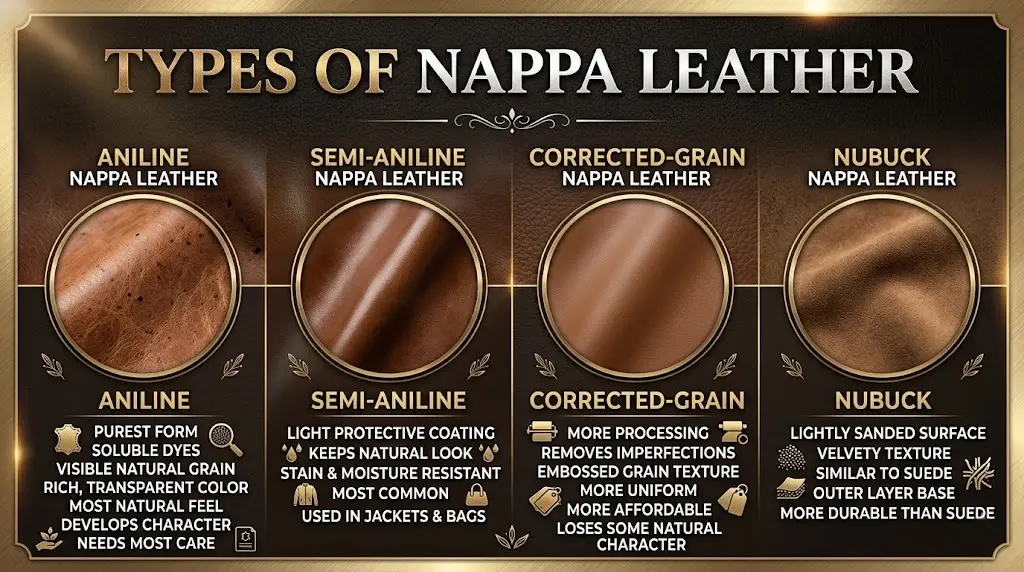
Aniline nappa leather is the purest form. Dyed using soluble dyes that soak into the leather without covering the natural grain. The color is rich and transparent, and all natural markings show through. It feels the most natural and develops the most character over time. It also needs the most care since there is no protective coating.
Semi-aniline nappa leather gets a light protective coating after dyeing. It keeps most of the natural look but offers better resistance to staining and moisture. This is the most common version used in women’s leather jackets and designer bags.
Corrected-grain nappa leather goes through more processing to remove surface imperfections, then gets embossed with a grain texture. More uniform and more affordable but loses some of the natural character of genuine nappa.
Nubuck nappa leather has its surface lightly sanded to create a velvety texture. Similar to suede but made from the outer layer, so more durable.
Where Is Nappa Leather Used?
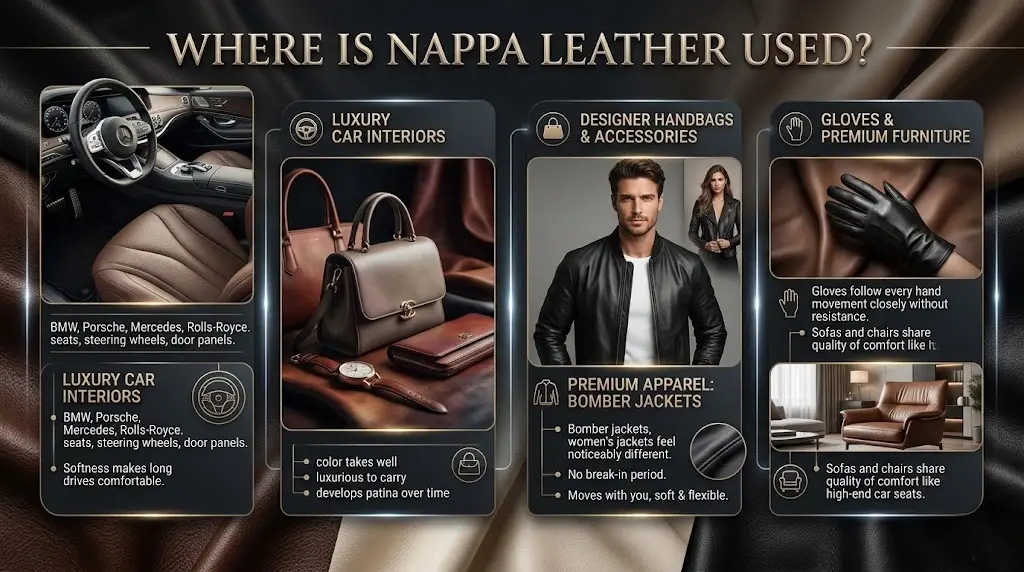
Luxury car interiors are the most visible use. BMW, Porsche, Mercedes, and Rolls-Royce use nappa leather for seats, steering wheels, and door panels. The softness makes long drives genuinely more comfortable.
Designer handbags and accessories benefit from nappa leather because it takes color well, feels luxurious to carry, and develops a patina that adds to the value of the piece over time.
Bomber jackets and women’s leather jackets made from nappa leather feel noticeably different from the first wear. No break-in period. The jacket moves with you immediately because the leather is already soft and flexible.
Gloves use nappa leather because the extreme flexibility means the leather follows every hand movement closely without resistance.
Premium furniture – sofas and chairs in nappa leather have the same quality of comfort you feel in a high-end car seat.
Advantages of Nappa Leather
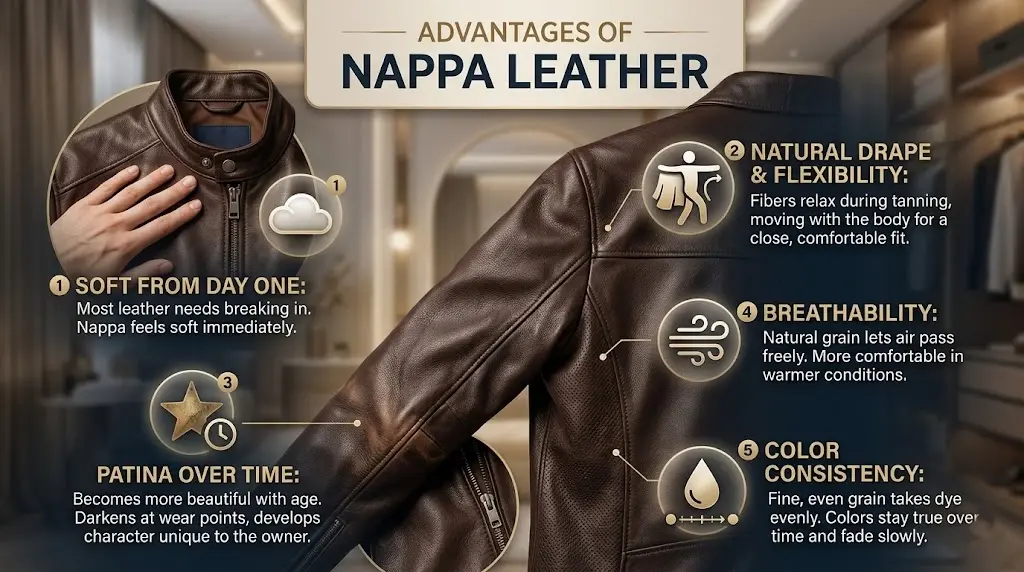
Soft from day one. Most leather needs time to break in. Nappa leather does not. It feels soft the first time you wear it.
Natural drape and flexibility. Because the fibers are relaxed during tanning, nappa leather moves with the body rather than holding a rigid shape. This is what gives nappa jackets their close, comfortable fit.
Patina over time. A five-year-old nappa leather jacket worn regularly looks better than a new one. The leather darkens at wear points, develops a subtle sheen, and takes on character that is unique to the person who owns it.
Breathability. The natural grain surface lets air pass through more freely than smooth-coated leathers. More comfortable against the skin in warmer conditions.
Color consistency. The fine, even grain takes dye evenly. Colors stay true over time and fade slowly and uniformly.
Disadvantages of Nappa Leather
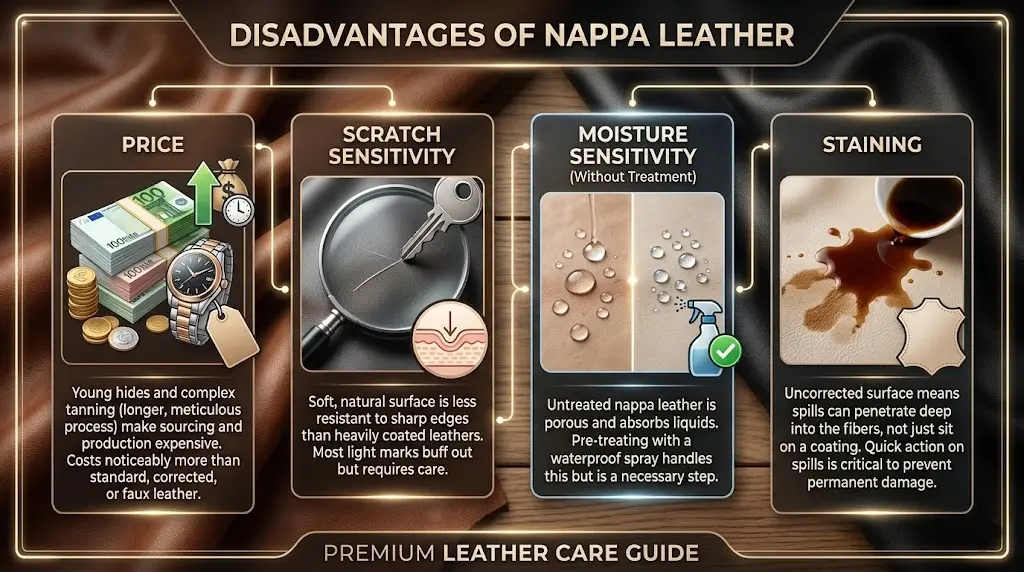
Price. Young animal hides cost more to source. The tanning process takes longer and needs more attention. That all adds up. Nappa leather costs noticeably more than standard leather and a lot more than corrected or faux alternatives.
Scratch sensitivity. The soft, natural surface scratches more easily than heavily coated leathers. Most light scratches buff out but the surface needs more care around sharp edges.
Moisture sensitivity without treatment. Untreated nappa leather absorbs water. A waterproof spray applied before first use handles this well, but it is a step that needs to be done.
Staining. Because the surface is natural and uncorrected, stains go into the grain rather than sitting on a coating. Quick action on spills matters.
How to Care for Nappa Leather
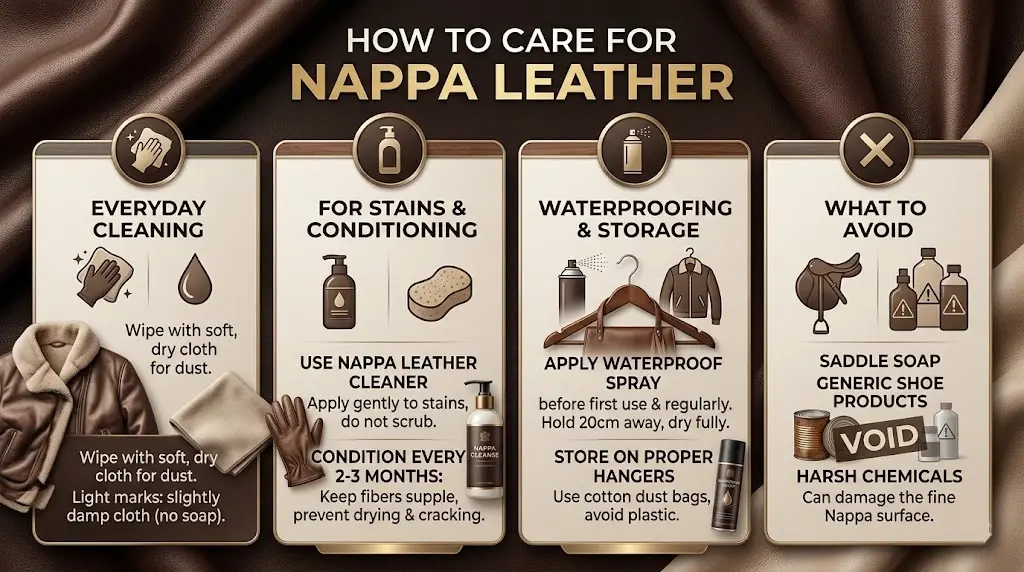
Everyday cleaning: Wipe with a soft, dry cloth after use to remove surface dust. For light marks, a slightly damp cloth with no soap handles most situations.
For stains: Use a leather cleaner made for nappa or aniline leather. Apply a small amount to a cloth and work it gently into the stained area. Do not scrub. Blot and let it air dry.
Conditioning: Every two to three months, work a good leather conditioner into the surface with a soft cloth. Buff off any excess. This keeps the fibers supple and stops the leather from drying and cracking – especially important in winter when indoor heating pulls moisture from the air fast.
Waterproofing: Before the first wear, apply a waterproof spray made for smooth or aniline leather. Hold the can about 20 centimeters away and cover evenly. Let it dry fully before wearing. Reapply every few months or after the jacket gets wet.
Storage: Keep nappa leather items on a proper hanger or stuffed with tissue paper. Store away from direct sunlight and heat. A cotton dust bag works well for bags. Never store nappa leather in plastic – trapped moisture damages it.
What to avoid: Never use saddle soap or generic shoe products on nappa leather. Many general leather products contain chemicals that damage the fine surface.
Is Nappa Leather Worth the Price?
Honestly, yes – if you plan to actually use and keep the item.
A nappa leather jacket or bag costs more upfront. With basic care it still looks good in ten or fifteen years. Corrected leather or faux leather alternatives start showing significant wear within two to three years of regular use. Over a ten-year period, the cost per year often works out similar or better with quality nappa leather – and the experience of wearing it is genuinely different.
The biggest mistake people make with nappa leather is not buying it. It is buying it and then not wearing it because they are too worried about it. Nappa leather is meant to be used. It gets better the more it is worn.
How to Spot Genuine Nappa Leather
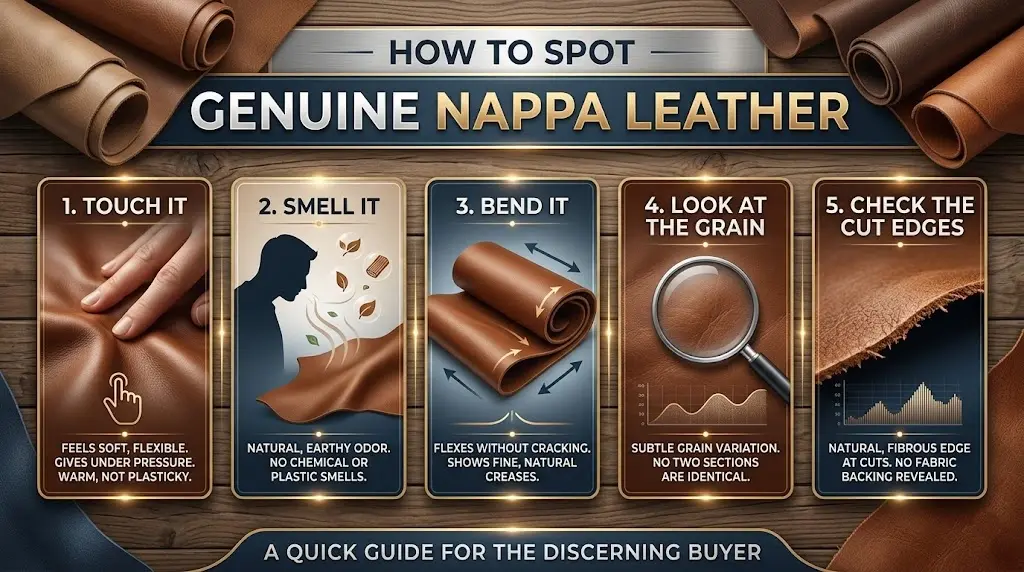
Touch it. Real nappa leather feels soft and flexible right away. It gives slightly under light pressure and feels warm rather than cold or plasticky.
Smell it. Real leather has a natural, earthy smell. Not strong but clearly there. Heavy chemical or plastic smells mean synthetic.
Bend a small section. Genuine nappa leather flexes without cracking and shows fine, natural creases. Fake leather often cracks or creases sharply at the fold.
Look at the grain. Real nappa has subtle grain variation – no two sections are identical. A perfectly uniform surface usually means embossed corrected leather.
Check the cut edges. Genuine leather shows a natural, fibrous edge at cuts and seams. Faux leather shows a clean, even edge that often reveals a fabric backing underneath.
Final Thoughts
Nappa leather earns its reputation. It is genuinely softer, more flexible, and more comfortable than most other leather types, and it develops a quality over years of wear that cheaper alternatives cannot replicate.
Buy it if you plan to keep it and use it. Condition it a few times a year, protect it from heavy moisture, and wear it regularly. Do those things and it will still look good long after everything else in your wardrobe has been replaced.
FAQs
Luxury car seats, designer bags, high-end jackets, gloves, shoes, and premium furniture. Anywhere the feel of the material matters as much as how long it lasts.
Not exactly. Nappa uses the outer full-grain layer, yes – but the tanning method is different. Regular full-grain leather often comes out firm. Nappa tanning is built around softness. Same starting point, very different jacket at the end.
Not without treatment. Untreated, it absorbs moisture. A nappa-specific waterproof spray applied before first use and reapplied regularly gives it good moisture resistance.
With proper care, 15 to 20 years without losing structural integrity. The surface develops patina over that time rather than degrading.
Young hides, a longer tanning process, and careful finishing at every step. Being a premium leather, the cost builds up across the whole production – and you feel it the moment you pick the jacket up.
Yes – one of the best materials for leather jackets. No break-in period, natural flexibility, and a jacket that lasts decades with basic care.
Light scratches and scuffs – yes, buff them out at home with a soft cloth or conditioner. Anything deeper, a tear or a bad stain, take it to a professional leather repair shop.