
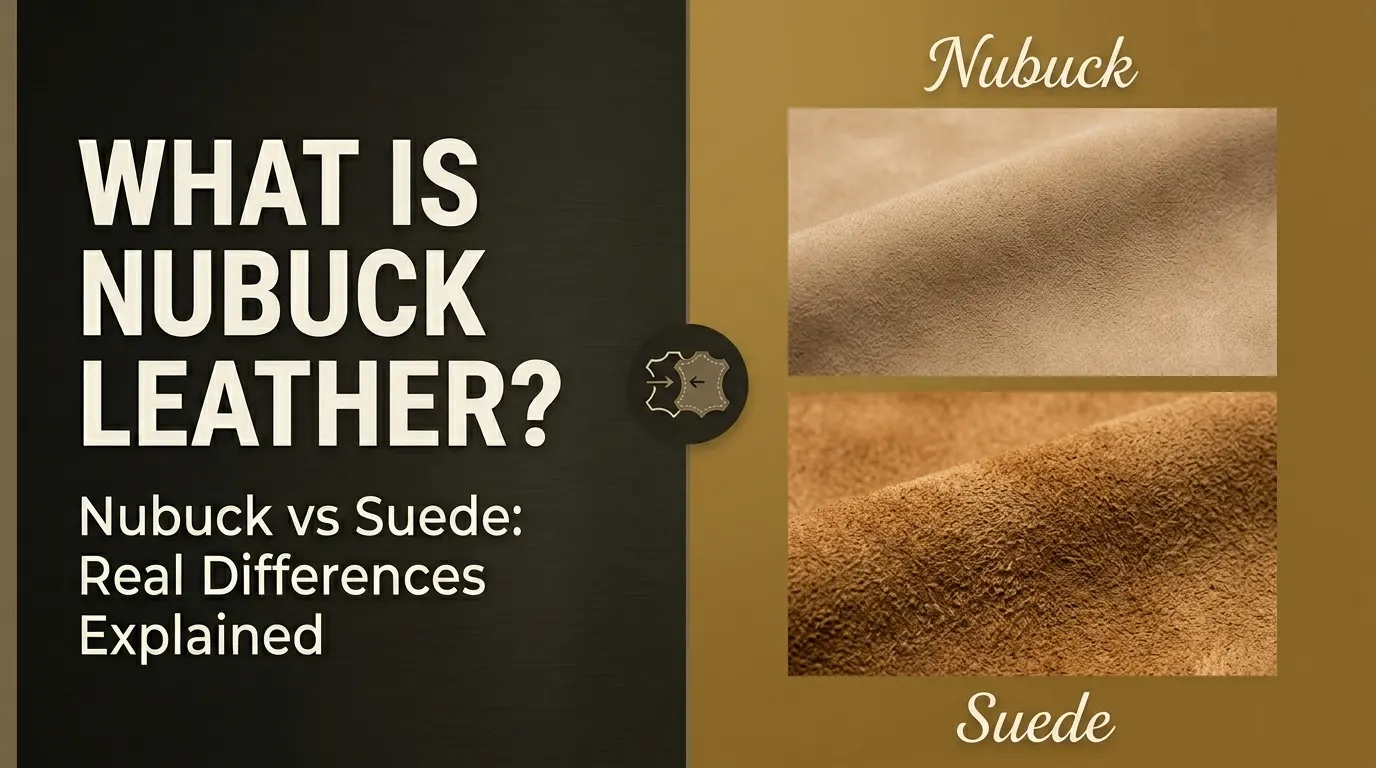
You are holding two jackets. Both feel soft. Both look velvety. The tags say different things – one says nubuck, one says suede. The price difference is noticeable. You have no idea why.
This happens all the time. Nubuck and suede look almost identical at first glance but they are genuinely different materials with different durability, different care needs, and different use cases. Getting them mixed up is an expensive mistake.
Here is everything you need to know about both.
What Is Nubuck Leather?
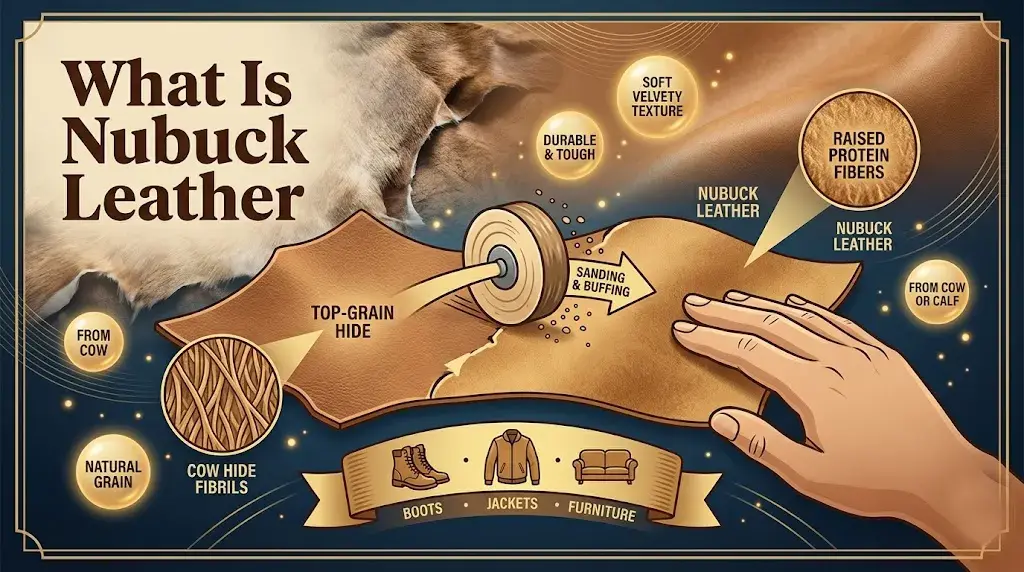
Nubuck leather comes from the outer surface of the hide – the same top-grain layer that full-grain leather comes from. The difference is in the finishing. Instead of keeping that smooth, polished surface, the outer layer is lightly sanded and buffed to raise the natural protein fibers sitting just beneath the surface. The result is a soft, velvety texture that feels luxurious but still carries the toughness of the original outer hide.
Most nubuck comes from calfskin or cowhide. Goatskin and deerskin are used occasionally but cowhide is the most common because of how consistently it takes the sanding process.
The key thing to understand about nubuck is where it starts. Because it uses the outer layer of the hide – the part that actually protects the animal – it retains much of the structural strength of that layer even after sanding. The fibers are dense, tight, and naturally resilient.
What Is Suede Leather?
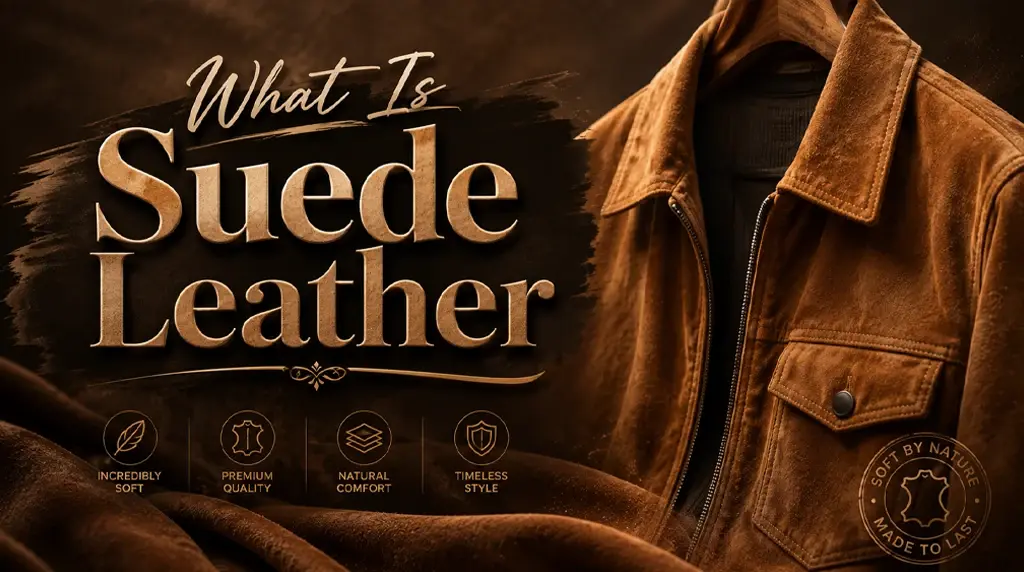
Suede comes from the inner surface of the hide. When a hide is processed, it can be split – the tough outer surface goes one way, the softer inner surface goes another. That inner surface is what becomes suede.
The inner layer is naturally softer, more pliable, and more loosely structured than the outer hide. Sanding it produces a very fine, smooth nap that feels incredibly soft to the touch – noticeably softer than nubuck in most cases. The trade-off is that the inner layer simply does not have the density and resilience of the outer layer, which makes suede inherently less durable.
Suede can be made from calfskin, lambskin, pigskin, or sheepskin. Lambskin suede is the softest. Pigskin suede is more textured. Cowhide suede is the most common in jackets and shoes.
How Nubuck Is Made: The Process
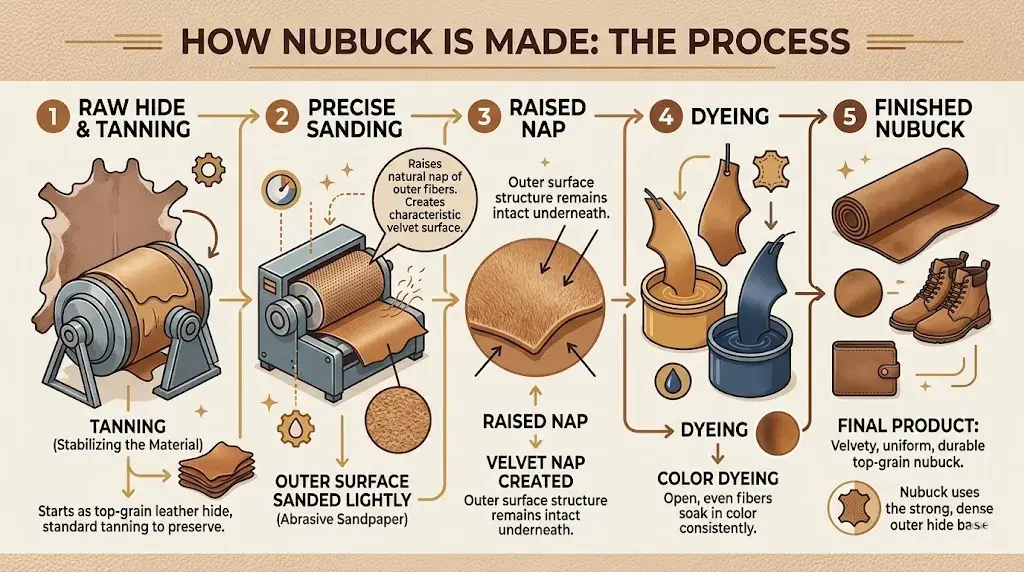
Understanding how nubuck is made helps explain why it behaves the way it does.
The hide starts as top-grain leather – the highest quality grade of leather available. It goes through standard tanning to stabilize the material. Then the outer surface is run across a fine abrasive – sandpaper or a rotating drum with a fine grit surface. This sanding is done very lightly and precisely. The goal is not to remove material but to raise the natural nap of the outer fibers just enough to create that characteristic velvety surface.
Once the sanding is done, color goes in through dyeing or staining. Because the raised fibers are open and even, the color soaks in consistently across the whole surface. That is why nubuck leather tends to hold its color well over years of wear.
The entire outer surface structure remains intact underneath the raised nap. This is what separates nubuck from suede – the base material is still the strong, dense outer hide.
Nubuck vs Suede: The Real Differences

This is the comparison most people actually want. Here it is clearly.
| Feature | Nubuck | Suede |
| Source | Outer layer of hide (top grain) | Inner layer of hide (split leather) |
| Texture | Soft but slightly firmer to touch | Very soft, fine, and supple |
| Durability | More durable – denser fiber structure | Less durable – thinner, looser fibers |
| Water resistance | Moderate – less porous than suede | Low – absorbs moisture quickly |
| Stain resistance | Moderate | Lower – stains more visibly |
| Patina over time | Develops rich character with age | Can look worn and tired over time |
| Maintenance | Regular brushing + occasional conditioning | Regular brushing, more careful cleaning |
| Price | Higher – uses premium outer hide | Lower to mid-range depending on animal |
| Best for | Jackets, boots, bags, high-use items | Jackets, shoes, soft accessories |
| Feel | Velvet-like but with slight grip | Silky smooth, very supple |
| Animal source | Mostly calfskin, cowhide | Calfskin, lambskin, pigskin, sheepskin |
Which Is More Durable – Nubuck or Suede?
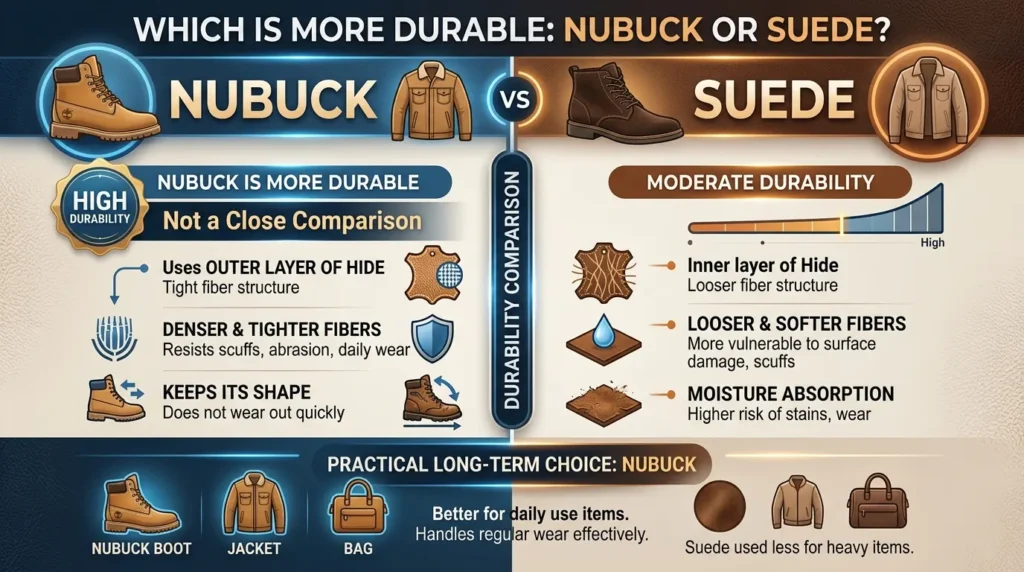
Nubuck is more durable. This is not a close comparison.
Because nubuck uses the outer layer of the hide, it starts with a denser, more tightly packed fiber structure. That tight fiber structure means scuffs and daily wear do not eat through it the way they do with softer materials. It keeps its shape and does not fall apart after a season of real use.
Suede’s inner layer has a looser fiber structure. It is softer precisely because those fibers are less tightly bound together. That same looseness makes it more vulnerable to surface damage, moisture absorption, and general wear.
For items that get used every day – a jacket, a pair of boots, a frequently carried bag – nubuck is the more practical long-term choice. It handles the reality of regular wear better than suede.
Which Is Softer – Nubuck or Suede?
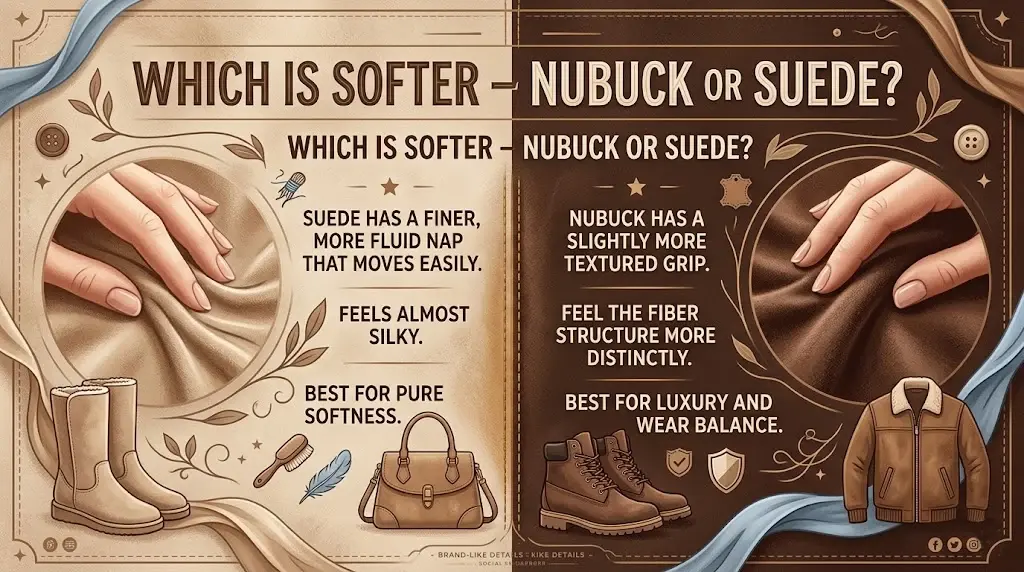
Suede is softer. Most people can feel this difference immediately when they handle both materials.
Suede has a finer, more fluid nap that moves easily under your fingers and feels almost silky. Nubuck is also very soft but has a slightly more textured grip to it – you can feel the fiber structure more distinctly.
If pure softness against the skin is your priority, suede delivers that better. If you want something that feels luxurious but also holds up to wear, nubuck is the better balance.
Nubuck Leather: Advantages and Disadvantages
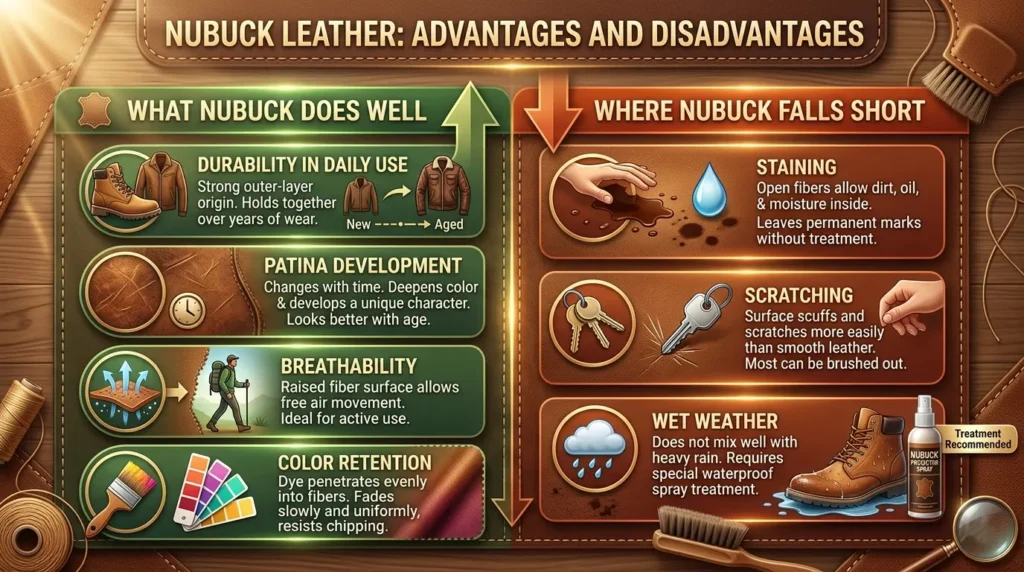
What Nubuck Does Well
Durability in daily use. Wear a nubuck leather jacket or boots every day for a few years and they still hold together. The outer-layer origin is what makes that possible.
Patina development. Nubuck changes with time. The color deepens, small marks from daily life settle into the surface, and the whole jacket starts to look like it belongs to you specifically. Leather people call this patina. A nubuck jacket worn for five years looks better than a new one, not worse.
Breathability. The raised fiber surface lets air move through more freely than smooth leather does. If you are moving around in a nubuck leather jacket – walking fast, hiking, anything active – you will not feel as trapped as you do in polished leather.
Color retention. The color goes into open, evenly raised fibers, so it does not sit on top of the surface waiting to chip or peel. It fades slowly and evenly, which is far better than patchy color loss.
Where Nubuck Falls Short
Staining. The open fiber surface that gives nubuck its texture also gives dirt, oil, and moisture an easy route in. A water splash on an untreated nubuck jacket will darken the surface immediately. It usually returns to its original color once dry, but repeated exposure without proper protective treatment will eventually leave permanent marks.
Scratching. The raised fiber surface can be scratched and scuffed more easily than smooth leather. Running a sharp object across nubuck will leave a visible mark. Most scratches can be brushed out with a proper nubuck brush, but deep scratches are harder to recover from.
Wet weather.Nubuck and heavy rain do not mix well without protective treatment. Waterproof spray specifically made for nubuck significantly reduces this problem, but it is an extra step that smooth leather does not require.
Suede Leather: Advantages and Disadvantages
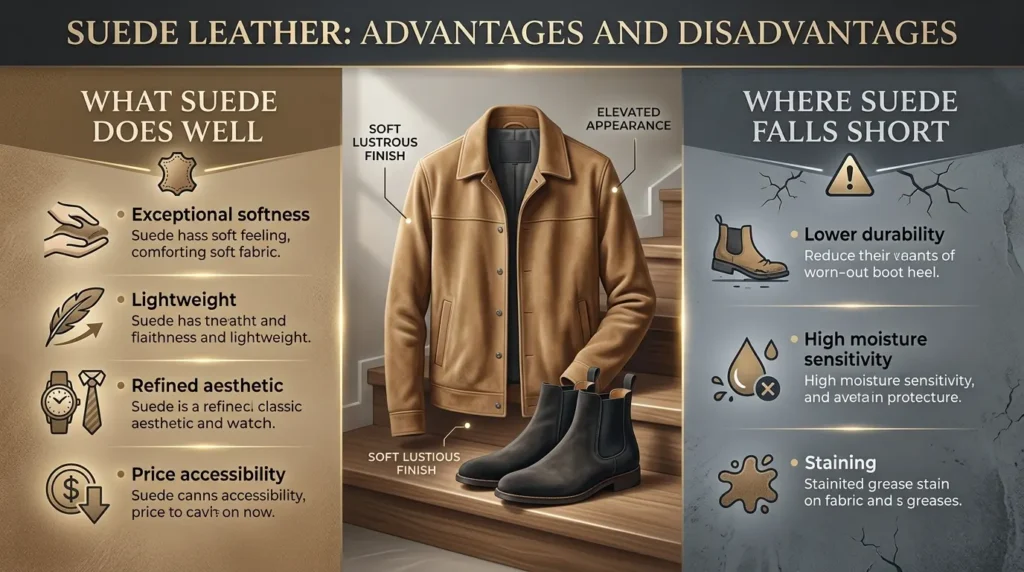
What Suede Does Well
Exceptional softness. Nothing quite replicates the feel of quality lambskin or calfskin suede against the skin. For items where comfort is the primary goal, suede delivers it better than almost any other material.
Lightweight. Because suede comes from a thinner layer of the hide and often from smaller or lighter animals, it tends to be lighter than nubuck. A suede jacket is noticeably less heavy than a comparable nubuck piece.
Refined aesthetic.Suede carries an elevated, slightly formal quality that nubuck does not have in the same way. A suede bomber jacket or suede Chelsea boots read as deliberately sophisticated rather than casually rugged.
Price accessibility. Because suede uses the inner layer – which is lower grade than the outer layer used for nubuck and full-grain leather – it is often more affordable, especially in pigskin or sheepskin versions.
Where Suede Falls Short
Lower durability. The inner layer simply does not have the structural density of the outer hide. Suede items worn heavily will show wear much faster than comparable nubuck items.
High moisture sensitivity.Suede absorbs water faster and more deeply than nubuck. Getting caught in rain in suede boots or a suede jacket without waterproof treatment can result in permanent watermarks and stiffening.
Staining.Suede stains more easily and more visibly than nubuck. Oil stains in particular are difficult to remove from suede without professional cleaning.
How to Care for Nubuck Leather
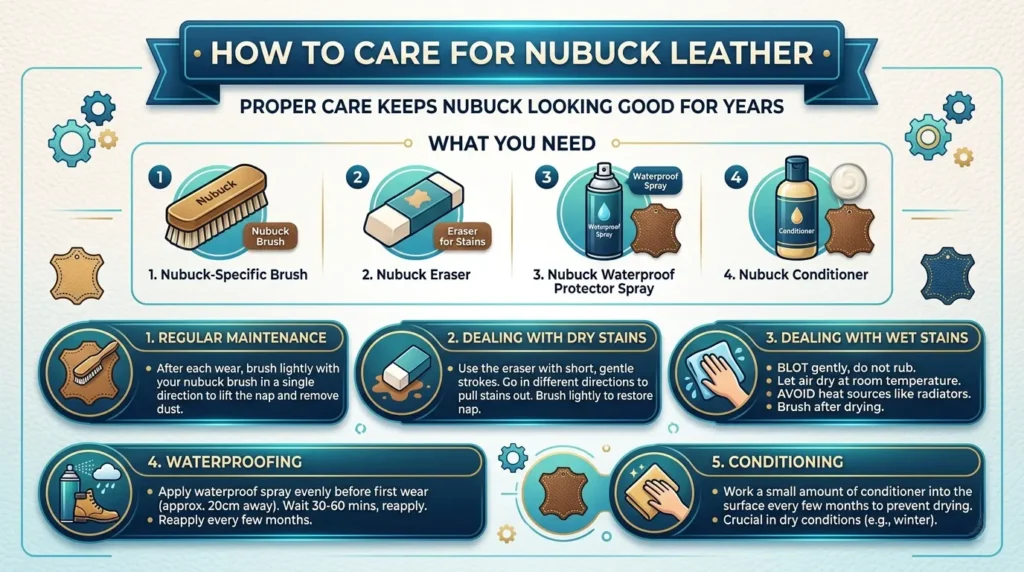
Proper care keeps nubuck looking good for years. The routine is straightforward once you know it.
What you need:
- A nubuck-specific brush (different from a standard leather brush)
- A nubuck eraser for dry stains
- A nubuck waterproof protector spray
- A nubuck conditioner
Regular maintenance: After each wear, brush the surface lightly with your nubuck brush in a single direction. This lifts the nap back up and removes loose surface dust before it works into the fibers.
Dealing with dry stains: Use the nubuck eraser on the stained spot with short, gentle strokes. Go in different directions to pull the stain out rather than push it deeper. Once the mark is gone, run the brush over it lightly to bring the nap back up.
Dealing with wet stains: Grab a clean cloth and blot – do not wipe or rub. Just press and lift. Then leave it somewhere at room temperature to dry on its own. Once it is fully dry, brush the surface again. Keep it away from the radiator and do not point a hairdryer at it. Heat ruins nubuck fast.
Waterproofing: Before the first wear, spray the whole surface with a nubuck waterproof spray. Hold the can about 20 cm away and cover every part evenly. Wait 30 to 60 minutes, then do a second light pass. After that, reapply every few months or any time the jacket gets soaked.
Conditioning: Every couple of months, work a small amount of nubuck conditioner into the surface. It stops the fibers from drying out and going stiff. This matters more in winter when indoor heating dries out leather faster than most people expect.
How to Care for Suede Leather
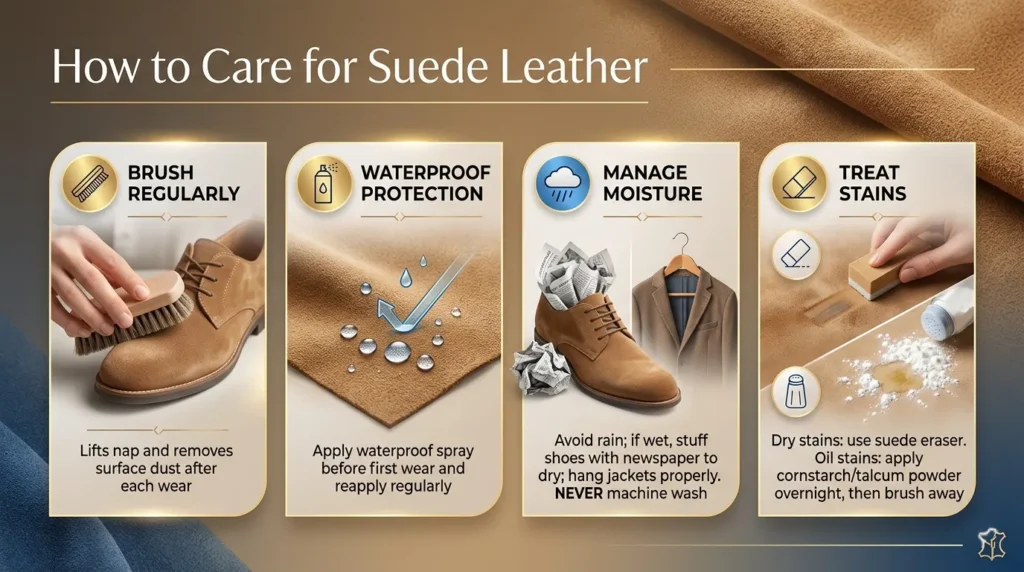
Suede needs roughly the same routine as nubuck but you need to be a bit more careful, especially around water.
Regular brushing after each wear is essential. Use a suede brush to lift the nap and remove surface dust.
Waterproof spray is even more important for suede than nubuck. Apply before first wear and reapply regularly.
Avoid wearing suede in rain whenever possible. If it gets wet, stuff shoes with newspaper to maintain shape while drying, or hang a jacket on a proper hanger in a dry room. Never machine wash suede.
Dry stains respond well to a suede eraser. For oil stains, sprinkle a small amount of cornstarch or talcum powder on the affected area and leave it overnight. The powder draws the oil out of the fibers. Brush away the powder the next day and follow with a light brushing of the nap.
Nubuck vs Suede for Jackets: Which Should You Buy?
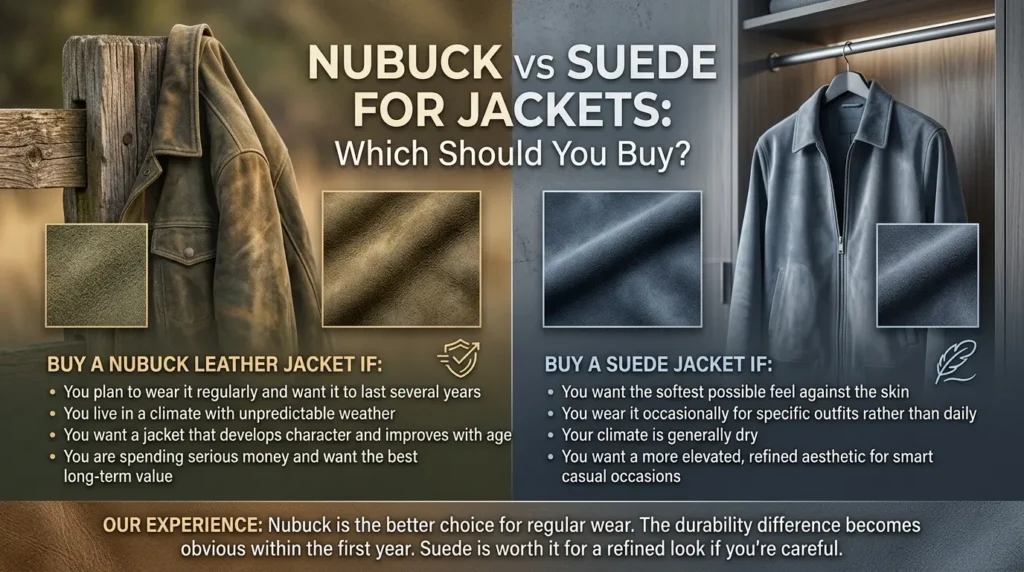
This is what most people searching this topic actually want to know.
Buy a nubuck leather jacket if:
- You plan to wear it regularly and want it to last several years
- You live in a climate with unpredictable weather
- You want a jacket that develops character and improves with age
- You are spending serious money and want the best long-term value
Buy a suede jacket if:
- You want the softest possible feel against the skin
- You wear it occasionally for specific outfits rather than daily
- Your climate is generally dry
- You want a more elevated, refined aesthetic for smart casual occasions
In our experience, nubuck is the better choice for a jacket you plan to wear regularly. The durability difference becomes obvious within the first year of regular use. Suede is worth it when you want something specifically for its refined look and you are willing to be careful with it.
Final Thoughts
Nubuck and suede are both genuinely good materials. They are not interchangeable and the choice between them matters for how long your jacket, boots, or bag will last and how much maintenance you want to deal with.
If durability and longevity are your priorities, nubuck leather is the stronger choice. It uses a better part of the hide, handles daily wear more reliably, and looks better the longer you own it.
If softness and a refined aesthetic are what you want, and you are willing to be careful with moisture and regular maintenance, suede delivers something that nubuck cannot fully replicate.
Know what you are buying, treat it properly from the start, and either material will serve you well for years.
Looking for a nubuck or suede leather jacket built to last? Browse Stegaro’s leather jacket collection – real materials, real craftsmanship.
FAQs
Yes. Nubuck is real leather – it comes from the top-grain outer layer of cowhide or calfskin. That puts it above suede in quality and closer to full-grain leather in terms of where it sits on the hide.
For everyday wear and long-term use, nubuck wins. It is tougher, handles moisture better, and the longer you own it the better it looks. If you specifically want something very soft and light that you will wear carefully, suede is worth considering.
It can, but it should not without protective treatment. Water will temporarily darken nubuck and repeated unprotected exposure will eventually cause permanent watermarks. A good waterproof spray significantly reduces this risk.
More easily than smooth leather, yes. Most light surface scratches can be brushed out with a nubuck brush. Deep scratches are harder to recover from.
Buy good quality nubuck, brush it regularly, condition it a couple of times a year, and keep it away from prolonged rain – do that and a jacket or pair of boots will easily last 10 to 15 years. The surface actually looks richer at year ten than it did when you first bought it.
Both come from the same part of the hide – the outer top-grain layer. The difference is what happens next. Full-grain keeps that surface untouched, smooth, and natural. Nubuck gets that surface lightly sanded to create the velvety feel. Full-grain sheds water a bit better. Nubuck feels softer against the skin.
Generally yes. Suede uses the inner layer of the hide, which is lower grade than the outer layer used for nubuck. Entry-level suede is quite affordable. Premium lambskin suede can be expensive, but most everyday suede products cost less than comparable nubuck items.