
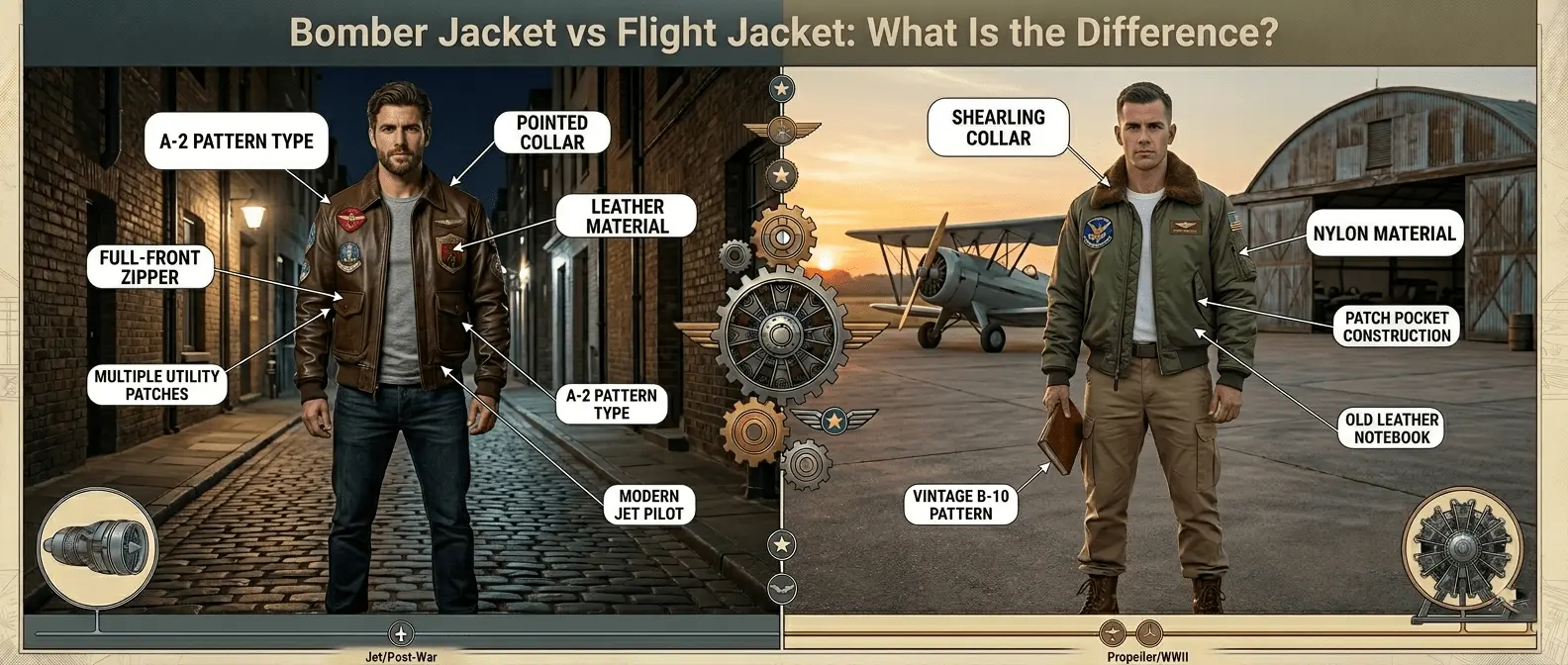
Bomber jackets and flight jackets look similar. Many stores use both names for the same jacket. This creates a lot of confusion.
But these two styles are not the same. They come from different moments in aviation history. They have different designs, different purposes, and different places in your wardrobe.
Once you understand the difference, choosing between them becomes easy. This guide covers everything: definitions, history, key models, warmth, styling tips, and which one you should buy.
What Is a Bomber Jacket?
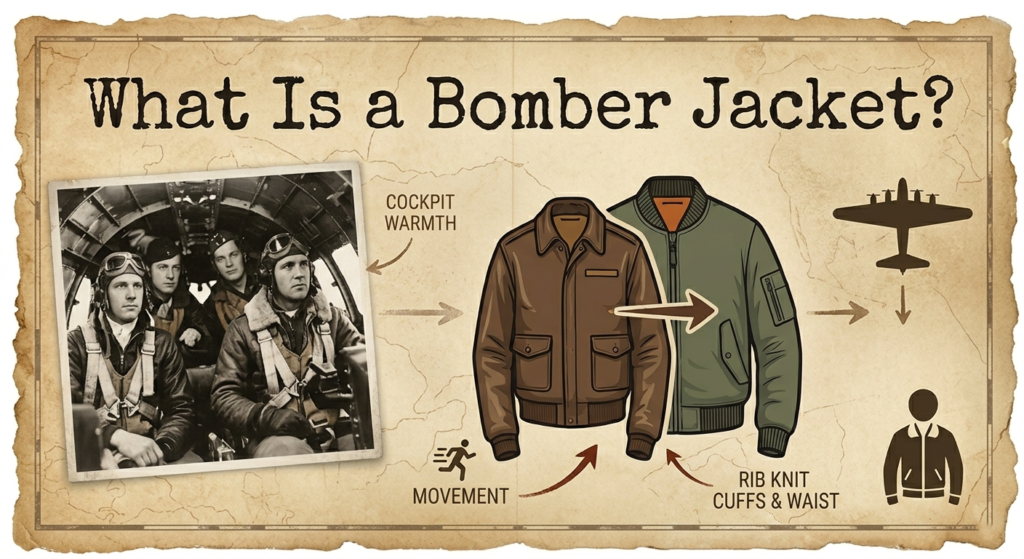
A bomber jacket is a short, waist-length jacket. It has ribbed cuffs, a ribbed waistband, and a front zipper. The collar is minimal or absent. The fit is relaxed and the build is lightweight.
So what is a bomber jacket made of? Most bombers use leather, nylon, or polyester. Leather versions offer more wind resistance and durability. Nylon versions, like the MA-1, are lighter and more affordable.
The bomber jacket meaning goes back to World War II. Bomber crews wore this style during missions. The design worked well in tight cockpit spaces. It allowed easy movement and handled moderate cold at lower altitudes. That is also why it is called a bomber jacket: the name transferred from the aircraft to the clothing.
Key features of a bomber jacket:
- Ribbed knit cuffs and waistband that seal against wind
- Short, waist-length cut
- Minimal or no structured collar
- Front zip closure
- Lightweight construction
- Clean exterior with few pockets
The ribbed cuffs and waistband are the most important visual detail. Remove them and the jacket loses its identity. These elements make a bomber style jacket instantly recognizable.
The MA-1 Bomber Jacket
The MA-1 is the most iconic bomber jacket ever made. The U.S. Air Force developed it in the 1950s for jet-age aviation. It used nylon instead of leather to reduce weight.
The MA-1 introduced a reversible design with a bright orange interior. This served as a survival signal. It also established the clean, minimal style that defines bombers today.
In the 1960s, civilians adopted the MA-1 quickly. It became central to youth subcultures in the UK and U.S. Every modern bomber jacket traces its design back to the MA-1.
The A-2 Bomber Jacket
The A-2 is where bomber jackets and flight jackets overlap. Understanding this overlap is important.
The A-2 was standard issue for U.S. Army Air Corps officers from the early 1930s to 1943. It used horsehide leather with a silk lining. It had a shirt-style collar, front zipper, and knitted cuffs and waistband.
Bomber crews wore the A-2 throughout World War II. So it is both a bomber jacket and a flight jacket depending on which feature you focus on. In modern fashion, a classic leather bomber in the A-2 style uses both terms accurately. Stegaro offers A-2 inspired styles that carry this same military heritage.
What Is a Flight Jacket?
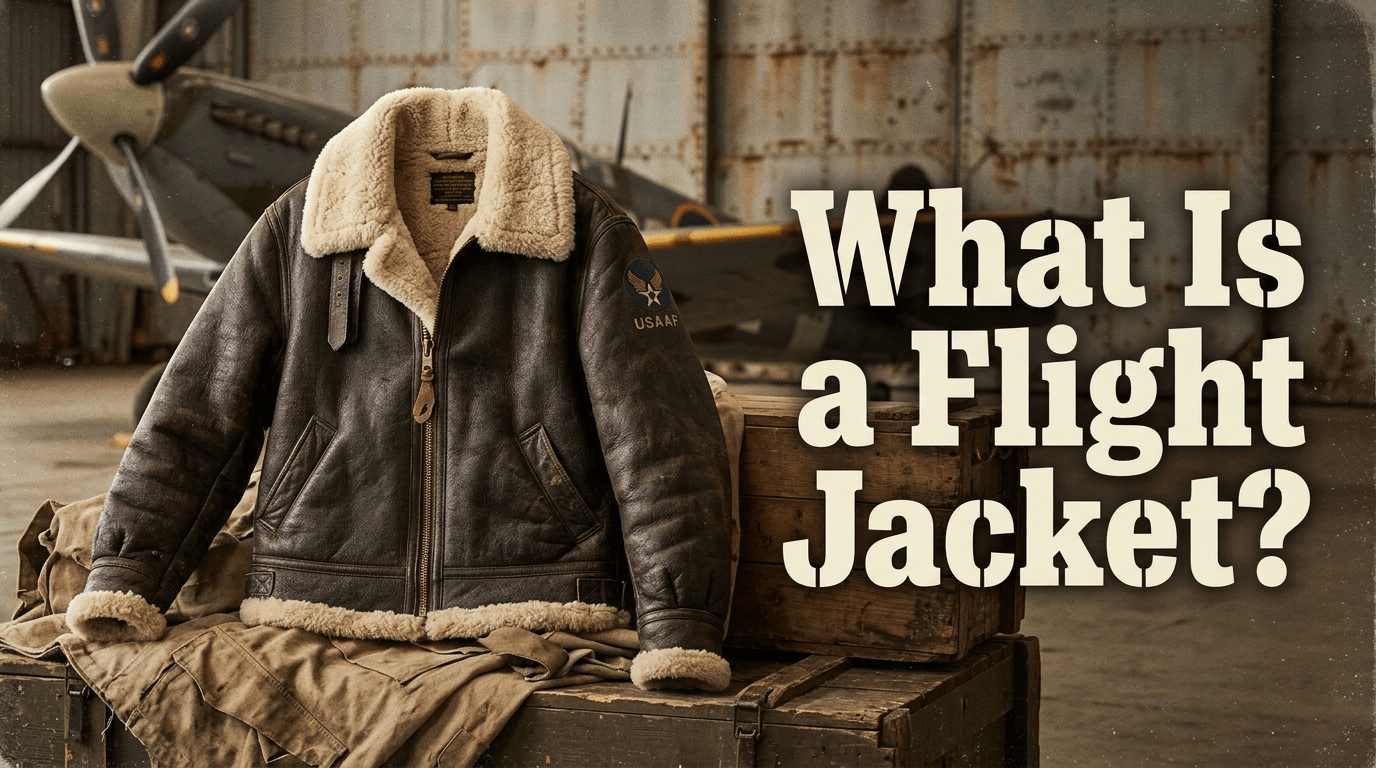
A flight jacket is the broader category. It covers all jackets originally designed for military aviation.
All bombers are flight jackets. But not all flight jackets are bombers.
Flight jackets designed for extreme cold stand apart from standard bombers. They have large structured collars, shearling or heavy linings, greater weight, and a rugged, heritage look. Flight jacket fashion today draws directly from these original military designs.
Key features of a flight jacket:
- Large, structured collar, often shearling or fur-lined
- Thick shearling or heavy insulation inside
- Heavy leather or sheepskin construction
- Substantial hardware and reinforced closures
- Strong vintage military aesthetic
- Often a longer torso than a standard bomber jacket
The core difference is purpose. A bomber jacket handled moderate cold in a cockpit. A heavy flight jacket handled extreme cold at 25,000 feet, where the right gear meant survival.
The B-3, G-1, and Irvin: Iconic Flight Jacket Models
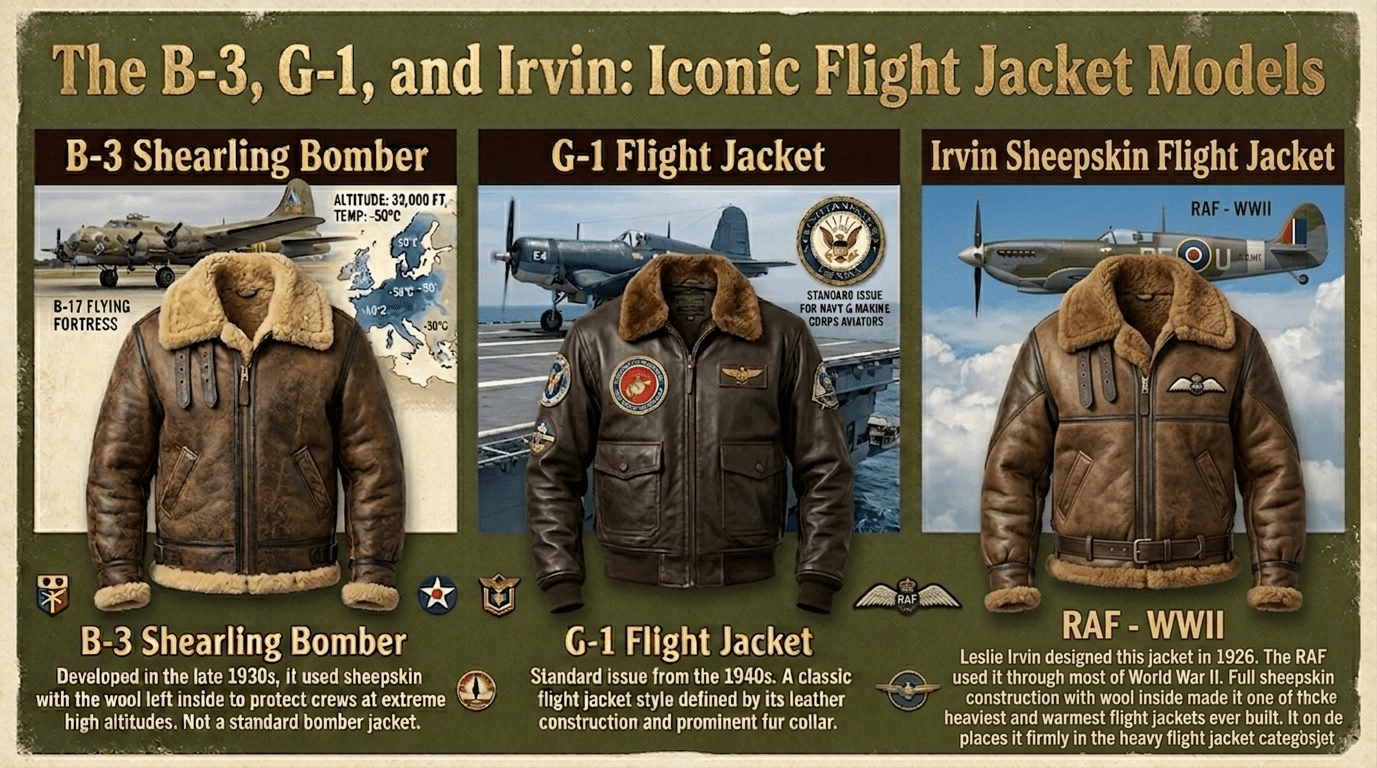
B-3 Shearling Bomber
The B-3 is the definitive heavy flight jacket. Developed in the late 1930s, it used sheepskin with the wool left inside. It protected crews flying at altitudes where temperatures reached -50 degrees C. It has a large shearling collar and substantial weight. The B-3 is not a standard bomber jacket in modern usage. Its construction and purpose are entirely different.
G-1 Flight Jacket
The G-1 was standard issue for U.S. Navy and Marine Corps aviators from the 1940s onward. It features a prominent fur or shearling collar with leather construction. In fashion, the G-1 falls into the flight jacket styles category because the collar dominates the design, not the ribbed cuffs.
Irvin Sheepskin Flight Jacket
Leslie Irvin designed this jacket in 1926. The RAF used it through most of World War II. Full sheepskin construction with wool inside made it one of the heaviest and warmest flight jackets ever built. Its bulk places it firmly in the heavy flight jacket category.
Bomber Jacket vs Flight Jacket: Quick Comparison
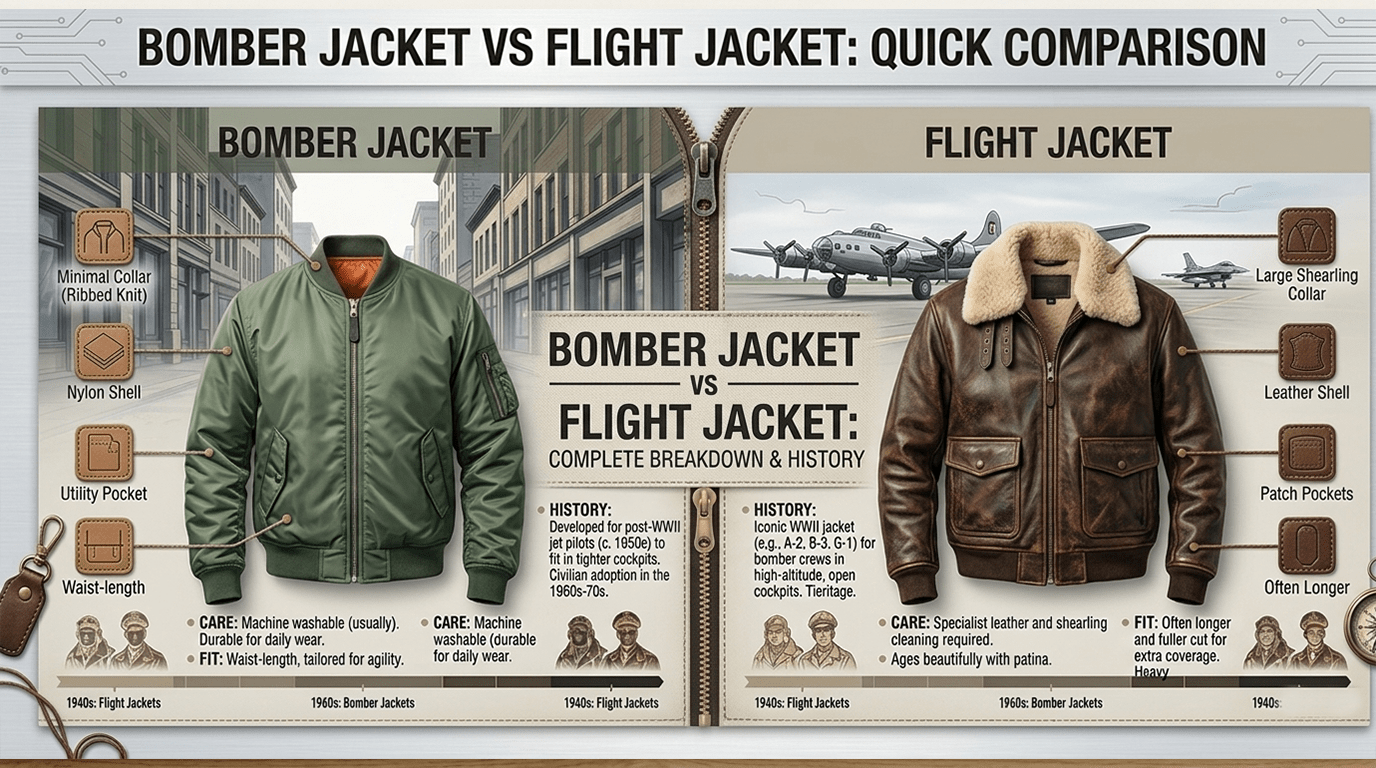
| Feature | Bomber Jacket | Flight Jacket |
|---|---|---|
| Collar | Minimal or none | Large shearling collar |
| Lining | Thin or quilted | Thick shearling |
| Weight | Lightweight | Heavy |
| Warmth | Mild weather | Cold weather |
| Length | Waist-length | Often longer |
| Style | Clean, modern | Rugged, heritage |
Bomber Jacket History: Where Did It Come From?
The bomber jacket origin goes back to World War I. Military pilots in open cockpits needed wind protection that standard uniforms could not provide. The U.S. Army established its Aviation Clothing Board in 1917 and began producing leather flight jackets for this purpose.
The term “bomber jacket” became common in World War II. Long-range bombing missions became a key military strategy. The aircrew who flew heavy bombers like the B-17 and B-24 wore the A-2 leather jacket as their standard outer garment. The jacket became associated with the bombers and the name stuck. That is the bomber jacket history in brief, and why this style carries so much cultural weight today.
The MA-1 took the bomber jacket concept into civilian life more directly than any design before it. British mod culture, skinhead subculture, and American youth culture all adopted it through the 1960s and 1970s. Hip-hop culture picked it up in the 1980s and 1990s. Today it appears on fashion runways worldwide.
Are Bomber Jackets Warm?
Are bomber jackets warm? The honest answer: moderately.
A standard bomber jacket works best between 7 degrees C and 18 degrees C / 45F and 65F. The ribbed cuffs and waistband seal wind out effectively, which adds real warmth beyond what the lining alone provides.
But a bomber jacket is not built for extreme cold. Below 0 degrees C / 32F, you will need heavy layering underneath or a different jacket entirely. This is where the bomber vs flight jacket difference matters most in practical terms.
Is a bomber jacket for winter? A quilted or insulated leather bomber can handle mild winters with layering underneath. For harsh winters, a B-3 shearling or aviator flight jacket provides far more protection.
The warmest bomber jacket types are quilted or insulated leather styles. These extend comfort into cooler temperatures significantly compared to nylon or thin-lined versions.
Types of Bomber Jackets
Leather Bomber Jacket The premium version of the style. Full grain or top grain cowhide provides wind resistance, durability, and a patina that develops over time. This is the most wearable bomber vs leather jacket comparison you can make: a leather bomber bridges both worlds.
Nylon Bomber Jacket (MA-1 Style) The most widely produced bomber style. Lighter than leather, easier to care for, and available in more colors. The MA-1 defines the streetwear bomber aesthetic.
Varsity Bomber Jacket The varsity jacket vs bomber jacket debate often surprises people: the varsity is technically a bomber. It combines the ribbed bomber silhouette with wool body panels and leather sleeves. It originates from American college athletics.
Quilted Bomber Jacket Adds horizontal quilting for extra insulation through trapped air between layers. This is the warmest standard bomber variant.
Oversized Bomber Jacket Applies the contemporary preference for relaxed, voluminous silhouettes to the classic bomber shape. This is the dominant runway and streetwear bomber aesthetic right now.
How to Style Each Jacket
Bomber Jacket Styling
- Casual: Bomber over a white t-shirt, straight jeans, white sneakers
- Streetwear: Oversized bomber over a hoodie, wide-leg trousers, chunky sneakers
- Smart-casual: Leather bomber over a crew-neck sweater, dark chinos, leather shoes
- Women: Bomber over a midi dress with ankle boots
Flight Jacket Styling
- Classic winter: B-3 over a chunky knit sweater, dark denim, leather boots. Keep everything else simple.
- Heritage: A-2 over a flannel shirt, straight jeans, workwear boots
- Casual statement: G-1 over a plain long-sleeve shirt and jeans. The collar does all the visual work.
- Women: Aviator jacket over a turtleneck, straight jeans, leather boots
When asking how to wear a flight jacket, the rule is simple: keep the rest of the outfit quiet and let the jacket speak.
Bomber vs Flight Jacket: Which One Should You Buy?
Ask yourself four questions:
What temperature range do you need? For 10C to 18C / 50F to 65F, a bomber jacket works well. For genuine winter cold below 5C / 41F, choose a heavy flight jacket.
What aesthetic do you want? A bomber jacket looks clean and contemporary. A flight jacket is a bold statement piece with strong military heritage. In the bomber vs aviator jacket comparison, the aviator wins on warmth and presence; the bomber wins on versatility.
How versatile does it need to be? A bomber jacket works across more occasions. If you want one jacket for most situations, a leather bomber is the better choice.
What is your climate? In mild winters, a bomber jacket with layering may be enough. In harsh winters, a heavy flight jacket is the right choice.
At Stegaro, bomber jackets are available from $169 to $219 and aviator or flight jacket styles from $199 to $229, all with free delivery and a 30-day return policy.
Conclusion
The difference between a bomber jacket and a flight jacket is real and worth knowing before you buy.
A bomber jacket gives you versatility, a clean silhouette, and comfort across spring and autumn. A flight jacket gives you genuine warmth, bold heritage style, and a strong visual presence in winter.
Both styles share military aviation roots. Both have lasted through decades of fashion without losing relevance.
Understand what your wardrobe needs and the right choice becomes clear.
Ready to find your perfect jacket? Explore Stegaro Leather’s bomber and aviator jacket collection. Free delivery on every order.
FAQs
A bomber jacket is a short, waist-length jacket with ribbed cuffs, a ribbed waistband, and a front zipper. It has minimal collar structure and lightweight construction. The name comes from WWII bomber aircraft crews who wore this style.
A bomber style jacket refers to any jacket that follows the classic bomber silhouette: ribbed cuffs, ribbed waistband, short length, and front zip. This includes leather bombers, nylon MA-1 styles, and varsity jackets.
The main differences are warmth, collar design, and weight. A bomber jacket is lighter, has minimal collar structure, and suits moderate cold. A flight jacket has a prominent collar, heavy shearling lining, and handles serious winter cold.
Bomber jackets are made from leather, nylon, polyester, or wool blends depending on the style. The original A-2 used horsehide leather. The MA-1 used nylon. Modern bombers come in all of these materials.
The name comes from World War II, when bomber crews flying aircraft like the B-17 and B-24 wore the A-2 leather jacket as their standard outer garment. The jacket became so associated with the bomber crews that the name transferred permanently.
Bomber jackets provide moderate warmth, best for 7C to 18C / 45F to 65F. They seal well against wind through the ribbed cuffs and waistband. For temperatures below 0C / 32F, layer heavily or choose a heavy flight jacket instead.
Bomber jackets work best in spring and autumn. With layering, they extend into mild winters. They suit casual, streetwear, and smart-casual contexts across a wide range of occasions.