
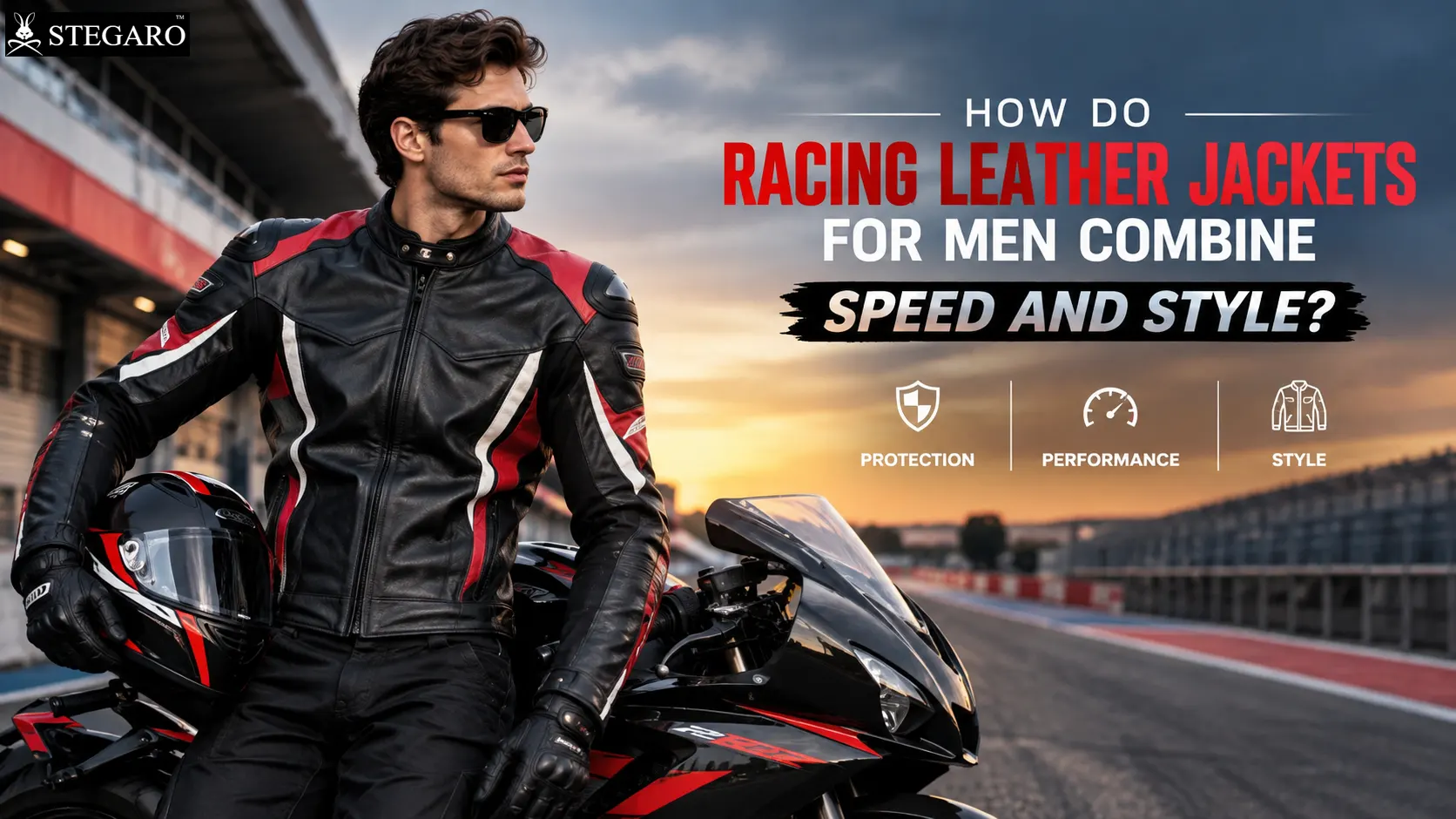
A good motorcycle jacket has two jobs: protect you when the road gets unforgiving and make you feel confident enough to wear it in the first place. That balance is where a racing leather jacket stands out. It borrows its shape and construction from performance riding gear, yet its sharp lines, bold panels, and unmistakable attitude have made it a style staple far beyond the racetrack.
The interesting part is that speed and style are not really fighting for space here. Many of the details that make a jacket useful at speed also give it that distinctive racing look. The close fit, curved sleeves, raised collar, reinforced shoulders, and streamlined profile all have a practical reason behind them. They just happen to look good, too.
So, how exactly does a racing leather jacket men’s design bring these two sides together?
Why Leather Still Makes Sense for Speed
Leather has remained popular in motorcycle racing for one straightforward reason: abrasion resistance. During a slide, the outer material has to withstand contact with rough pavement, and quality motorcycle leather is well suited to that job.
Race-oriented jackets commonly use cowhide or other performance leathers, with some products built around leather around 1.2 mm or thicker. However, thickness alone does not tell the whole story. Construction, seams, armor, certification, fit, and the quality of the hide all matter.
This is where a men’s racing leather jacket differs from an ordinary fashion jacket. A fashion piece may use leather mainly for its appearance and feel. A motorcycle-specific garment has to be designed around movement, abrasion, impact protection, and riding posture.
And yes, leather also develops character with wear. A few miles, some sunshine, and the occasional unfortunate encounter with a dusty garage can give it a personality that synthetic fashion pieces often struggle to imitate.
The Racing Leather Jacket Is More Than a Fashion Statement
Put on a racing jacket while standing in front of a mirror, and it may feel surprisingly snug. Sit on a motorcycle, lean forward, and suddenly the design starts making sense.
Race jackets are generally shaped around the rider’s posture. Sleeves are pre-curved, the back can be extended, and the torso is cut to work with a forward-leaning riding position. Stretch panels may also be added around areas that need more movement.
That close, athletic silhouette creates one of the most recognizable features of racing gear: the jacket looks fast even when the motorcycle is parked.
A properly designed racing leather jacket therefore does not simply copy the appearance of racing gear. Its shape comes from the riding position itself.
For serious riding, the fit should also keep protective components correctly positioned rather than allowing them to move freely around the body. That is an important distinction between genuine motorcycle gear and a jacket that merely uses racing-inspired graphics.
What Gives a Racing Jacket Its Track-Inspired Look?
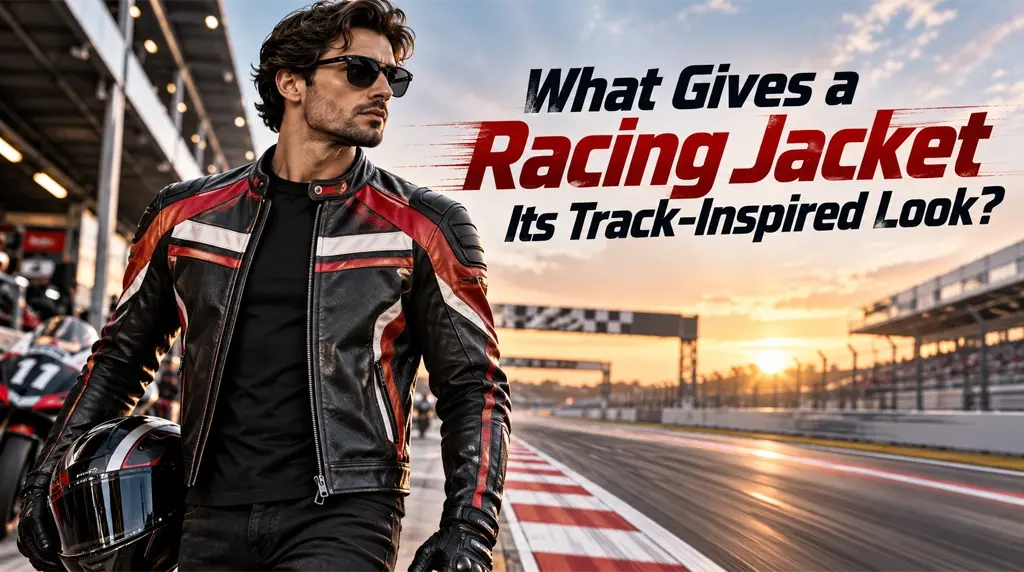
A true racing aesthetic borrows directly from motorcycle competition. Think bold color blocking, sponsor-style graphics, contrast panels, aerodynamic shaping, perforated leather, reinforced shoulders, and pronounced seam lines. These details are not just decorative; many developed alongside the practical requirements of high-speed riding.
That separates the style from a traditional cafe racer, which usually relies on a simpler silhouette, minimal detailing, and vintage motorcycle influence. A racing jacket looks more technical and athletic, with visual elements that immediately suggest the track rather than an old-school garage. For the classic version, read what is a cafe racer jacket.
Armor Turns the Style Into Functional Gear
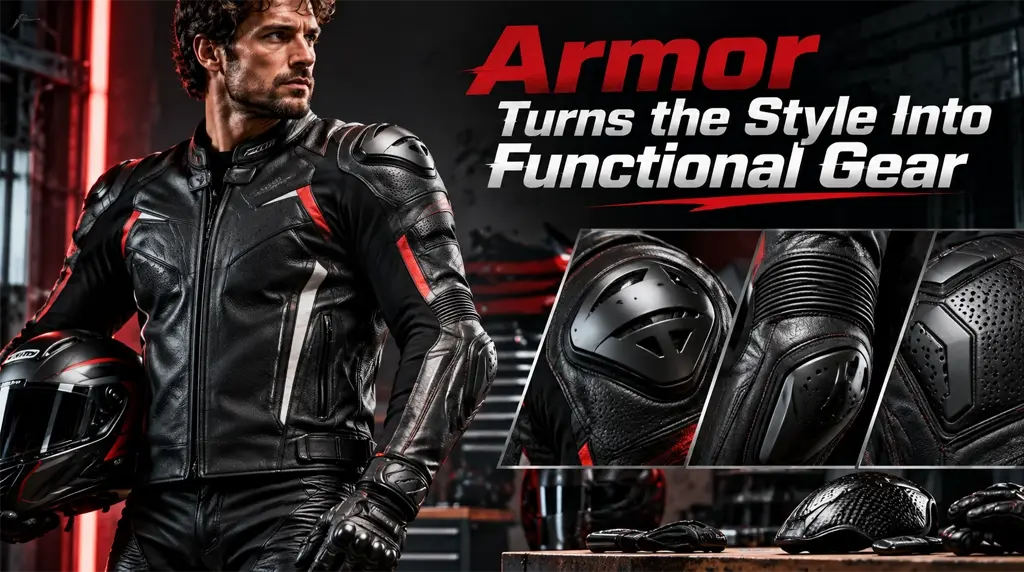
The visual language of racing jackets is often built around shoulders, elbows, and other high-impact areas. Those details are not there only to make the jacket look tougher.
Motorcycle jackets can include certified protectors at the shoulders and elbows, while some designs provide pockets for back and chest protectors. Current performance jackets may also use Level 1 or Level 2 impact protectors, depending on the design.
This is one reason you should look beyond color and panel design when choosing a jacket.
If you’re buying one specifically for riding, check what protection is actually included. A dramatic shoulder design means very little if the garment has no meaningful protective construction behind it.
Certification provides another useful checkpoint. EN 17092 is used for motorcycle protective garments, with classes such as A, AA, and AAA indicating different levels of garment protection. Impact protectors themselves are covered by separate standards, including EN 1621-1 for limb protection.
In other words, “racing style” and “racing protection” are not interchangeable terms. See how armored cafe racer jackets balance protection and style.
The Details That Make a Jacket Look Fast
You can usually spot a racing jacket from across a parking lot. The design tends to have a few recurring visual ingredients.
Contrast panels break up the leather and create a more dynamic shape. Black-and-white combinations, red accents, metallic details, and bold branding are common in racing-inspired designs.
Raised collars reduce wind exposure and give a cleaner, more technical look to the neck area.
Shoulder details add visual structure and can accommodate protective components or sliders on performance garments.
Pre-curved sleeves create the bent-arm silhouette associated with sport riding.
Streamlined pockets and closures prevent the jacket from looking bulky.
Stretch sections are another useful design feature. They allow movement while keeping the overall silhouette relatively close to the body.
None of these details needs to be exaggerated. In fact, some of the best-looking jackets are the ones where the technical elements blend into the design instead of shouting for attention.
How Ventilation Keeps the Style From Becoming a Sweat Test
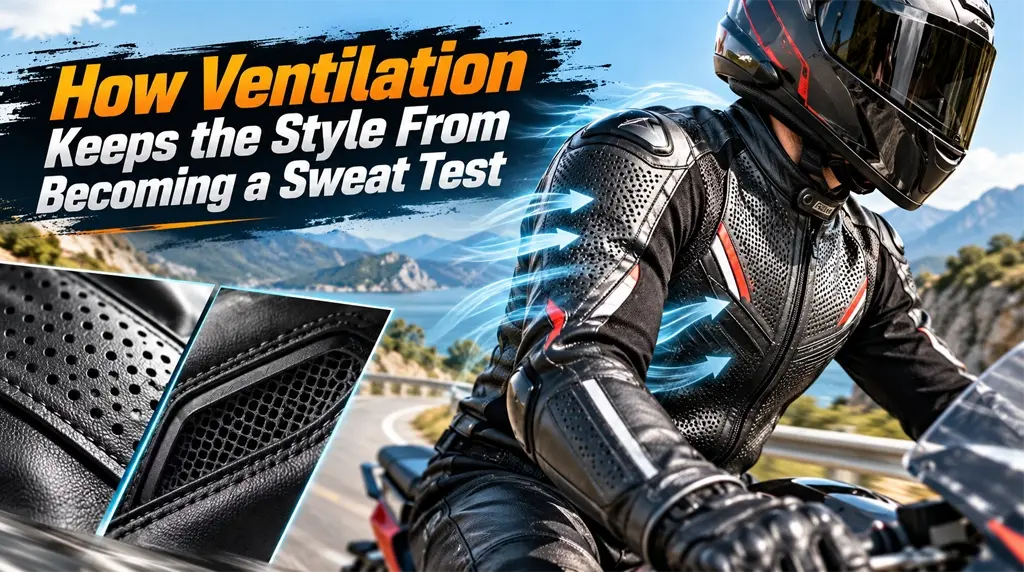
Leather is excellent at resisting abrasion, but it can become uncomfortable when temperatures rise. That is why ventilation matters.
Performance jackets may use perforated leather, zippered vents, breathable liners, or stretch textile sections to improve airflow. Some designs place ventilation across the chest, back, or other areas where moving air can make a noticeable difference.
This is another place where modern motorcycle gear has moved beyond the old idea that protection has to mean feeling like you’re wrapped in a leather oven.
A mens racing leather jacket with sensible ventilation can retain its structured appearance while being much easier to wear during warmer rides.
For riders who regularly deal with hot weather, localized perforation can be particularly useful. Just remember that more ventilation can affect weather resistance, so the right setup depends on where and when you ride. Our cafe motorcycle jackets guide covers ventilation and weather protection.
When Performance Features Become Style Features
One of the reasons racing jackets have such staying power in fashion is that their functional details are visually interesting.
- A zipped cuff looks technical.
- A padded shoulder looks substantial.
- A raised collar looks sharp.
- A fitted waist creates a cleaner silhouette.
- A diagonal or asymmetric closure adds movement.
- Even the stitching can give the jacket a more engineered appearance.
That means a racing leather jacket men’s design can work with everyday clothing without needing to look like you’ve just stepped away from a starting grid.
Pair a black version with dark jeans, a plain T-shirt, and boots for an easy combination. Want something cleaner? Wear it over a knit or simple button-down with straight-leg trousers. For a stronger streetwear feel, add sneakers and relaxed denim.
The trick is simple: let the jacket be the statement piece. You do not need racing graphics from head to toe. Unless, of course, you’re heading directly to the circuit.
Racing Jacket vs. Regular Leather Jacket
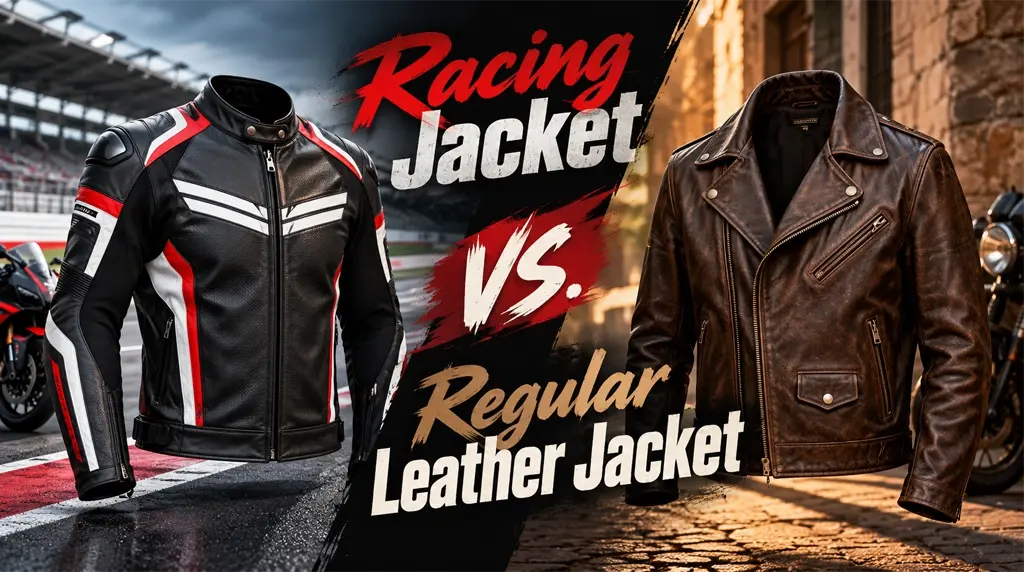
The difference becomes clearer when you look at what each jacket is designed to accomplish.
| Feature | Racing Leather Jacket | Regular Leather Jacket |
| Main purpose | Riding performance and protection | Everyday style |
| Fit | Close and pre-curved | Usually more relaxed |
| Leather | Often substantial motorcycle-grade leather | Varies widely |
| Armor | Common on motorcycle-specific models | Usually absent |
| Ventilation | Often designed for riding conditions | Depends on the style |
| Jacket-pants connection | Common in performance models | Rare |
| Styling | Sporty and technical | Wider range of fashion styles |
This does not make one automatically suitable for every rider. A commuter who spends most of the day walking around town may prefer a less restrictive design. A rider who spends weekends attacking corners will have very different priorities.
The important thing is matching the jacket to the job.
What Should You Look for Before Buying One?
Start with the purpose. If you need genuine riding protection, look for a motorcycle-specific garment rather than choosing a fashion jacket simply because it resembles race gear.
Then check the leather and construction. Look for quality materials, strong seams, appropriate reinforcement, and a design that keeps protective elements in place.
Next, investigate certification. An EN 17092 classification can tell you considerably more about the garment’s protective performance than marketing phrases such as “racing inspired.”
Also consider ventilation. If you live somewhere with long, hot summers, airflow should not be an afterthought.
Finally, pay attention to the riding position. A jacket can feel restrictive when you’re standing but work beautifully when you’re seated and leaning forward. Conversely, a jacket that feels wonderfully loose while walking may shift around too much when you’re riding.
How to Style a Racing Leather Jacket
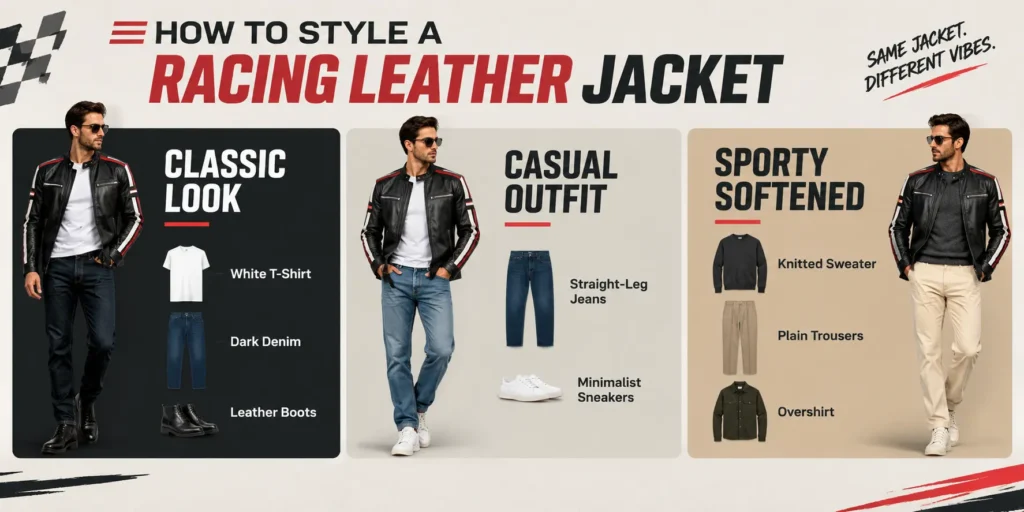
The easiest approach is to keep everything else simple.
For a classic look, combine a black leather racing jacket with a white or charcoal T-shirt, dark denim, and leather boots. The clean base allows the jacket’s construction to stand out.
For a more contemporary outfit, try the jacket with straight-leg jeans and minimalist sneakers. If the jacket has strong color blocking, choose neutral pieces underneath rather than competing with its graphics.
You can also soften the sporty character with a knitted sweater, plain trousers, or a simple overshirt underneath.
The basic rule is surprisingly amazing: one racing statement is usually enough. You want the outfit to look intentional, not as though every item came from the same pit crew.
Final Thoughts
The appeal of a racing leather jacket men’s design comes from how closely its looks are connected to its purpose. The curved sleeves, structured shoulders, close silhouette, ventilation, stretch sections, and protective elements were developed around riding needs, yet they also happen to create a powerful visual identity.
That combination gives the style its staying power. You can wear it on the motorcycle, pair it with everyday denim, or build a sharper street outfit around it without losing the character that makes racing gear recognizable.
For riders who want that meeting point between function and attitude, Stegaro offers a useful place to explore leather jacket styles that bring performance-inspired design into everyday wardrobes. The key, as always, is to know what you’re buying: a jacket can look fast, but the details are what tell you whether it was actually built with riding in mind.
FAQs
Keep the rest of the outfit relatively understated. A racing jacket works naturally with jeans, plain T-shirts, boots, or clean sneakers. For a smarter contrast, pair it with straight trousers and a simple knit. If the jacket already has bold racing graphics, neutral clothing will usually create a more balanced look.
A motorbike specialist racing jacket is made for riding, not just to look good. It may have pre-curved sleeves, protective armor, strengthened construction, ventilation, stretch panels, and a jacket-to-pants connecting zipper. A regular fashion leather jacket may share the same visual style without providing those riding-focused features.
Yes. Leather is worn in almost all motorcycle racing because of its very high abrasion resistance when sliding. But leather, in itself, does not constitute protective clothing. Also look at general construction, seams, armor, fit, and protective certification.
A motorcycle racing jacket generally has a close, pre-curved fit designed around the riding position. It should not simply be judged by how comfortable it feels while standing. The important consideration is whether the garment stays properly positioned and allows the movement required for your riding posture.
Absolutely. The fitted silhouette and technical details can be well combined with everyday clothing. Try it with jeans and a T-shirt for a simple outfit, or balance the sporty shape with a knit and straight trousers for a cleaner appearance.
No. This distinction is important. A jacket can borrow racing graphics, colors, or panel designs without being certified motorcycle protective equipment. If protection is your priority, check the garment’s construction, included armor, and certification instead of relying on the word “racing” in the product name.