
A motorcycle jacket can look the part without actually being built for the ride. That distinction matters. When you’re standing beside the bike, almost any leather jacket can give you that rugged motorcycling look. Once you’re leaning over the tank with cold air pushing against your chest, the details suddenly matter a lot more.
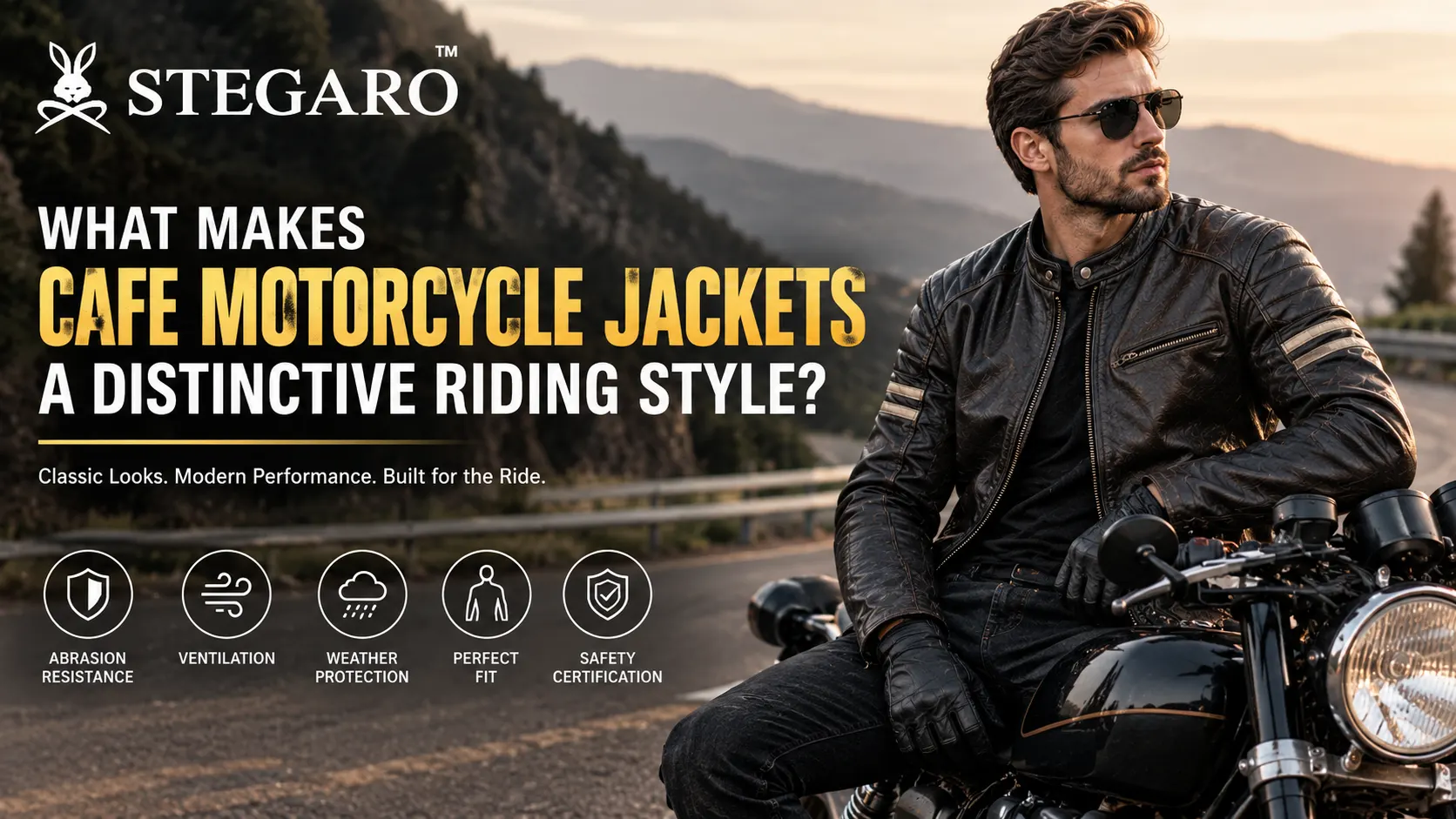
That’s where a leather cafe motorcycle jacket earns its reputation. Its appeal comes from a simple idea: keep the design clean, close-fitting, and functional without covering it in unnecessary hardware. The style grew out of motorcycle culture and still carries that stripped-back attitude today, but a well-made cafe leather motorcycle jacket now offers far more than vintage-inspired looks. Ventilation, abrasion resistance, weather protection, fit, and certification are what turn a familiar silhouette into genuinely useful riding gear.
So what actually makes this style distinctive once you’re on the road? Let’s take a closer look.
Is a Cafe Racer Jacket Actually Good for Riding?
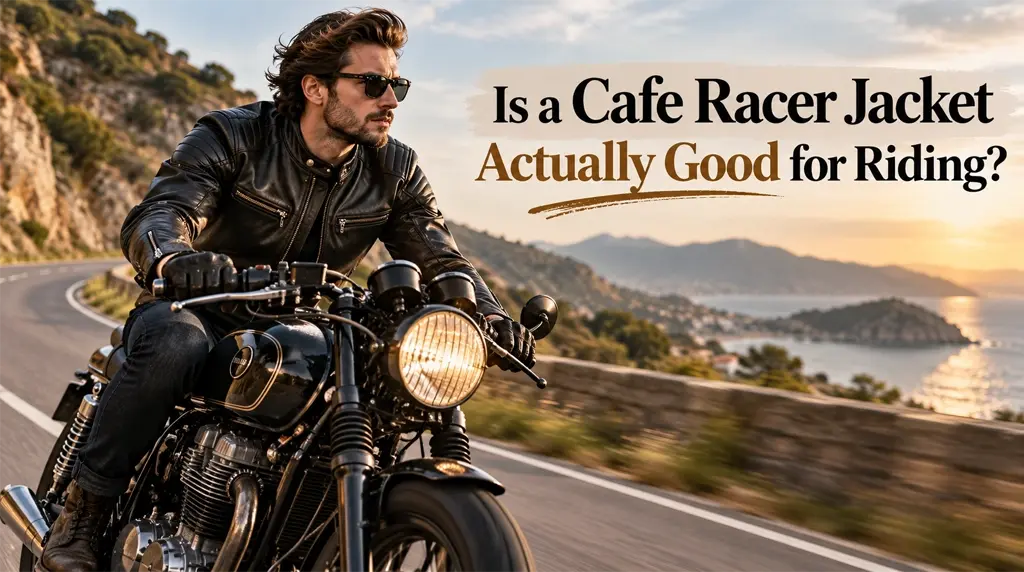
It can be, but the name alone doesn’t make a jacket protective.
This is an important distinction for buyers. A fashion jacket may copy the collar, zipper, and silhouette of a cafe racer riding jacket while offering little meaningful protection in a crash. A purpose-built motorcycle jacket should be judged by its construction and certification, not by what it’s called.
Leather can offer useful abrasion resistance, but how well it performs depends on the hide, thickness, construction, stitching, and the garment’s overall design. Modern protective riding jackets may also include impact protectors in key areas. Armor is only one part of the equation, though, and it shouldn’t distract you from the quality of the outer shell and how well the jacket stays positioned on your body while you ride.
A close, streamlined cut matters here too, and not just for looks. Less excess fabric means less flapping at speed, and a secure front closure helps a leather cafe motorcycle jacket stay put in strong airflow instead of billowing around you. If you ride regularly, look for a jacket that’s specifically tested and labeled for motorcycle use. Use our guide to choosing cafe racer jackets for men to check fit and protection.
Ventilation: The Detail You Appreciate After Ten Minutes
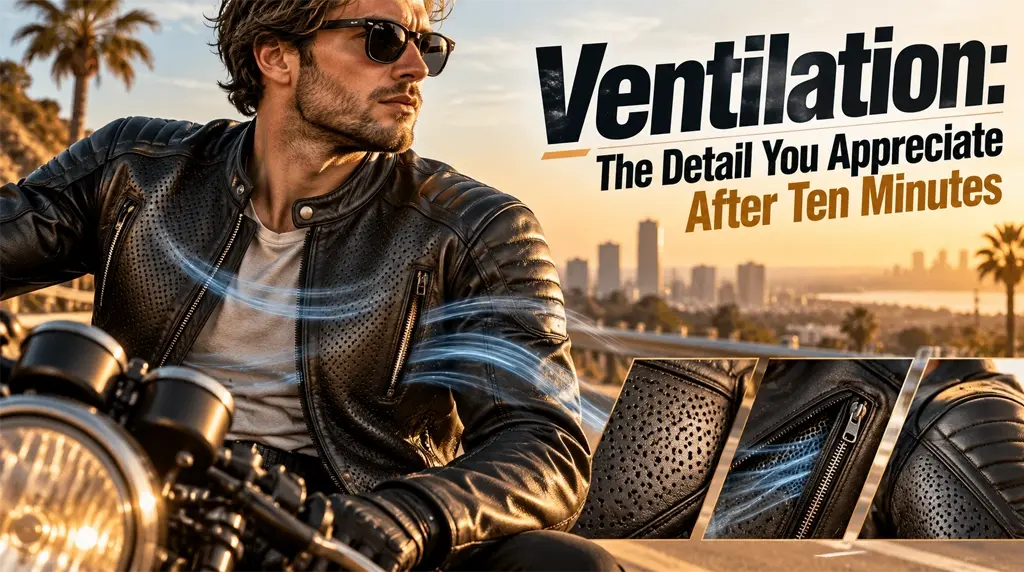
Leather blocks wind well, but that same quality can turn uncomfortable fast once temperatures climb.
Good motorcycle jacket ventilation manages heat by letting air move through designated areas of the garment. Depending on the design, this might mean zippered vents, perforated leather panels, mesh sections, or exhaust vents that help warm air escape.
This matters most in stop-and-go traffic. At highway speed, airflow naturally helps cool you down. Sitting at a red light in the middle of summer is an entirely different story.
A useful rule of thumb is to think about where and when you actually ride. A heavily insulated jacket might suit colder weather but become miserable once it warms up. A highly perforated jacket, on the other hand, can be excellent in summer but offers less protection from cold air and rain. The best setup usually isn’t the one with the most ventilation; it’s the one that matches your real riding conditions.
Weather Protection Is More Than “Leather Is Waterproof”
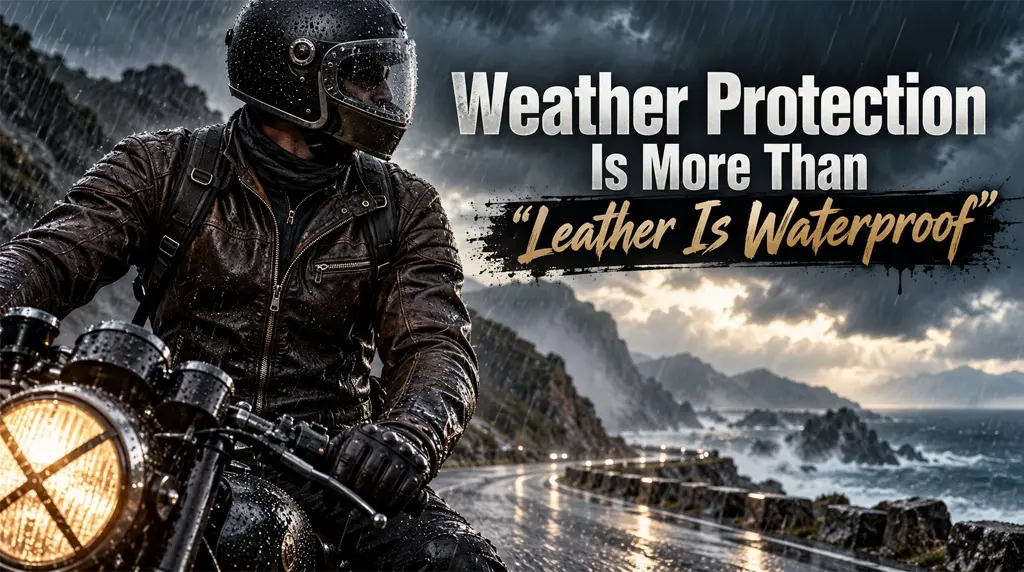
This is another area where marketing language tends to cause confusion.
Leather can resist light moisture, but ordinary leather shouldn’t be treated as waterproof. Prolonged rain can soak the material, change how it feels, and potentially damage the finish if the jacket isn’t properly treated and maintained.
If wet-weather riding is part of your routine, look for features like a water-resistant treatment, a waterproof membrane, a storm flap, sealed construction, or a separate waterproof shell you can wear over the jacket. The same principle applies in cold weather: a jacket may block wind effectively but still needs a thermal layer underneath once temperatures drop. Weather protection is really a system: the outer shell, lining, closures, and ventilation all work together.
What Do Motorcycle Certification Ratings Mean?
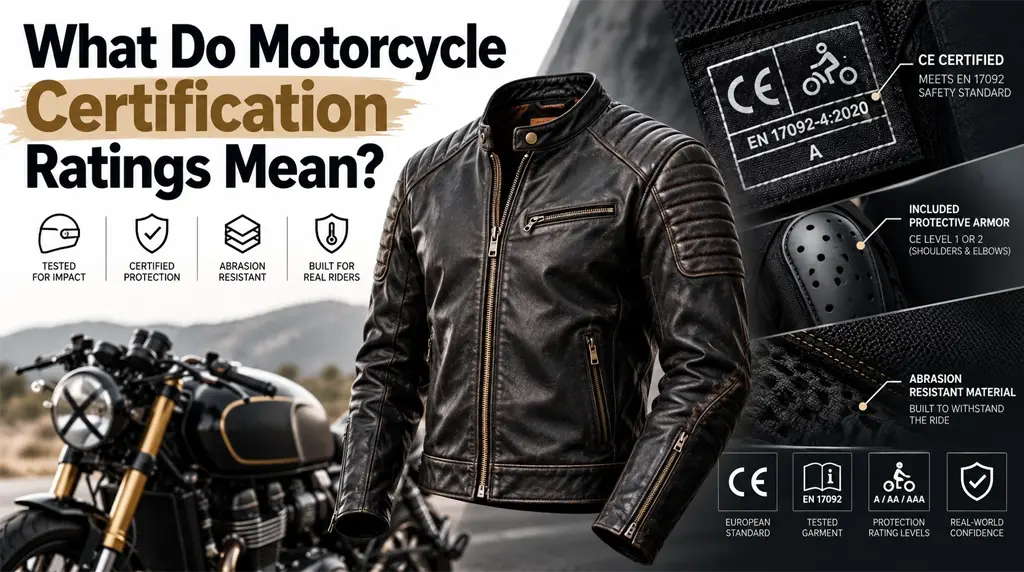
This is one of the most useful things to understand before buying protective riding gear.
In Europe, the EN 17092 family of standards covers motorcycle protective garments, with classes including AAA, AA, A, B, and C. The European Commission’s published harmonized standards identify EN 17092-2 for AAA, EN 17092-3 for AA, EN 17092-4 for A, EN 17092-5 for B, and EN 17092-6 for C garments.
In practical terms, these classifications reflect different levels and combinations of protective performance. AAA sits at the top of the series, while AA and A cover progressively different use cases. Class B addresses abrasion-resistant garments without the same integrated impact-protector setup, while Class C typically applies to garments designed to hold protectors rather than including them outright.
You don’t need to memorize every testing requirement here. Just check the garment label and manufacturer documentation. If a cafe leather motorcycle jacket is marketed as protective motorcycle equipment, you should be able to find clear information about which standard and class it meets. And certification is never a guarantee against injury; it simply reduces certain risks. For armor levels and placement, read armored cafe racer jackets.
Cafe Racer vs. Traditional Biker Jacket for Riding
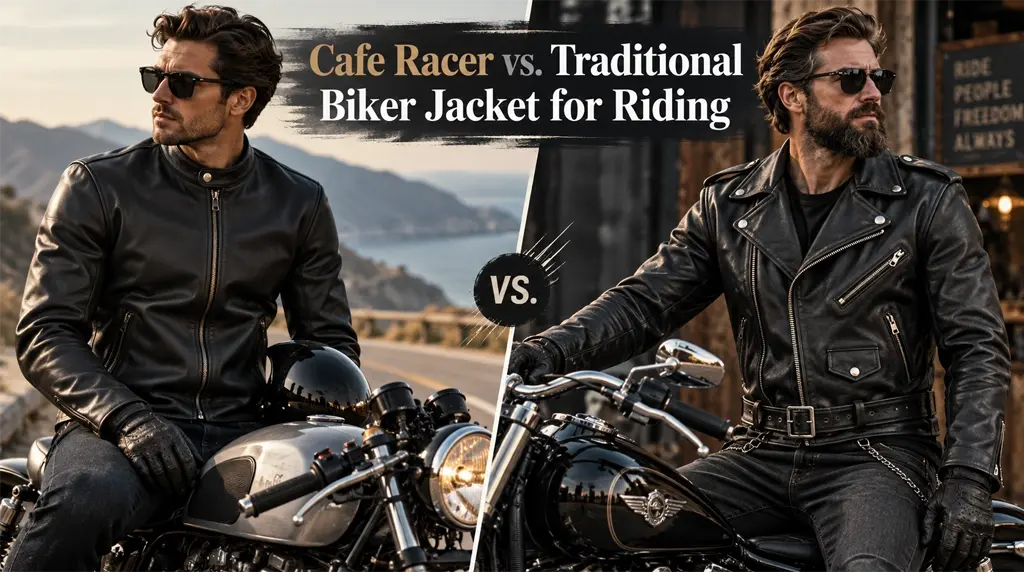
The clearest way to compare the two styles is by design philosophy and what each prioritizes once you’re actually riding.
| Feature | Cafe Racer | Traditional Biker |
| Front zip | Usually straight and central | Often asymmetric |
| Collar | Stand, band, or compact collar | Wide lapel or fold-down collar |
| Hardware | Minimal | More prominent |
| Body | Short and streamlined | Often more substantial |
| Riding focus | Streamlined everyday riding | Heritage biker aesthetic |
Neither is automatically the better choice. A cafe style motorcycle jacket makes sense if you want a close, streamlined cut that reduces drag and moves easily between the bike and everyday wear. A traditional biker jacket may appeal more if you prefer the heavier, more substantial feel some riders favor at speed. See our full cafe racer vs biker jacket comparison.
How to Choose One for Real Riding
Start with the ride, not the mirror.
If most of your riding happens in hot weather, prioritize practical ventilation. If you’ll be riding in colder conditions, think about insulation or how easily you can layer underneath. If rain is common where you ride, look into waterproofing rather than assuming leather alone will handle it.
Then check the fit. Seated in your normal riding position, the shoulders should move naturally, the sleeves should stay long enough to cover your wrists, and the jacket shouldn’t ride up excessively. Closures should feel secure without digging into your neck or waist.
Finally, look at certification and construction. A good jacket should prioritize riding performance over fashion, even if it also happens to look great at the coffee shop afterward.
Final Thoughts
What separates genuine riding gear from a jacket that merely looks the part comes down to what you can’t see from across the room: ventilation built for real conditions, weather protection that holds up past the first light shower, a fit tested in the riding position, and certification you can actually verify.
For riders who want something that feels purposeful without looking overly technical, this style remains a particularly strong middle ground, one that carries genuine motorcycle heritage while fitting naturally into everyday wardrobes. And that’s where Stegaro fits into the conversation: the goal isn’t just wearing something that looks like motorcycle gear, but choosing a clean, cafe-inspired design backed by construction that makes sense once the engine starts.
FAQs
Yes, provided it’s designed and certified for motorcycle use. Look beyond the styling and check the garment’s abrasion protection, construction, fit, ventilation, and certification. A fashion jacket with the same silhouette shouldn’t be assumed to offer equivalent protection.
They can be, especially with good ventilation or perforated panels. Leather is naturally heat-retaining, so in warmer climates it’s worth choosing a jacket that’s well ventilated for the conditions. A highly ventilated design may also offer different weather protection than a solid leather jacket.
For European-certified motorcycle protective clothing, EN 17092 is the key standard to know, covering garment classes including AAA, AA, A, B, and C. Check the jacket’s actual label and manufacturer documentation rather than relying on phrases like “motorcycle grade” or “protective.”
Not necessarily. Leather can handle some moisture, but it shouldn’t automatically be considered waterproof. If you regularly ride in heavy rain, look for a jacket with a waterproof membrane or treatment and weather-resistant closures, or wear an appropriate waterproof outer layer.
The names can describe a similar silhouette, but the word “riding” shouldn’t be treated as proof of protection. A true riding jacket should be evaluated for motorcycle-specific construction, abrasion performance, fit, ventilation, and relevant certification rather than its style name alone.