
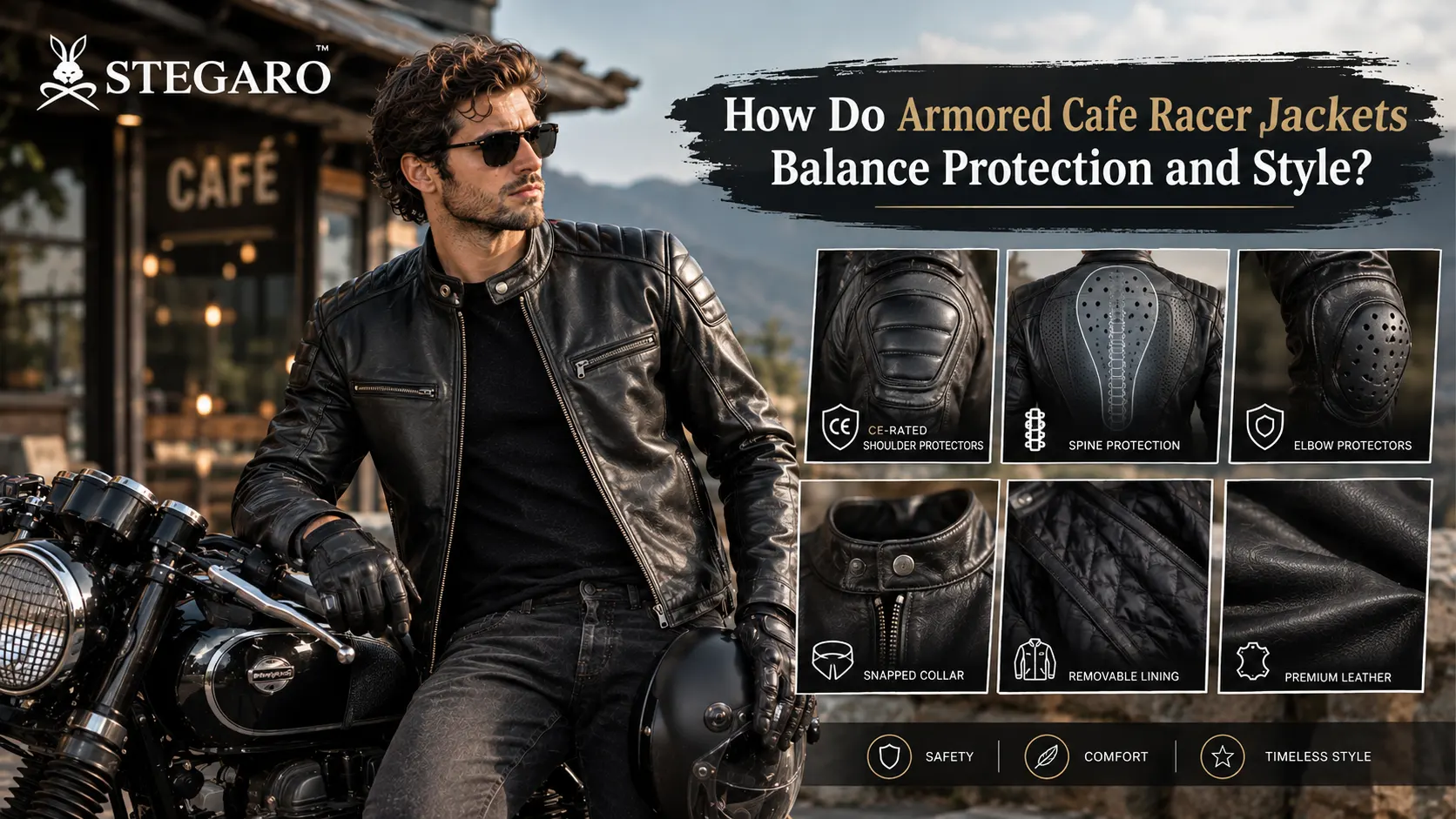
There is a distinct feeling when you pull up to a coffee shop on a vintage build, kill the engine, and step off the bike. The café racer look is clean, with the snapped collar and that effortlessly fitted silhouette, which is a statement. It is timeless. But let’s cut through the romance: asphalt doesn’t care about aesthetics.
If you’re wearing a standard high-street jacket when a ride goes sideways, that thin leather will shred in seconds. That is why a genuine cafe racer jacket with armor isn’t a luxury; it’s non-negotiable. It bridges the gap between looking sharp and surviving a slide, packing low-profile protective inserts under a silhouette that looks like it belongs in a film, not a racetrack.
The challenge is finding the right balance between safety, comfort, and style. Let’s break down what actually matters, from CE ratings and protector placement to slim-profile designs and removable inserts.
What Makes an Armored Cafe Racer Jacket Different?
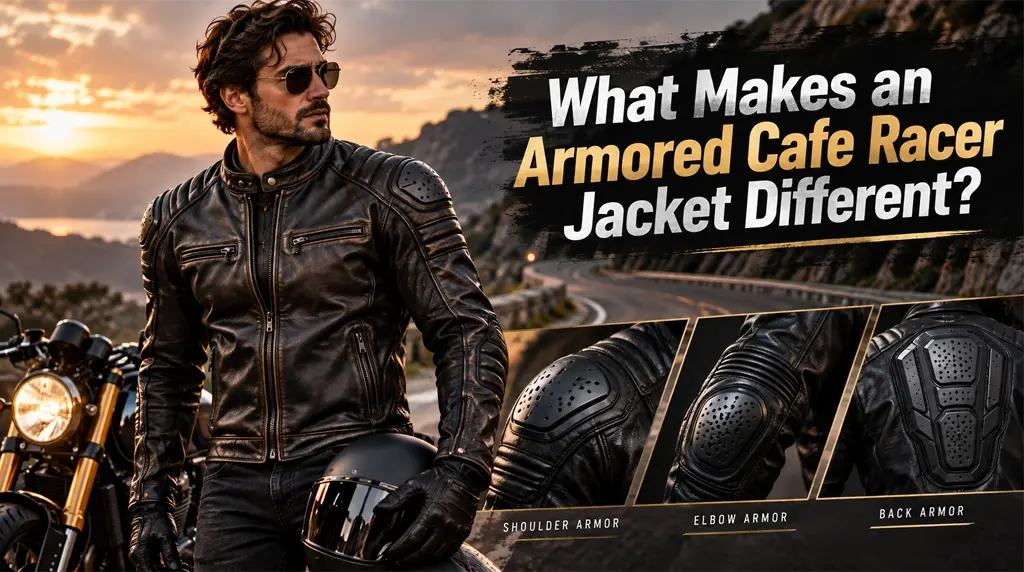
At first, a motorbike-specific cafe racer jacket could look almost comparable to a standard leather jacket. But look a bit closer, and the differences become clear. A riding jacket might have reinforced seams, abrasion-resistant panels, robust fastenings, and purpose-built pockets for holding protective inserts in place.
It’s a multi-layered defense system where the separate characteristics serve wholly distinct purposes:
- The Outer Layer: Quality leather is the first line of defense between you and the road and is built to withstand the savage friction and abrasion of a slide.
- The Internal Armor: Impact protectors absorb the harsh blunt-force shock of a fall.
Because neither feature can replace the other, a premium cafe racer leather jacket with armor relies on teamwork. It typically features impact-absorbing inserts at the high-risk shoulders and elbows, paired with a dedicated pocket built for a separate, heavy-duty back protector.
Some manufacturers offer these protectors right out of the box, while others allow you the choice to buy them separately to customize your fit, depending on the brand.
But don’t simply take the brand’s word for it. Always examine the official motorbike safety certifications before you spend your hard-earned money. Look for the EN 17092 label certifying the resistance of the whole motorcycle protective clothing and the marks of the EN 1621 series stamped on single impact protectors.
Just because a jacket looks nice or has one CE-marked insert doesn’t guarantee the whole garment is approved to protect you when it matters. For garment classes and ventilation, read our cafe motorcycle jackets guide.
CE Level 1 vs. Level 2 Armor: What’s the Difference?
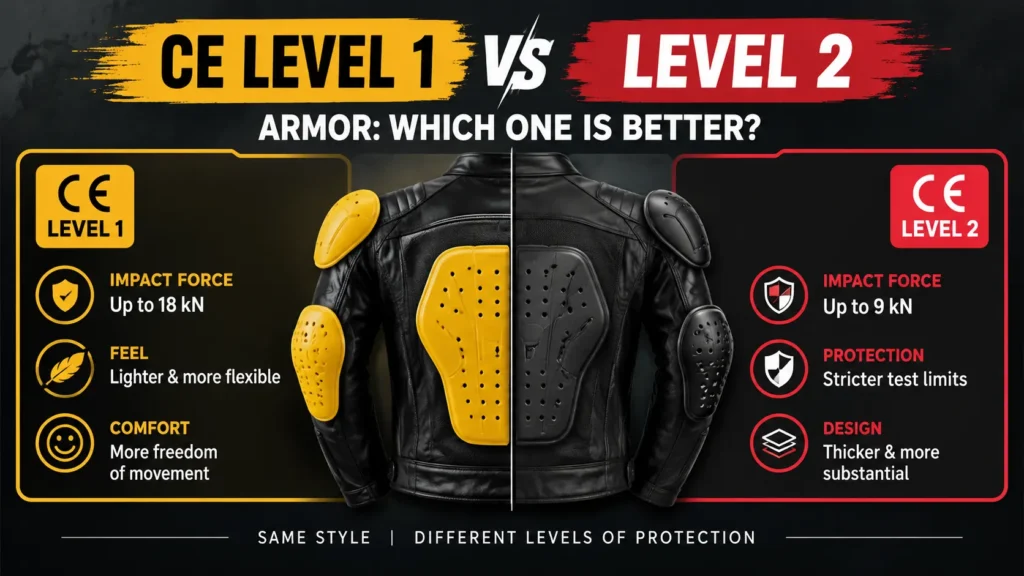
CE-rated armor is tested to determine how much impact force passes through a protector under specified test conditions. For most shoulder and elbow inserts, look for EN 1621-1; back protectors are assessed under EN 1621-2. The limits differ between the two standards, so a Level 2 shoulder protector and a Level 2 back protector are not tested to the same number.
The two main impact performance levels offer different balances of protection and bulk.
| Feature | CE Level 1 | CE Level 2 |
| Shoulder, elbow, knee, and hip protectors (EN 1621-1): Average transmitted force | Under 35 kN | Under 20 kN |
| Back protectors (EN 1621-2): Average transmitted force | Under 18 kN | Under 9 kN |
| Typical design | Often lighter and more flexible | May be thicker or more substantial |
| Main consideration | Comfort and freedom of movement | Greater impact attenuation |
These are test limits, not predictions of the force or injury a rider will experience in a real crash. Level 2 must meet stricter transmitted-force limits, but the final result also depends on the impact, the body area, the protector’s coverage, and how well it fits.
When Does Level 1 Make Sense?
Level 1 can suit riders who value flexibility, a lower-profile feel, and comfort during everyday use. It might also help to keep that café racer style shape and fit.
But don’t choose it just because it seems thinner. Check the certification, coverage, and fit before you decide if it meets your riding needs.
Is Level 2 Worth the Extra Bulk?
If you want to get the most shock absorption, you should take a look at Level 2. Frequent riding can be a distinctive attraction, but the best decision relies on the riding environment and the total protective equipment.
A good cafe racer jacket with armor can have Level 2 inserts and not be overly bulky. The key is to choose compatible protectors that fit the jacket’s pockets and stay correctly positioned when you lean forward. For a more track-oriented look, see racing leather jackets for men.
Where Should Armor Sit Inside a Cafe Racer Jacket?
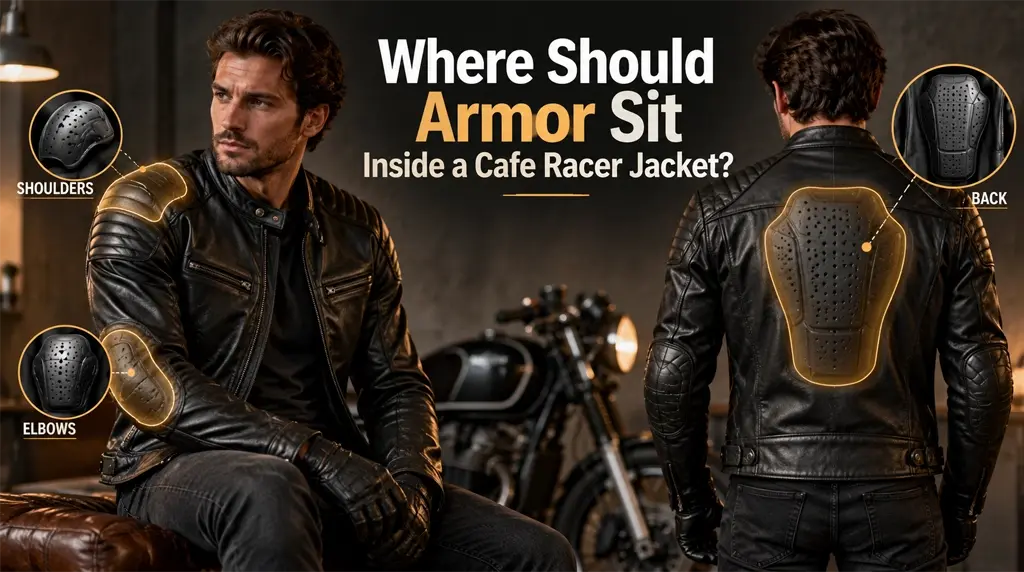
The location of each protector matters because it needs to cover the intended body area when you ride, not merely when you stand in front of a mirror.
- Shoulder Protectors
Shoulder armor should cover the shoulder’s main impact area and remain in place as you reach forward. It usually sits inside a shaped pocket near the shoulder seam.
Check that the insert does not slide toward your chest or back when you move your arms. The jacket should also allow natural shoulder movement without forcing the protector out of position.
- Elbow Protectors
Elbows are another important area to cover. The armor should align with the elbow joint and stay there when your arms bend around the handlebars.
Sit in your normal riding position and bend your arms. If the insert moves down toward your forearm or sits too high above your elbow, the fit may be unsuitable.
- Back Protector Pocket
The back protector pocket deserves special attention. Some cafe racer jacket with armor include a certified back protector, while others contain only a basic foam pad or leave the pocket empty.
Look for a protector certified to EN 1621-2, and check whether it offers central-back or full-back coverage. Also check that its size and shape correspond to the jacket. A protector that is too short, too wide, or improperly attached may not provide enough coverage in the desired areas.
A handy shopping tip: Look for the certification mark from the protector and the manufacturer’s advice on compatibility. A pocket does not guarantee the inclusion of an approved protection.
How Can You Keep the Slim Style of a Café Racer Jacket with Armor?
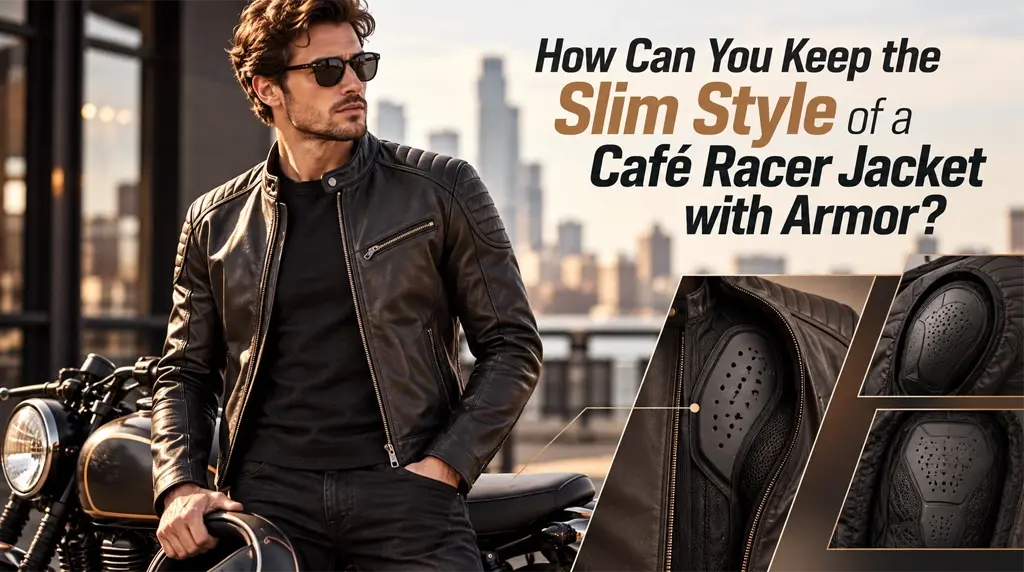
Café racer jackets are known for their minimalist design. Large external pads, oversized panels, and excessive padding can disrupt that look. Fortunately, protective gear doesn’t have to be bulky.
The design construction of a cafe racer leather jacket with armor can help it keep its streamlined shape through three design choices:
- Low-profile protectors: Flexible inserts molded to the anatomy can be worn closer to the body and don’t leave noticeable bumps.
- Purpose-built armor pockets: Correctly shaped pockets help hold the inserts in position while reducing unnecessary movement.
- A riding-specific cut: Sleeves, shoulders, and the torso should accommodate armor without pulling or bunching when you lean forward.
Some riders make the mistake of buying a jacket that looks perfect while standing but becomes restrictive on the bike. Others choose a loose fit to make room for padding. Both approaches can create problems if the armor shifts away from the intended impact area.
Instead, try the jacket with all the protectors installed. Reach forward, bend your elbows, rotate your torso, and check whether the inserts remain in place. A clean silhouette is worth keeping, but not at the expense of a secure fit.
Removable vs. Fixed Armor: Which Is Better?
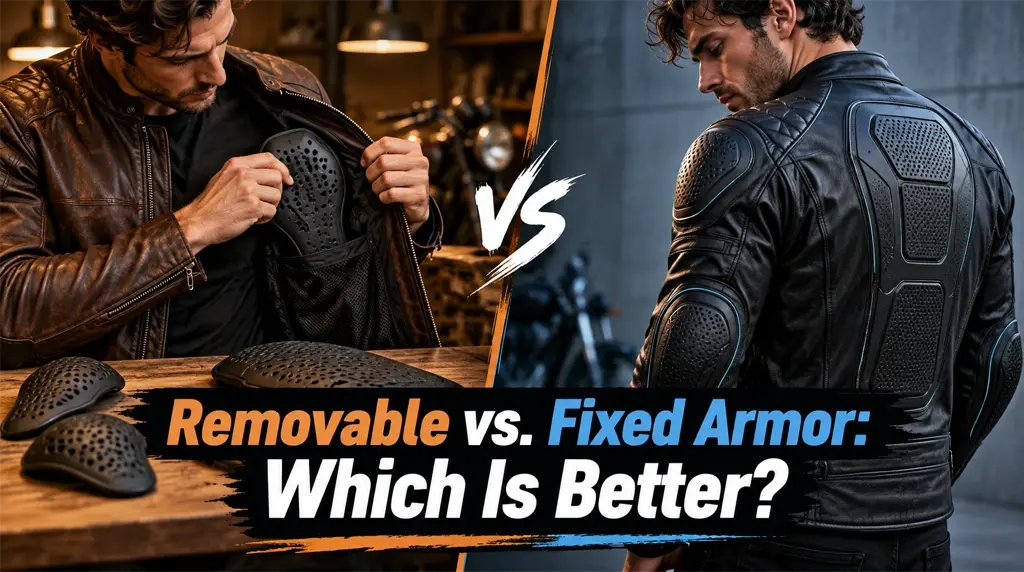
Both of the designs have practical advantages. Your decision will depend on how often you ride, how you care for your cafe racer jacket with armor, and whether you plan to replace the protective inserts.
| Feature | Removable Armor | Fixed Armor |
| Cleaning | Easier to remove inserts before cleaning | Requires more care around integrated components |
| Upgrading | May allow compatible Level 2 replacements | Usually offers less flexibility |
| Fit adjustment | Inserts can sometimes be repositioned or replaced | Position is determined by the jacket’s construction |
| Convenience | Requires checking and reinstalling inserts | Less handling during everyday use |
Often the most flexible choice is removable armor. If the jacket supports upgrades, you are able to remove the appropriate inserts for maintenance or swap them with higher-rated protectors.
Fixed armor can be convenient, since the defensive elements are incorporated into the clothing. But you should verify that the protection is certified, how it fits, and what the manufacturer suggests for cleaning and maintenance.
Neither design is automatically safer. What matters is the protector’s performance, coverage, condition, and ability to remain in place during riding.
What to Check Before Buying an Armored Cafe Racer Jacket
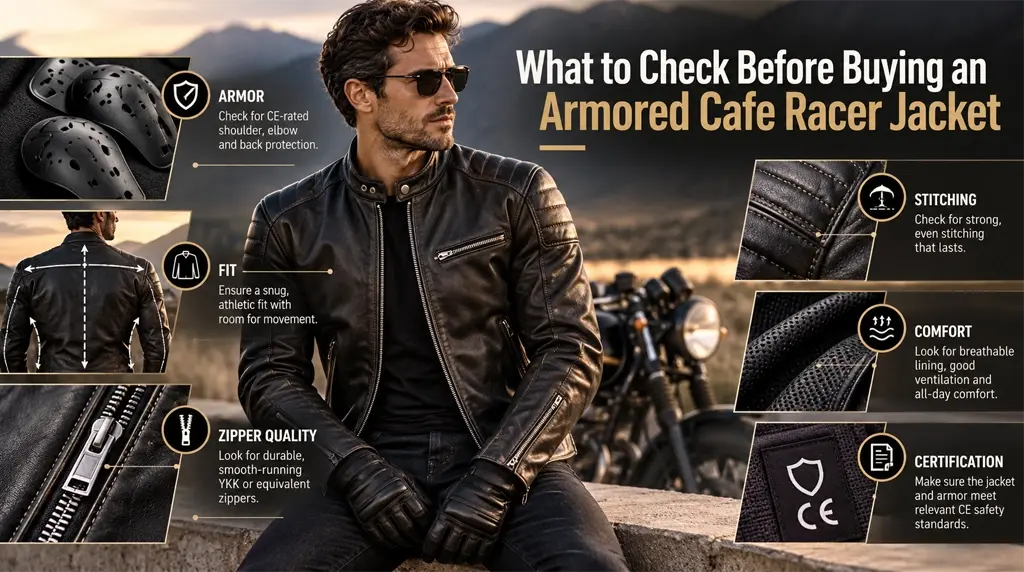
Before choosing a padded armored cafe racer leather motorcycle jacket, look beyond the product photos. A few practical checks can help you avoid paying for a fashionable jacket that doesn’t meet your riding needs.
- Check the certifications. Look for the applicable EN 1621 standard and protection level on each insert. Check the garment’s EN 17092 class separately, where applicable.
- Confirm what is included. Shoulder and elbow armor may be supplied, while the back protector might be an extra option.
- Test the fit on the bike. You should be able to extend your arms comfortably, and the armor should remain in the correct locations.
- Check the construction. Check stitching, closures, quality of leather, and reinforcement. Armor cannot make up for a badly constructed garment.
- Consider ventilation. Leather can get hot on summer rides; look for good vents or perforated panels.
- Inspect compatibility. If you are going to upgrade your armor, check the exact measurements of the protector and the model compatibility before buying.
Remember that impact shields are not meant to prevent all injuries. They’re part of a wider system of protection, including the jacket shell, adequate riding trousers, gloves, boots, and a correctly fitted helmet. Our guide to choosing cafe racer jackets for men covers fit and construction.
Final Thoughts
The best cafe racer jacket with armor does more than look good in a photograph. It combines a streamlined design with properly fitted impact protectors, sound construction, and comfort that holds up on real rides. Choose your armor based on the certification, coverage, and compatibility, not only the thickness, to protect yourself.
A little attention to these details can help you choose a jacket that fits your riding habits and your unique style. Stegaro is one option to consider when comparing armored cafe racer styles, but the same checks apply to any brand.
FAQs
Armor is strongly recommended for motorcycle riding because it helps reduce impact forces at vulnerable body areas. Choose a motorcycle-specific jacket with well-fitting protection and appropriate garment construction, not just leather.
Level 2 has more restrictive impact attenuation limitations, meaning less force is transmitted through the protector during standardized tests. Level 1 might be lighter and more flexible; thus, when choosing, compare protection coverage, fit, and comfort.
Yes, if the jacket allows appropriate replacement inserts. Before upgrading to level 2, check the manufacturer’s acceptable protection models, pocket dimensions, and certification requirements.
No. Armor lessens the forces of impact, but it does not eliminate the risk of harm. The overall protection depends on the abrasion resistance of the jacket, its seams, fit, coverage, and the conditions of a crash.
Yes. With low-profile inserts and smart interior pockets, you can keep the classic fitting silhouette. The jacket still needs to fit correctly over the armor and allow for natural riding motions.