
A racer jacket can look deceptively simple. Usually, there is a clean front, a short collar, a few practical pockets, and very little decoration. But that simplicity puts the spotlight on one thing: the leather.
Change the hide, and you can almost change the personality of the entire jacket.
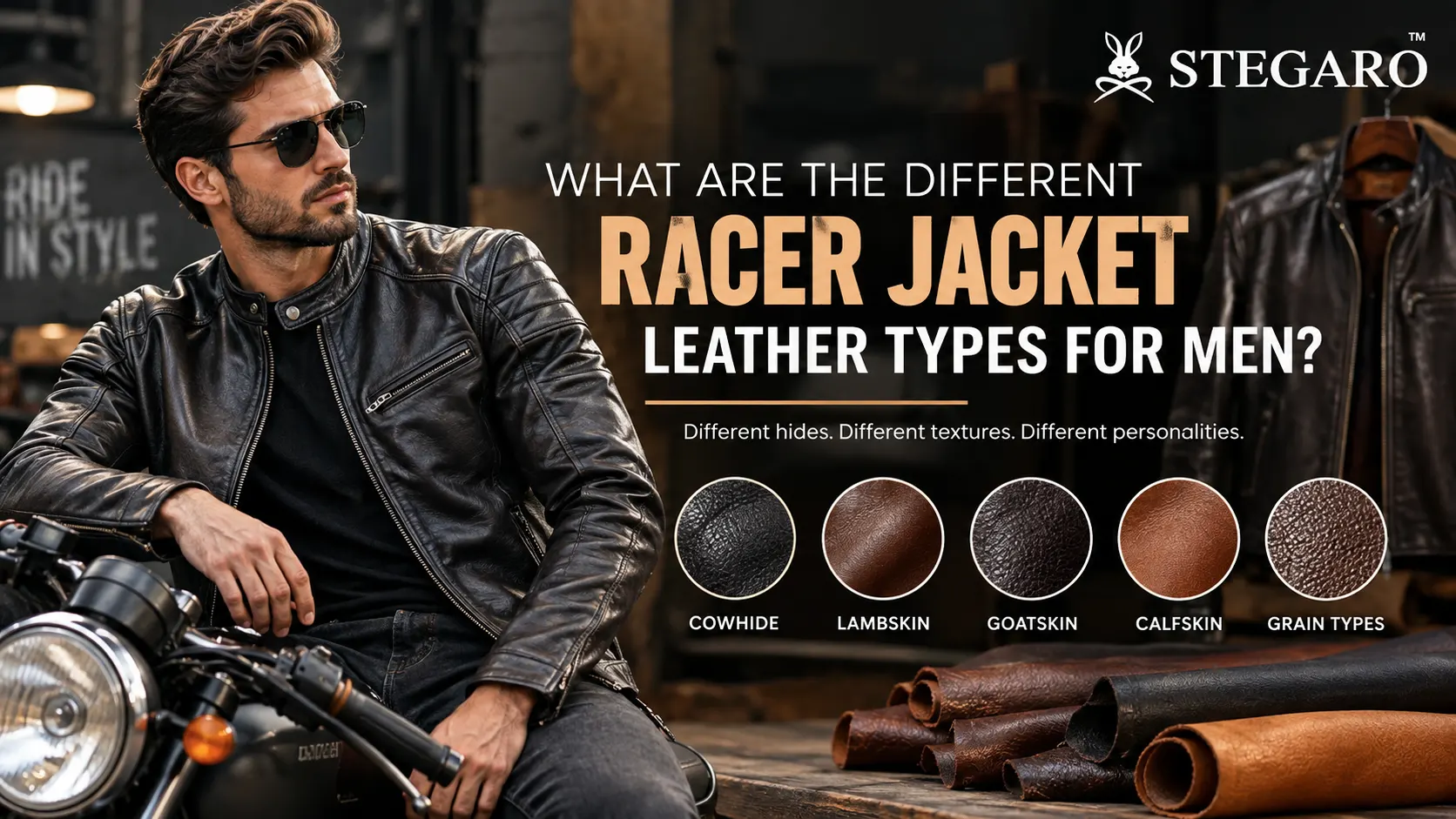
A cowhide racer feels substantial and rugged. Lambskin feels soft almost immediately. Goatskin offers an interesting balance of lightness and toughness, while calfskin brings a smoother, more refined character. Then there is the question of grain: full grain, top grain, corrected grain, and split leather can all behave differently.
That is why understanding racer jacket leather types is more useful than simply choosing the jacket with the biggest “premium leather” label.
Why Do Racer Jacket Leather Types Matter?
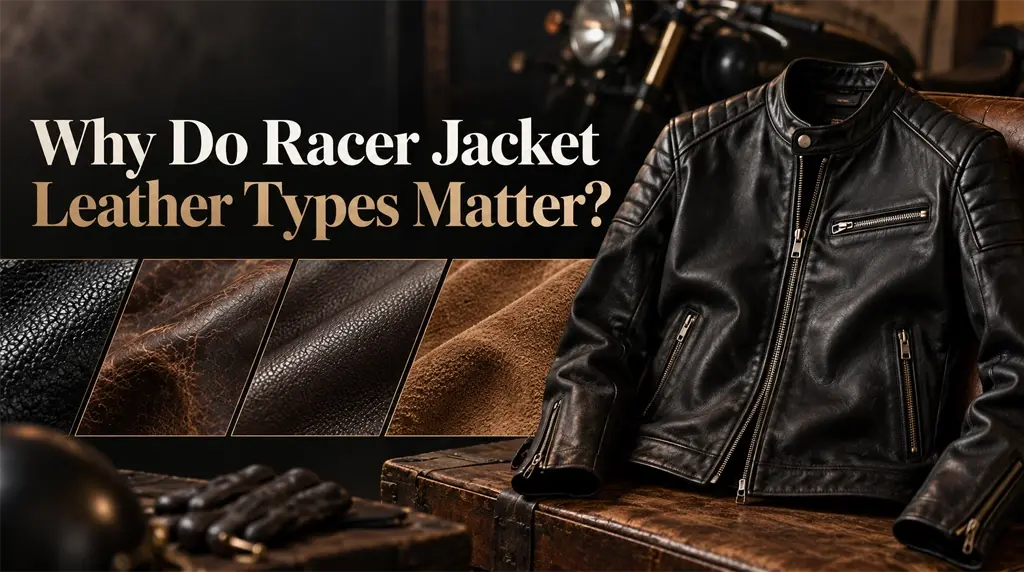
The leather determines far more than appearance.
It affects how a jacket feels on your shoulders, how quickly it breaks in, how it responds to moisture and abrasion, how much structure it has, and how its surface changes with age.
For example, lambskin can give a leather racer jacket a soft, almost shirt-like drape. Heavy cowhide does the opposite. When new, it can feel stiff enough to make you wonder whether the jacket needs breaking in or whether you need to break it in.
Neither is automatically better.
The right choice depends on how you intend to wear the jacket. A fashion-focused buyer may value softness and flexibility, while a rider may put considerably more emphasis on abrasion resistance, construction, armor, and certification.
The Main Racer Jacket Leather Types
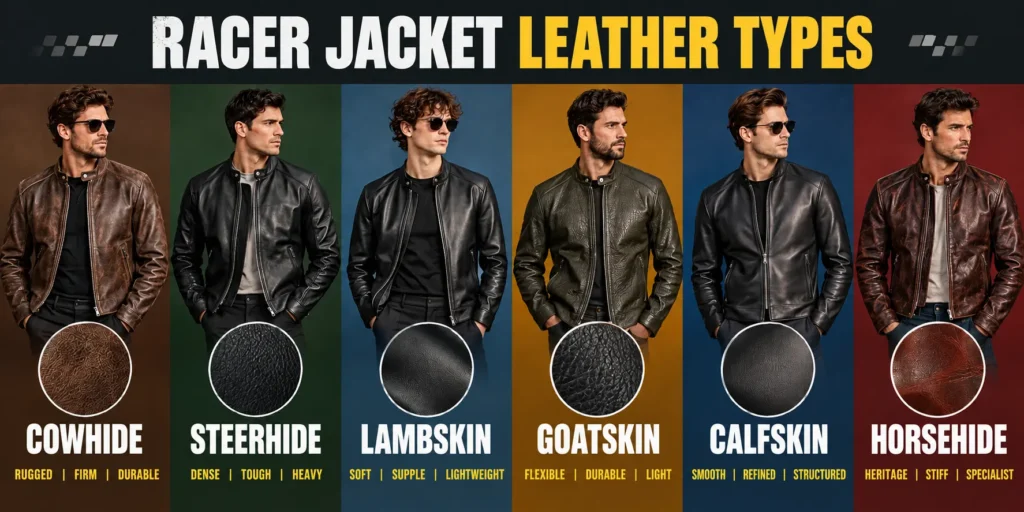
There is no single “racer leather.” Several hides are used for the style, and each brings different characteristics.
| Leather Hide | Feel | Durability | Weight | Break-In | Best For |
| Cowhide | Firm and structured | High | Medium to heavy | Longer | Rugged everyday wear and riding |
| Steerhide | Dense and substantial | Very high | Heavy | Longer | Heavy-duty jackets |
| Lambskin | Soft and supple | Moderate | Lightweight | Short | Fashion and casual wear |
| Goatskin | Flexible with natural grain | High for its weight | Light to medium | Moderate | Everyday wear and vintage styles |
| Calfskin | Smooth and refined | High | Light to medium | Moderate | Premium fashion and refined racers |
| Horsehide | Dense and initially stiff | Very high | Medium to heavy | Long | Heritage and rugged jackets |
These descriptions are broad rather than absolute. Tanning, thickness, finishing, and hide selection can change how any particular jacket behaves.
1. Cowhide
Cowhide is one of the most recognizable choices for serious leather outerwear. Its dense structure gives it a firm hand and substantial feel, particularly when a heavier weight is used.
That toughness makes it a natural fit for biker and motorcycle jackets, but it does not mean every cowhide jacket is motorcycle protective gear. A fashion jacket made from cowhide should never be assumed to have the abrasion or impact protection of certified motorcycle equipment.
For someone shopping for a mens leather racer jacket that should feel rugged and structured, cowhide is an excellent starting point.
It also changes considerably with wear. The leather can soften as it is used, and natural creasing and surface variation can gradually make the jacket look more personal.
2. Steer skin
Another kind of bovine leather is steerhide, but it’s usually associated with especially dense and tough hides.
It tends to have a heavier, more substantial character than the softer fashion leathers used in many modern jackets. That makes it attractive to people who enjoy heritage-style outerwear and do not mind a longer break-in period.
If you want a jacket that feels substantial in the hand rather than lightweight and drapey, steerhide deserves attention.
3. Lambskin
Lambskin is almost the opposite experience.
It is soft, supple, and comfortable from the beginning. Instead of fighting against your movements during the first few wears, it generally drapes naturally around the body.
That makes lambskin popular for fashion-oriented leather racer jackets, especially when the goal is a clean silhouette without excessive weight.
The trade-off is toughness. Lambskin is more vulnerable to scuffs and abrasion than heavier hides, so it should not be chosen solely for its luxurious feel.
For a dinner, commute, weekend outing, or smart-casual wardrobe, however, its softness can be hard to beat.
4. Goatskin
Goatskin is one of the more interesting options because it offers a useful combination of flexibility and durability.
Its grain often has a naturally pebbled appearance, giving the jacket visual texture without requiring an artificially distressed finish. It can also feel lighter than a similarly rugged cowhide.
That makes goatskin a good choice for people who want durability without carrying around an especially heavy jacket.
It has another advantage: goatskin is known for its natural flexibility. For an everyday racer, the natural flexibility of goatskin can be a significant benefit, as it allows the jacket to move with you instead of feeling rigid.
5. Calfskin
Calfskin is often chosen when a smoother and more refined appearance is desired.
Compared with heavy cowhide, it can feel more supple and polished. In contrast to lambskin, it can offer slightly more structure.
That middle ground makes it particularly interesting for a fashion-focused mens leather racer jacket.
If you want the racer silhouette but do not necessarily want it to look rugged or overtly motorcycle-inspired, calfskin can be a smart choice.
6. Horsehide
Horsehide has a long history in heritage leather clothing, and enthusiasts who enjoy a strong break-in process particularly appreciate it.
New horsehide can be stiff and dense. That is part of its appeal for some buyers, although it can test your patience during the early stages.
With regular wear, the leather can develop pronounced creasing and patina. In other words, it tends to reward people who enjoy watching a jacket change rather than keeping it looking factory-new.
It is also less common and can cost more, so it is usually a specialist choice rather than the default option. For aged leather, read vintage and retro cafe racer jackets.
Full Grain vs Top Grain Leather Jacket: What’s the Difference?

The difference between full grain vs top grain leather jackets is mainly about how much of the original grain surface is left and how the leather has been treated.
According to the Leather Working Group, full-grain leather retains the entire grain, with no surface removed through corrective mechanical treatment. Corrected grain, by comparison, has had part of its grain mechanically removed and then enhanced through finishing.
Top grain is commonly used commercially for leather that comes from the upper portion of the hide but may have received some surface correction or finishing. The terminology can vary, so a detailed product specification is more useful than assuming every seller uses the terms identically.
| Leather Grade / Description | Surface Treatment | Typical Appearance | Main Characteristic |
| Full grain | Natural grain retained | Natural variations visible | Strong natural character |
| Top grain | May receive light correction/finishing | More uniform | Refined appearance |
| Corrected grain | Surface mechanically corrected | Highly consistent or embossed | Uniform finish |
| Split leather | Lower layer of hide | Often suede-like or coated | Different structure from grain leather |
| Faux / PU | Synthetic coating over a textile base | Can imitate smooth leather | No genuine hide structure |
One important point: “genuine leather” should not be treated as a synonym for full grain. It is not a reliable shortcut for determining premium quality. Read the actual material description instead.
Why Full Grain Is Often Valued
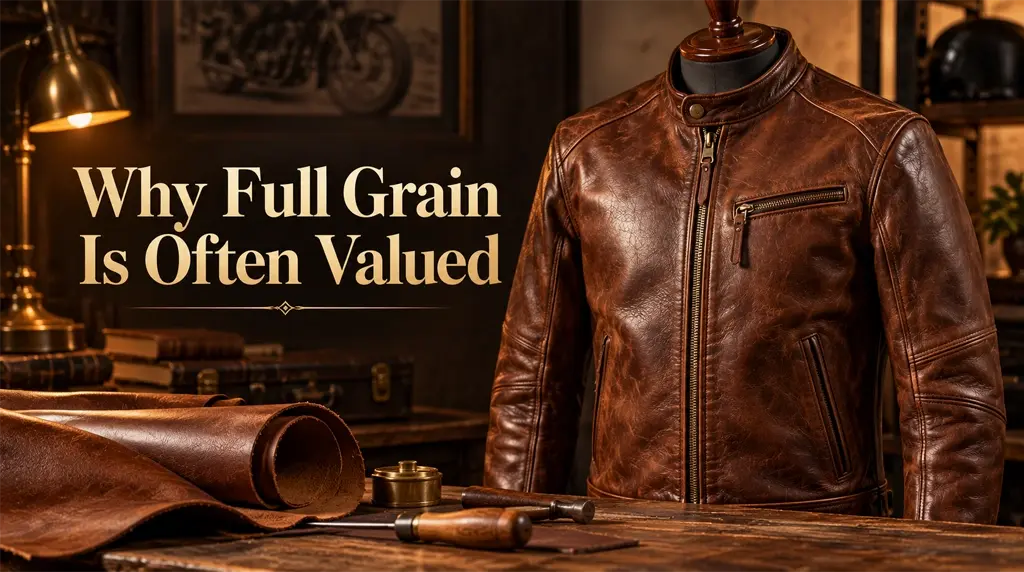
Full grain gets so much attention because the natural grain surface remains intact.
That surface contains the characteristics created during the animal’s life, so small differences between panels are normal. Rather than being a problem, those variations can contribute to the individuality of a jacket.
Full grain can also develop a distinctive patina as it is worn and cared for.
However, “full grain” should not become a magic phrase that ends your research. The hide still needs to be properly tanned, the jacket needs to be well constructed, and the finish has to suit the intended use.
A badly made full-grain jacket is still badly made.
Does Leather Thickness Tell You the Quality?

Not by itself.
A thicker hide generally feels heavier and more structured, but thickness does not automatically mean better leather. A thinner, well-made hide may be far more comfortable for everyday wear.
This is especially important with racer jackets because the style is often worn as a relatively close-fitting layer.
Consider these scenarios:
- Daily fashion: You may prefer lighter lambskin, calfskin, or goatskin.
- Rugged use: Cowhide, steerhide, or horsehide may be more appealing.
- Motorcycle use: Leather type is only one part of the equation. Certification, abrasion performance, seam construction, and armor become essential.
For motorcycle clothing, EN 17092 establishes performance requirements for protective garments, with classes such as A, AA, and AAA. These classifications address mechanical performance, including abrasion, tear, and seam strength.
So a thick fashion jacket should never be assumed to provide motorcycle protection simply because it feels heavy. For certification classes, see our cafe motorcycle jackets guide.
How to Choose the Right Hide for Your Lifestyle

Rather than asking, “Which leather is the best?” ask a more useful question:
Which leather makes sense for the way I actually live?
| If You Prioritize… | Consider… | Why |
| Softness | Lambskin | Very supple and comfortable |
| Ruggedness | Cowhide | Firm and durable |
| Lightweight durability | Goatskin | Strong feel without excessive weight |
| Refined appearance | Calfskin | Smooth and polished |
| Heritage character | Horsehide | Dense with dramatic break-in |
| Heavy-duty feel | Steerhide | Substantial and highly durable |
This approach prevents one of the most common leather-buying mistakes: paying for characteristics you will never use.
If your jacket spends 90% of its time over a T-shirt while you walk around town, you probably do not need the heaviest hide available.
On the other hand, if your wardrobe revolves around rugged outerwear or you need actual motorcycle protection, the priorities change.
What Makes a Leather Jacket Worth Keeping?

Leather quality is only half the story.
The construction should also be examined. Check the stitching on the armholes, collar, pockets, cuffs, and main seams. Check for a smooth-running zipper. Inspect how the lining is attached and whether the pocket openings feel securely constructed.
The leather itself should also be considered in context. Natural variation is normal, and an entirely uniform surface is not automatically evidence of superior quality.
A useful rule is simple: do not let the leather grade distract you from the whole garment.
The best leather racer jackets combine suitable leather with sensible pattern cutting, strong stitching, dependable hardware, and a lining that complements the garment. Our guide to choosing cafe racer jackets for men covers fit and construction.
Leather Racer Jackets for Men: Which One Is Right for You?
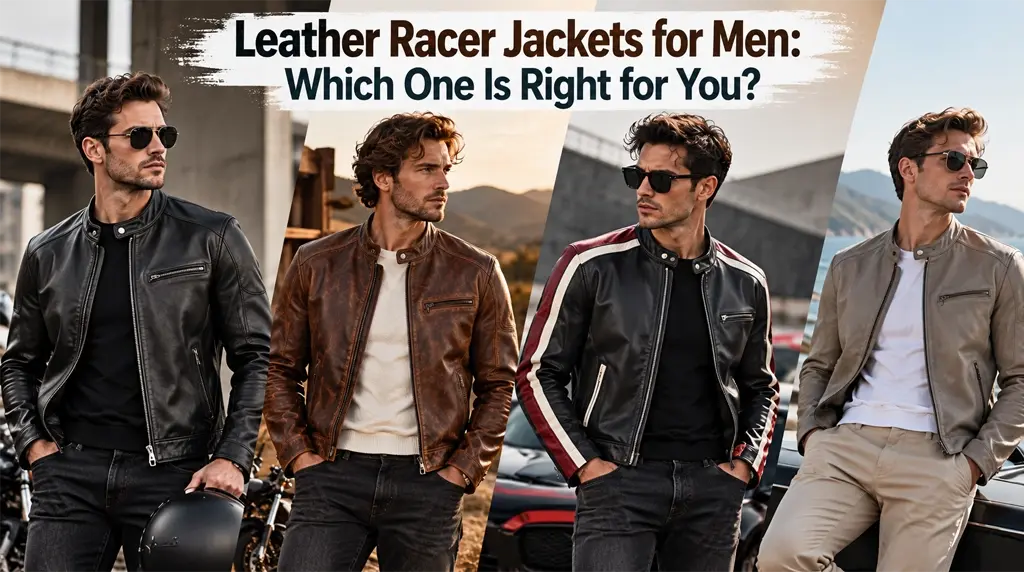
For buyers comparing leather racer jackets for men, the decision can be narrowed down surprisingly quickly.
- Choose lambskin when comfort and softness are your priorities.
- Pick cowhide when you want a firmer, more rugged jacket that should develop character over time.
- Select goatskin when you want a lighter hide with a distinctive grain and good durability for its weight.
- Grab calfskin when you want a polished, refined racer.
- Opt for horsehide when the break-in journey is part of the attraction.
- And choose steerhide when you genuinely appreciate a heavy, substantial jacket.
There is no trophy for choosing the toughest racer jacket leather types. The best purchase is the one that fits your habits.
Final Thoughts
Understanding racer jacket leather types changes the way you shop.
Instead of asking whether a jacket is simply “real leather,” you can ask better questions. What hide is it? What part of the hide was used? How much of the natural grain remains? How has the surface been finished? Is the weight appropriate for the way you will wear it?
Those questions lead to much better buying decisions.
A soft lambskin racer and a heavyweight cowhide racer can share almost exactly the same silhouette, yet they can feel like completely different garments. That is the fascinating part of leather. The material is not just the outer shell; it determines much of the jacket’s personality.
For shoppers exploring leather racer jackets for men, Stegaro is one option to consider while comparing leather type, construction, finish, and intended use.
Ultimately, don’t buy leather because a product page calls it “premium.” Learn what is underneath the finish. Once you understand the hide, the grain, and the construction, that glossy product photograph has a lot less power over you, and your wallet will probably appreciate it.
FAQs
Common men’s leather jacket styles include racer or café racer, biker or double rider, bomber, aviator, trucker, field, motorcycle, varsity, and leather blazer styles. The style describes the jacket’s design and construction, while the leather hide, such as cowhide, lambskin, goatskin, or horsehide, describes the material.
There is no single universal four-type classification for all leather. For jacket shopping, leather is often discussed using terms such as full grain, top grain, corrected grain, and split leather. Faux or PU leather is different because it is synthetic rather than genuine animal hide. The Leather Working Group distinguishes full grain and corrected grain based on how much of the original grain surface has been retained or mechanically removed.
Neither is universally better. Lambskin is softer, lighter, and more supple, making it excellent for fashion and casual wear. Cowhide is firmer and generally better suited to people who want a rugged, structured jacket. For motorcycle protection, however, neither hide should be judged by material alone; the garment’s certified protective construction matters.
Popular styles include racer jackets, biker jackets, bomber jackets, aviator jackets, trucker jackets, field jackets, motorcycle jackets, varsity jackets, and leather blazers. A racer is a relatively clean and streamlined design, whereas a biker usually has more pronounced hardware, an asymmetric front or a more aggressive silhouette.
Full grain is highly valued because its natural grain surface remains intact, but that does not automatically make every full-grain racer the best choice. Comfort, thickness, tanning, finishing, construction, fit, and intended use all matter. Someone seeking a lightweight fashion jacket may prefer a different leather even if full grain is available.
A lambskin fashion jacket should not automatically be treated as motorcycle protective gear. Motorcycle clothing should be assessed for its certified abrasion, tear, seam, and impact-protection performance. EN 17092 uses protection classes, including A, AA, and AAA, for motorcycle garments.