

Blog
How to Identify Quality Leather Jackets: The Complete Honest Guide
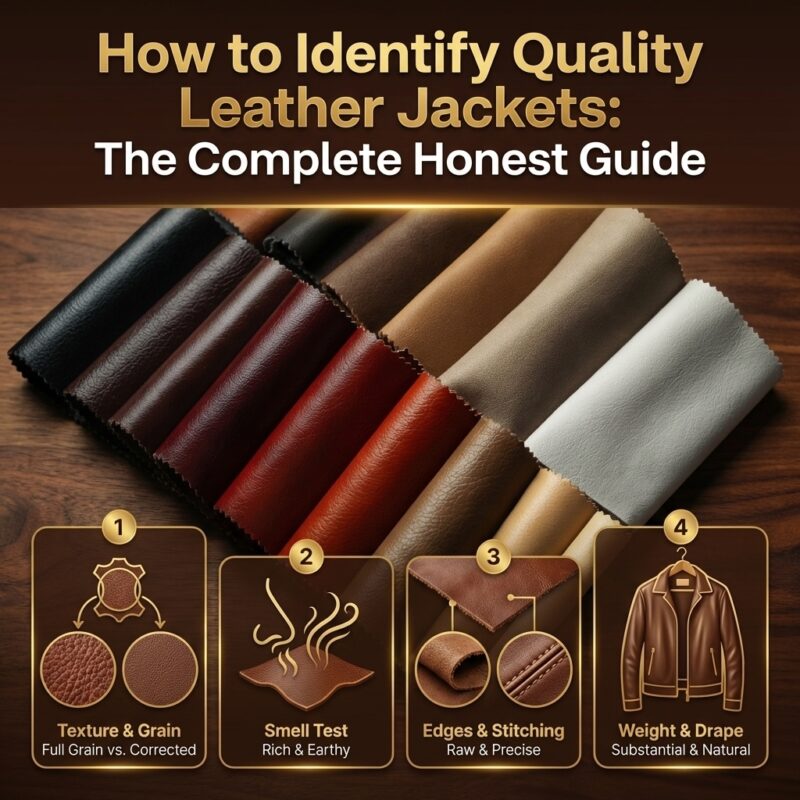
Apr
Most people walk into a store or open a website, see the word “leather,” and assume they know what they are getting. They do not. The leather jacket market is full of misleading labels, low-grade materials sold at premium prices, and synthetic products that look convincing enough to fool buyers who have not done their research.
This guide is written for people who want to stop guessing. You will learn exactly how to identify a quality leather jacket before buying, what physical signs to check with your own hands and eyes, and why certain features matter more than others. Whether you are shopping online or in person, every test in this guide works in under two minutes with no tools required.
Why Most Buyers Get Fooled When Buying a Leather Jacket
The problem starts with the label. Walk into any store, and you will see words like genuine leather jacket,premium leather jacket,real leather jacket, and PU leather jacket used almost interchangeably. Brands know that most buyers do not understand the difference, and they take full advantage of that.
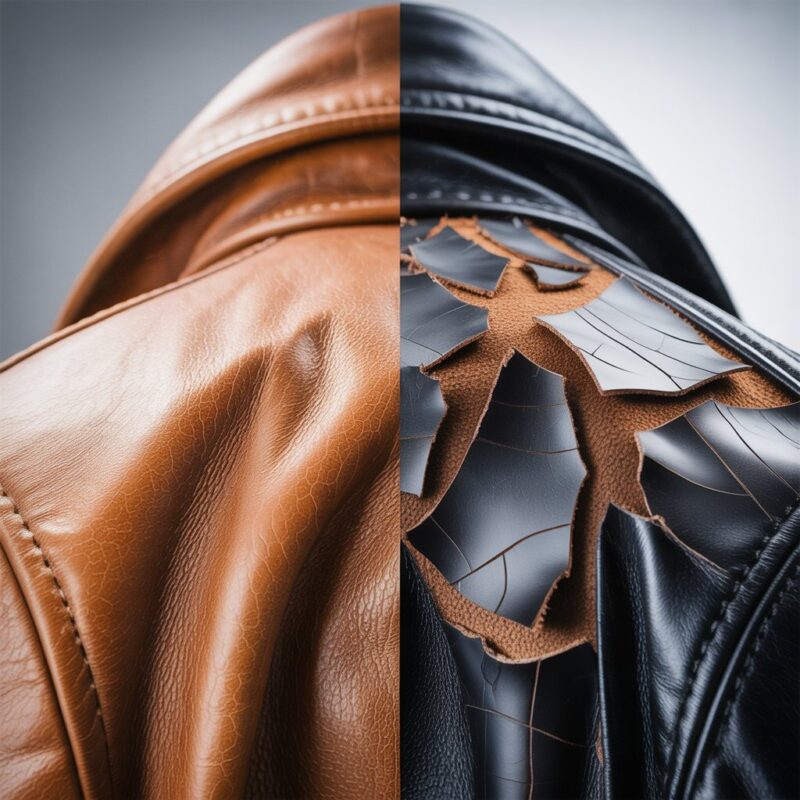
Genuine leather sounds like the best possible option. It is not. In industry grading, genuine leather is actually one of the lowest real leather grades, made from the inner layers of the hide after all the premium layers have been removed. A jacket labeled genuine leather is real leather in the technical sense, but it performs closer to a budget material than a premium one.
PU leatherare not leather at all. They are polyurethane-coated fabric engineered to look like leather. They are sold everywhere and priced to seem like a bargain, which they are, for about two years. After that, they peel, crack, and fall apart in ways that no real leather ever does.
Understanding this before you shop is the single most valuable thing you can do.
The Leather Grade Hierarchy: What You Are Actually Buying
Before testing any jacket, you need to know what the grades mean so you can evaluate what you find.
| Grade | What It Is | Lifespan | Feel |
| Full Grain Leather | Outermost hide layer, nothing removed | 20 to 40+ years | Firm, natural, develops patina |
| Top Grain Leather | Outermost layer, surface lightly sanded | 10 to 20 years | Smooth, polished, uniform |
| Genuine Leather | Inner hide layers, heavily processed | 3 to 7 years | Thinner, coated, less flexible |
| Bonded Leather | Leather scraps glued onto fabric | 1 to 3 years | Plasticky, peels at edges |
| PU / Faux Leather | No real leather content | 1 to 2 years | Uniform, cold, synthetic feel |
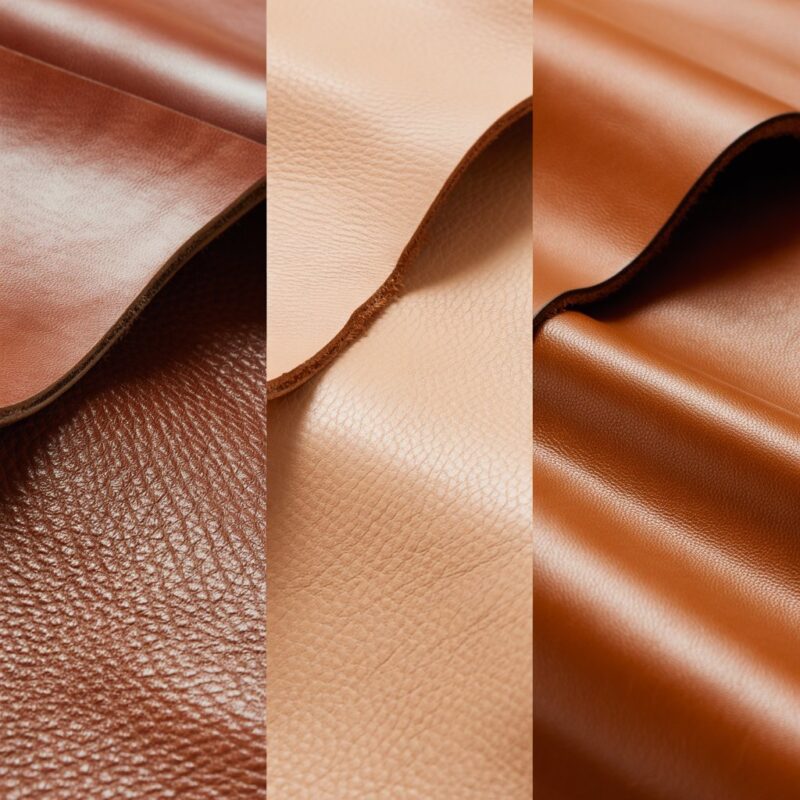
The most important thing to know: full grain leather is the only grade that ages beautifully over time. Everything else either holds steady or degrades. Full grain gets better. That distinction alone justifies the higher price for anyone buying a jacket they plan to keep.
At Stegaro, jackets start from $119 for entry-level styles and go up to $249 and above for premium leather pieces, with most genuine and real leather jackets sitting in the $169 to $229 range. Free delivery is included on all orders.
12 Physical Signs of a High-Quality Leather Jacket
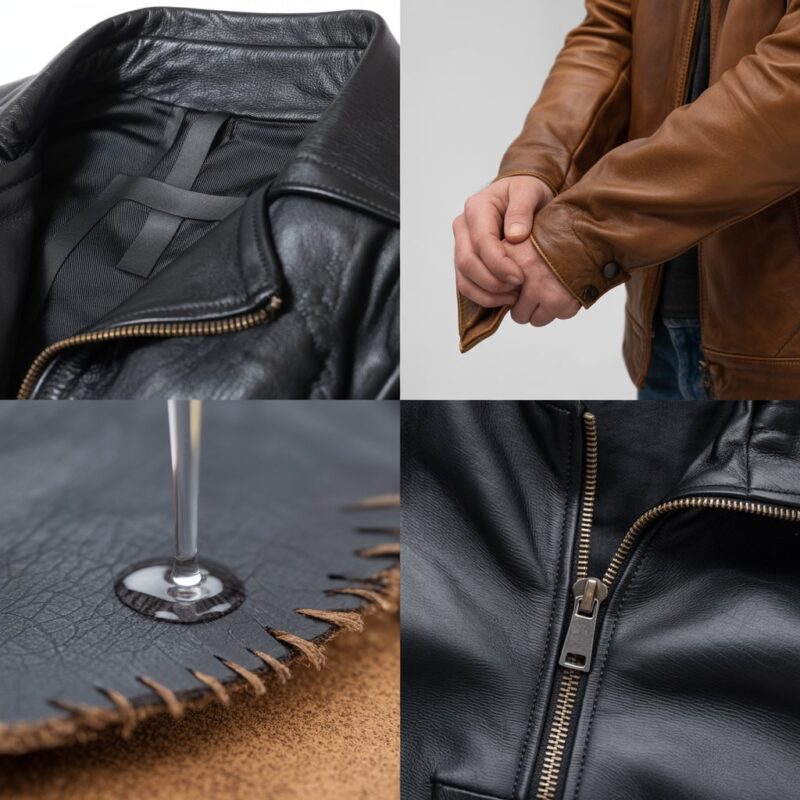
This is the practical core of this guide. Each of these checks can be done in a store, at home with a new purchase, or when evaluating any leather jacket before buying.
1. The Back of the Leather
Turn any raw edge inside out or examine an unfinished interior seam. Real leather has a fibrous, suede-like back surface that looks rough and slightly fuzzy, like felt. Fake leather and bonded leather have a clearly visible fabric or plastic mesh backing. This single check will catch most fakes immediately and requires no expertise.
2. The Pore Pattern
Look closely at the surface under a bright light or flashlight. Real leather has irregular pores in a randomized pattern because it comes from a living animal. Every section looks slightly different. Fake leather has a machine-stamped pore pattern that repeats itself uniformly across the entire surface. If you can see an obvious repeat, it is synthetic.
3. How It Responds to Pressure
Press a finger firmly into the surface and hold for two seconds, then release. Real leather compresses, wrinkles naturally like skin, and then returns to shape. Fake leather either does not compress at all or stays deformed and does not recover naturally. This test takes five seconds and works every time.
4. The Temperature Test
Hold a section of the jacket in your palm for 30 seconds. Real leather warms up quickly because it has the same thermal properties as natural hide. Synthetic leather stays at room temperature or feels consistently cool. This test is fast, discreet, and works in any store.
5. The Smell Test
Real leather has a specific, earthy, organic, slightly musky smell from the tanning process and natural oils in the hide. It is subtle and warm. Fake leather smells like plastic, chemicals, or rubber. Some low-quality genuine leather jackets are sprayed with artificial leather scent to pass this test. If the smell is overpoweringly strong or feels forced, that is also a warning sign.
6. The Water Drop Test
Place one small drop of water on a hidden area, like the underside of the collar. Real leather slowly absorbs moisture, and you will see the surface darken slightly within 10 to 15 seconds. Fake leather repels water completely. The drop sits on top and rolls off because the synthetic coating prevents any absorption.
7. The Edge Quality
Examine cut edges around the zipper area, collar, and pocket openings. On a quality leather jacket, edges are burnished, painted, or folded and stitched. On low-quality jackets, edges are rough, unfinished, or already separating. On bonded leather specifically, you will often see the layered construction starting to delaminate at the edges, even on a brand-new jacket.
8. The Stitching
Run your finger along every seam you can reach. Quality jackets have tight, even stitches with consistent spacing. Pull lightly at a stress point like the armhole or shoulder. It should feel completely solid. Loose threads, uneven spacing, or any puckering in the leather at the seam line all indicate poor construction that will fail quickly under regular use.
9. The Zipper
Open and close every zipper on the jacket several times. A quality zipper glides completely smoothly with no catching, no resistance, and no wiggle. YKK is the most trusted zipper manufacturer, and its name is embossed on the zipper pull. Stiff, scratchy, or lightweight zippers indicate the entire jacket was built to the same budget standard. Stegaro uses YKK zipper closure across its genuine leather jacket range, which is a verifiable quality indicator.
10. The Lining
Reach inside the jacket and feel the lining. A quality lining is smooth, substantial, and tightly sewn at every attachment point. It should not pull away when tugged lightly. Cheap linings feel thin, scratch your hand, and show loose stitching where the lining meets leather. A poor lining means cost was cut throughout the entire jacket, not just on the lining.
11. The Weight
Pick the jacket up by the collar and feel how it hangs. A full grain cowhide jacket has real, noticeable weight. Not uncomfortable, but substantial. You feel the quality when you hold it. Thin, almost weightless jackets for their apparent thickness are made of very thin leather, bonded leather, or faux leather. The weight of a jacket directly reflects the density and thickness of the hide.
12. The Color Depth Test
Find a hidden area inside a pocket or under the collar, and scratch it lightly with your fingernail. On quality leather, color is dyed deep into the hide and a light scratch shows no change. On surface-dyed or coated leather, you will see a lighter layer appear where you scratched, or small flakes of coating. Surface dye fades unevenly with use and looks terrible within a year.
The 12 Signs at a Glance
| Check | Quality Leather | Fake or Low-Grade |
| Back of leather | Fibrous, rough, suede-like | Fabric or plastic mesh backing |
| Pore pattern | Random, irregular | Repeating, machine-stamped |
| Pressure response | Wrinkles and recovers like skin | Stays flat or stays deformed |
| Temperature | Warms to body heat quickly | Stays cool or room temperature |
| Smell | Earthy, organic, subtle | Chemical, plastic, or overpowering |
| Water test | Slowly absorbs moisture | Water beads and rolls off |
| Edges | Burnished, painted, or folded | Raw, separating, or delaminating |
| Stitching | Tight, even, consistent | Loose, uneven, puckering |
| Zipper | Smooth, YKK standard | Stiff, scratchy, or lightweight |
| Lining | Substantial, smooth, secure | Thin, scratchy, pulling away |
| Weight | Noticeable, substantial | Suspiciously light for its size |
| Color depth | No change when scratched | Lighter layer or flaking appears |
What the Price Actually Tells You About Leather Quality
Price is not a reliable indicator of quality on its own, but it does set a realistic floor. Below certain price points, quality leather is physically impossible to deliver.
| Price Range (USD) | What Is Realistic |
| Under $80 | PU or faux leather. No genuine leather at this price. |
| $80 to $130 | Bonded leather or very low-grade genuine leather. Short lifespan. |
| $130 to $200 | Mid genuine to low top grain. Decent for everyday use. Stegaro’s entry-level real leather jackets start at $119 to $169 in this range. |
| $200 to $300 | Top grain cowhide or lambskin. Quality investment piece. Stegaro’s premium range sits at $199 to $249 with YKK hardware and viscose lining. |
| $300 and above | Full grain or artisan quality. Built to last decades. |
A brand marketing a jacket as full grain leather under $100 is either lying about the grade or cutting costs severely on every other part of the construction. The raw hide alone for a genuine full grain jacket costs more than that before any labor, hardware, lining, or finishing is added.
Hidden Construction Details That Separate Good From Great
Most guides about leather jacket quality stop at checking stitching and smelling the leather. That is helpful but incomplete. Here are the construction details that matter just as much.
Panel Alignment
Where two leather panels join, such as at the shoulder seam or across the back, the grain pattern should flow naturally from one panel to the next. On quality jackets made from well-matched hides, the transition is nearly invisible. On cheap jackets, panels are cut randomly, and the texture changes direction visibly at every seam.
Hardware Attachment Points
Look at where metal hardware like zippers, snaps, and rivets attach to the leather. The leather around each attachment point should be reinforced with a backing plate, a second layer of leather, or tight bartack stitching. Hardware attached directly through a single layer of thin leather will tear away quickly under regular use.
Structural Symmetry
Hold the jacket up by the collar and let it hang freely. Both sides should hang at exactly the same level. The collar should sit flat and even. Pockets on both sides should be at identical heights. Asymmetry is a direct sign of poor quality control, and a jacket that hangs unevenly will look wrong on your body regardless of how good the leather is.
Interior Finishing
Turn the jacket inside out as far as you can and look at the interior construction. Quality jackets have clean interior seams, consistent lining attachment, and no loose threads anywhere inside. The interior tells you far more about construction quality than the exterior, because the exterior is what the manufacturer wants you to see.
How Quality Leather Changes With Time: The Patina Factor
This is the dimension of leather jacket quality that separates a real purchase from a fashion item, and it is one of the most underexplained topics in every guide on this subject.
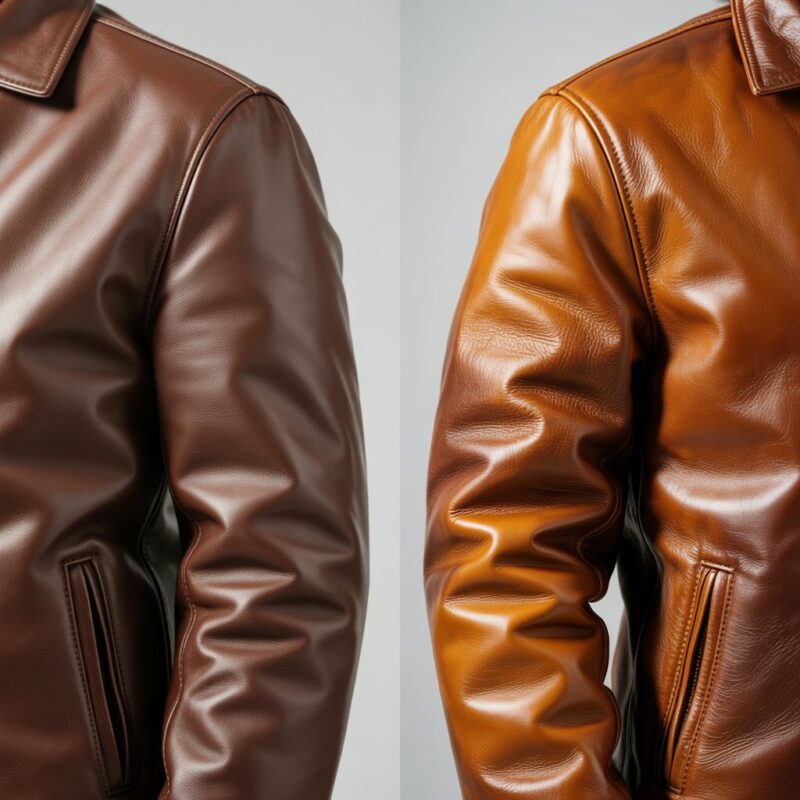
A full grain leather jacket does not just stay the same over the years of wear. It changes in ways that make it better. The hide absorbs natural oils from your skin during wear. Areas that flex most often, like elbows and shoulders, develop a slight darkening and softening called a patina. The texture of the leather becomes more personal to you over time. Minor scratches often buff out or integrate into the character of the jacket rather than looking like damage.
This patina development is why people keep great leather jackets for decades. It only happens with real leather, specifically full grain or high-quality top grain leather. It does not happen with genuine leather, bonded leather, or any synthetic material. Those materials do the opposite. They start looking decent and progressively get worse.
When you buy a quality leather jacket, you are not just buying what it is today. You are buying what it will become over the years of real wear. That is a fundamentally different value proposition from any other clothing material.
Common Buying Mistakes and How to Avoid Them
Buying based on product photos alone. Leather photography is specifically designed to make every grade look premium. Lighting, angles, and editing can make bonded leather look identical to full grain in a photo. Always examine leather in person when possible, or buy from a seller with a clear return policy. Stegaro offers a 30-day return window on all orders, which means you can verify quality at home without risk.
Trusting label language without knowing the grades. Labels like “100% genuine leather” and “real leather” are technically true even for the lowest grades. They tell you nothing useful about quality. The only label worth trusting is one that specifies full grain or top grain explicitly.
Ignoring the interior of the jacket. The lining, interior stitching, and hardware attachment points on the inside are where brands most aggressively cut costs. Most buyers never look inside before purchasing.
Buying the wrong size expecting it to stretch. Leather does not stretch significantly. A jacket that is tight across the shoulders will stay tight. The shoulders must fit perfectly at purchase because shoulder seams are the most difficult alteration to make on any jacket. Everything else can be adjusted by a tailor. The shoulders cannot.
Expecting cheap to become expensive. A bonded leather jacket bought at a low price will not develop character or improve with age. It will peel and fall apart. Only real leather develops a patina. The break-in process and aging that make leather jackets special are exclusive to genuine animal hide.
Quick Buyer Checklist for Any Store or Website
Use this before committing to any purchase.
- Back of leather at any raw edge: fibrous and rough, not fabric
- Pore pattern: irregular and random, not repeating
- Press test: wrinkles naturally and recovers
- Hold in palm: warms to body heat within 30 seconds.
- Smell: earthy and organic, not chemical or plastic
- Water drops on a hidden area: absorbs slowly, does not beads up
- All edges: cleanly finished, not raw or separating
- All seams: tight and even stitching, no loose threads
- All zippers: smooth and effortless, YKK preferred
- Lining: substantial and secure, not thin or pulling
- Overall weight: noticeable and real, not suspiciously light
- Scratch hidden area lightly: no color change or flaking
If a jacket passes all twelve of these checks, it is built from real leather with real construction quality. If it fails more than two or three, keep looking.
FAQs
Check the back of the leather for any raw edges or interior seam. Real leather has a fibrous, rough, suede-like backing. Fake leather and bonded leather have a visible fabric or plastic mesh backing. This one check takes five seconds and catches most fakes immediately without any tools.
No. Despite the confident name, genuine leather is one of the lower grades in the industry grading system. It is made from inner hide layers that are weaker and require heavy processing and coating. It is real leather technically, but it is not premium leather. Full grain and top grain are the grades worth seeking out for a quality purchase.
Full grain feels slightly firmer and has more visible natural texture and variation. Top grain feels smoother and more uniform because its surface has been lightly sanded. Both feel warm and substantial, not plastic-like or cold. The difference becomes obvious once you have held both side by side.
Yes, in most cases. Real leather has a specific organic scent that comes from the tanning process and cannot be perfectly replicated synthetically. Some fakes are sprayed with artificial leather scent, but it smells noticeably different, usually stronger and more artificial than the real thing. Once familiar with the real leather smell, identifying fakes by nose becomes second nature.
A top grain leather jacket with proper care lasts 10 to 20 years. A full grain leather jacket cared for properly can last 30 to 40 years or longer. Genuine leather typically lasts 3 to 7 years before showing significant degradation. Bonded leather and PU leather generally last 1 to 3 years before peeling or cracking visibly.
Not at all. Full grain cowhide and buffalo leather are legitimately stiff when new. This stiffness exists because the hide is dense and thick, which is precisely what makes it durable. These leathers require a break-in period of 2 to 4 weeks of regular wear before they soften and mold to your body. Stiffness from natural density is a quality sign. Stiffness from the synthetic coating is not.
At Stegaro, real leather jackets start from $119 for entry-level styles and range up to $249 for premium pieces, with most quality genuine and real leather jackets priced between $169 and $229. Free delivery is included on all orders. As a general rule, any jacket marketed as full grain leather under $100 is almost certainly not genuine full grain.
A patina is the natural darkening, softening, and character that develops in full grain and top grain leather over the years of wear. It is caused by the hide absorbing natural skin oils, light exposure, and regular use. It makes the jacket look richer and more personal over time. This aging process is exclusive to real leather and is the main reason quality leather jackets become more valuable with age rather than less.
Conclusion
Identifying a quality leather jacket is not complicated once you know what to look for. Check the back of the leather for any raw edges. Feel how it responds to pressure and body heat. Smell it. Drop water on a hidden area. Examine every seam, zipper, and edge with the same attention you would give to anything you plan to own for the next twenty years.
The brands that sell low-quality leather rely entirely on buyers not doing these checks. They depend on attractive photos, confident label language, and the general assumption that anything called leather is worth the price. None of those things is reliable. Your hands and eyes in person are reliable.
A genuine quality leather jacket is one of the few clothing purchases that pays for itself over time. It does not go out of style, it does not wear out if you take basic care of it, and it becomes more personal and more yours with every year you wear it. That is worth taking a few extra minutes to get right before you buy.