

Blog
Caring for Your Leather Jacket: The Complete Guide to Cleaning, Conditioning, and Long-Term Maintenance
Apr
A leather jacket is one of the few clothing purchases that genuinely improves with time, but only if you care for it correctly. The same material that can last forty years with the right routine can crack, peel, fade, or develop permanent odors within two or three years if neglected or cleaned the wrong way.
Caring for your leather jacket is not complicated, but it requires knowing what to do, what to avoid, and how often to do each thing. Most damage done to leather jackets happens not from wear but from cleaning mistakes, improper storage, and skipping conditioning until the leather is already dry.
This guide covers everything in one place. Cleaning, conditioning, storage, seasonal adjustments, problem-solving for common issues, and the mistakes that are most likely to permanently damage your jacket. Whether your jacket is cowhide, lambskin, suede, or goatskin, the right information for your specific leather type is here.
First Step: Know Your Leather Type
The single most important thing to establish before cleaning or treating any leather jacket is which type of leather you are working with. The wrong product on the wrong leather type causes irreversible damage, including discoloration, surface breakdown, and permanent staining.
| Leather Type | Surface Feel | Care Approach | Conditioning Need |
| Full Grain Cowhide | Firm, slightly textured | Damp cloth, leather cleaner | Every 4 to 6 months |
| Top Grain Cowhide | Smooth, uniform | Damp cloth, leather cleaner | Every 4 to 6 months |
| Lambskin | Buttery soft, delicate | Very gentle, minimal moisture | Every 3 to 4 months |
| Goatskin | Pebbled, medium firm | Damp cloth, leather cleaner | Every 4 to 6 months |
| Suede | Soft, napped, velvet-like | Dry brush only, suede-specific products | Suede protector spray only |
| Nubuck | Similar to suede, slightly firmer | Dry brush, nubuck-specific cleaner | Nubuck conditioner only |
| Genuine Leather | Thinner, coated surface | Very gentle, minimal moisture | Every 3 months |
| Faux / PU Leather | Uniform, plastic-like | Damp wipe only, no conditioner needed | None |
Check the tag inside your jacket before doing anything. If the tag is missing or unclear, perform a small water drop test on a hidden area. Real leather absorbs a drop of water slowly. Faux or heavily coated leather repels it entirely.
Suede and nubuck require completely different care from smooth leather. Never use standard leather cleaner or conditioner on suede or nubuck. These products will darken the surface permanently and ruin the texture.
How Often to Care for Your Leather Jacket
One of the most common questions about leather jacket maintenance is how frequently each task needs to be done. Here is the complete schedule.
| Care Task | Recommended Frequency | Why It Matters |
| Surface wipe-down | After every few wears | Removes body oils, dust, and surface dirt before they set |
| Deep cleaning | Every 4 to 6 weeks during active wear | Prevents buildup that dries out and discolors the leather |
| Conditioning | Every 3 to 6 months | Restores natural oils, prevents cracking and stiffness |
| Waterproof protection spray | At start of each wet season | Protects against rain and moisture penetration |
| Storage check | Monthly during off-season | Catches mold, shape distortion, and hardware issues early |
| Hardware inspection | Start of each season | Catches zipper and snap issues before they worsen |
| Professional cleaning | Every 2 to 3 years or when needed | For deep stains, color restoration, and structural repairs |
If you only maintain two habits, make them regular wiping and conditioning before the leather starts to feel dry or stiff. Those two steps account for the majority of long-term leather health.
How to Clean a Leather Jacket: Step-by-Step
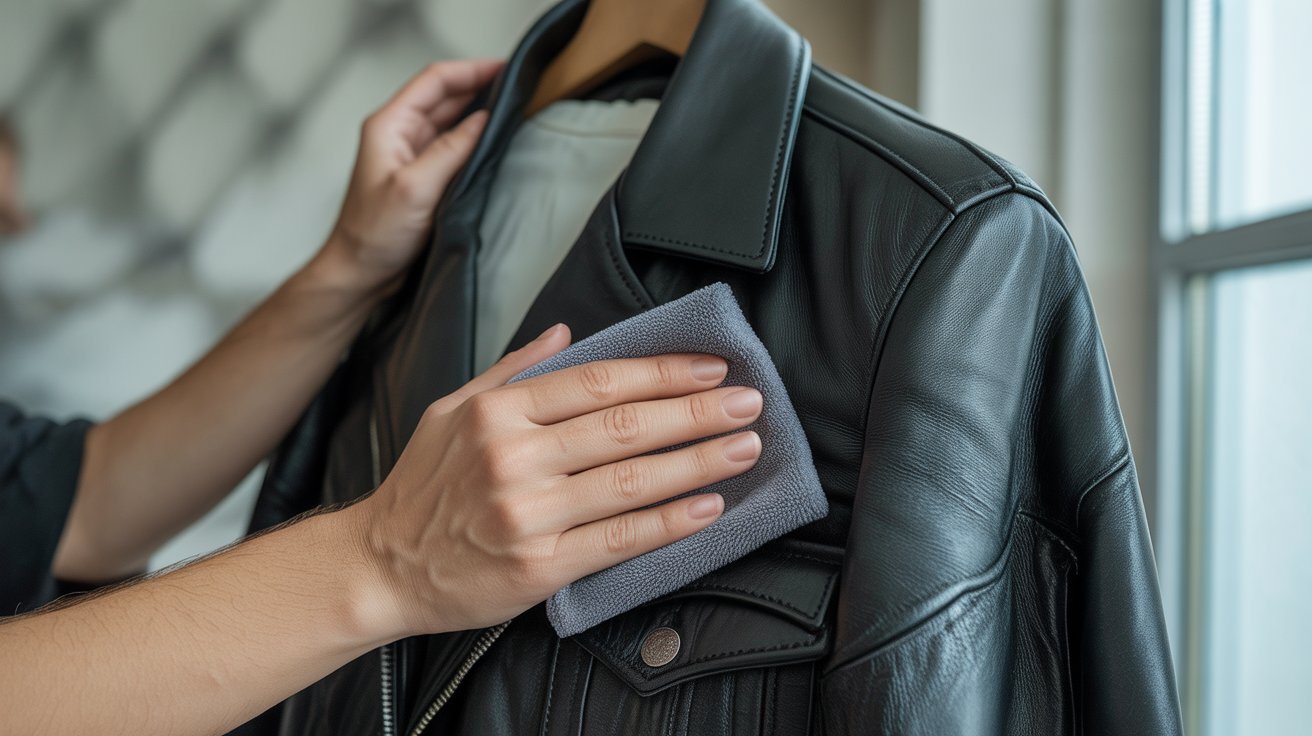
What You Need
Before starting, gather the right materials. Using the wrong products is the most common cause of leather damage during cleaning.
Safe to use:
- Soft, lint-free microfiber cloths
- Distilled water, not tap water, which can leave mineral deposits.
- Leather-specific cleaner matched to your leather type.
- Mild leather soap for deeper cleaning
Never use on leather:
- Household cleaners, dish soap, or detergents
- Bleach or ammonia-based products
- Alcohol, acetone, or nail varnish remover
- Baby wipes, which contain chemicals that break down the leather surface
- Shoe polish, which clogs pores and causes discoloration
- Paper towels, which can scratch delicate leather surfaces
Step 1: Prepare the Jacket
Empty all pockets completely. Remove any detachable liner if present and wash it separately following its own care label. Hang the jacket on a sturdy padded hanger.
Step 2: Test Any Product First
This step is non-negotiable. Before applying any cleaner, conditioner, or treatment to your jacket, apply a small amount to a hidden area such as the inside hem or under the arm. Wait five minutes and check for any color change, darkening, or surface reaction. If there is any change you do not want, do not proceed with that product.
Step 3: Remove Surface Dust and Dirt
You must use a soft, dry microfiber cloth plus gently wipe the entire surface of the jacket to remove loose dust, dirt, and surface debris. In addition, pay attention to the collar, cuffs plus any creased areas where dirt accumulates. Work in the direction of the leather grain where visible.
Step 4: Wipe Down with Distilled Water
Dampen a clean microfiber cloth very lightly with distilled water. The cloth should feel barely damp, not wet. Wipe the entire surface gently, section by section. Do not saturate or scrub any scany area. In addition, follow immediately with a dry cloth to absorb excess moisture.
Step 5: Apply Leather Cleaner for Deeper Dirt
If surface dirt remains after the water wipe-down, apply a small amount of leather cleaner to a clean cloth. The cleaner should lather slightly as it lifts dirt.
After cleaning each section, wipe away the residue with a clean, damp cloth, then immediately dry with a dry cloth. Work section by section rather than cleaning the entire jacket with cleaner and wiping afterward.
Step 6: Air Dry Completely
Hang the jacket on a wide padded hanger in a well-ventilated room. Never use a hairdryer, radiator, or any artificial heat to speed up drying.
Moreover, you must allow the jacket to dry completely before applying any conditioner. Applying conditioner to damp leather prevents proper absorption.
How to Clean a Suede Leather Jacket
Suede requires a completely different cleaning approach from smooth leather. Water is the enemy of suede in most circumstances. Never apply standard leather cleaner to suede.
What You Need for Suede Care
- Suede brush with soft brass or rubber bristles
- Suede eraser for light scuffs and marks
- Suede-specific cleaner
- Suede protector spray for prevention
Suede Cleaning Steps
Step 1: Hang the jacket and use the suede brush to gently remove loose dirt from the entire surface. Always brush in the same direction, following the natural nap of the suede, to maintain a uniform finish.
Step 2: For light scuffs, dry marks, and minor stains, try the suede eraser first. Rub it back and forth over the affected area just as you would use a pencil eraser. This handles the majority of surface marks without needing any liquid cleaner.
Step 3: For deeper or set-in stains, test your suede cleaner on a hidden area first. Mix one part undiluted suede cleaner with two parts warm water, or use a pre-diluted spray cleaner directly. Dip the suede brush in the solution and work the affected area in gentle back and forth strokes until the cleaner lathers.
Step 4: Allow the jacket to air dry completely overnight. Do not apply heat. The cleaned area may appear slightly darker when wet, but should return to a more even tone as it dries.
Step 5: Once fully dry, use the suede brush again to restore the natural nap of the surface.
Prevention: Apply suede protector spray to a clean, dry jacket before the first wear and at the start of each wet season. This creates a barrier against moisture and light stains without affecting the texture.
How to Condition a Leather Jacket
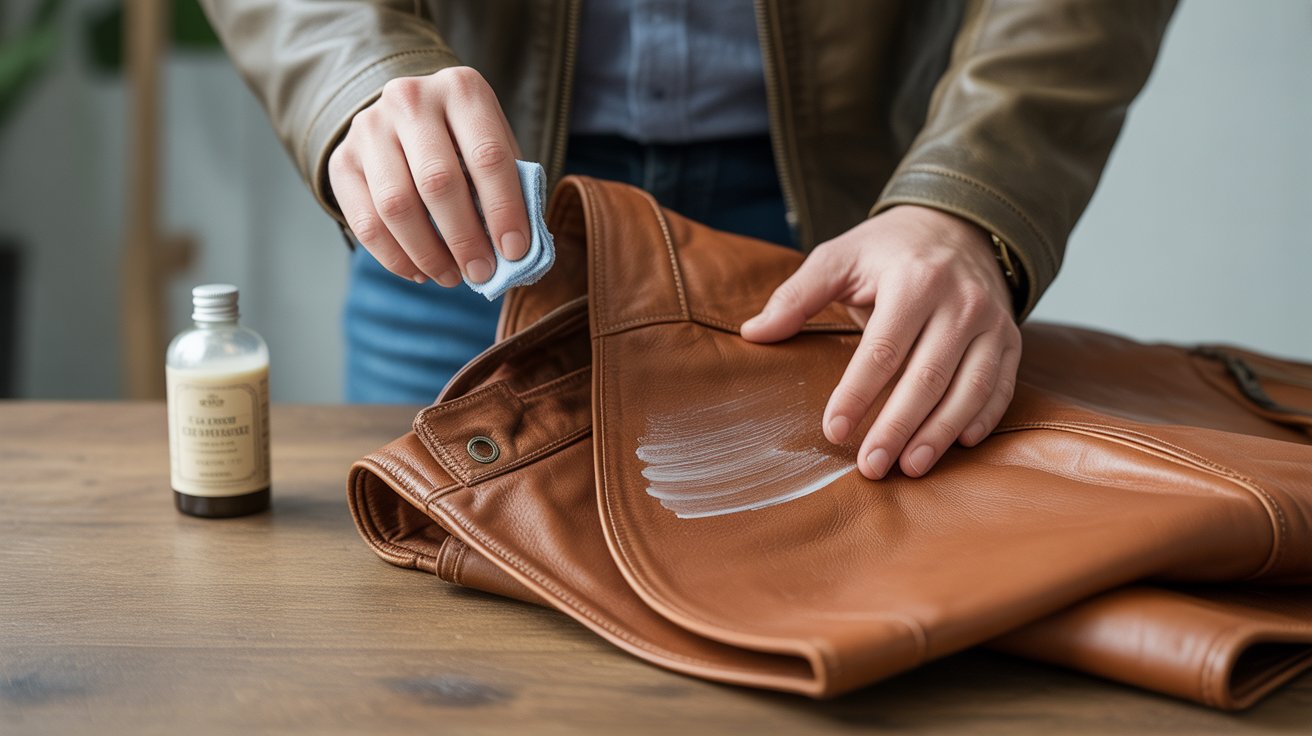
Conditioning is the single most important maintenance step for leather jacket longevity. Leather retains its flexibility because of oils introduced during tanning. Wear, sunlight, indoor heating, and dry air all gradually strip these oils. When the oils are gone, the leather becomes stiff, brittle, and eventually cracks.
Conditioning restores these oils and extends the life of the leather significantly. It is not optional.
Choosing the Right Conditioner
Use a conditioner specifically designed for finished leather jackets. Match it to your leather type.
- For lambskin and soft leathers: use a lightweight cream conditioner that absorbs without leaving residue.
- For cowhide and buffalo hide: a slightly heavier conditioner with natural oils works well.
- For suede and nubuck: use suede protector spray only, never standard conditioner
- Look for conditioners containing lanolin, which is a natural waxy secretion from sheep that penetrates leather deeply and maintains suppleness.
- Avoid products containing petroleum, mineral oils, waxes, or silicones, which sit on the surface, clog pores, and dry the leather out over time.
Conditioning Steps
Step 1: Ensure the jacket is completely clean and fully dry. Never apply conditioner to a damp or dirty surface. Dirt trapped under the conditioner will be sealed into the leather.
Step 2: Apply a small, approximately coin-sized amount of conditioner to a soft, clean cloth. Never apply the conditioner directly from the container onto the leather.
Step 3: Work the conditioner into the leather using gentle circular motions, one section at a time. Apply a thin, even layer across the entire exterior of the jacket. Do not apply to the lining.
Step 4: Allow the conditioner to absorb for 15 to 30 minutes. The leather should visibly absorb the conditioner rather than leaving it sitting as a film on the surface.
Step 5: Using a separate clean, dry cloth, gently buff the surface to a soft sheen and remove any excess product. Buffing also helps work the conditioner deeper into the grain.
Step 6: Allow the jacket to hang overnight before wearing it.
Less is more with conditioning. Over-conditioning leaves the leather feeling heavy and greasy and can actually attract more dirt. A thin, well-absorbed coat every few months is far more beneficial than heavy applications.
How to Store a Leather Jacket Properly
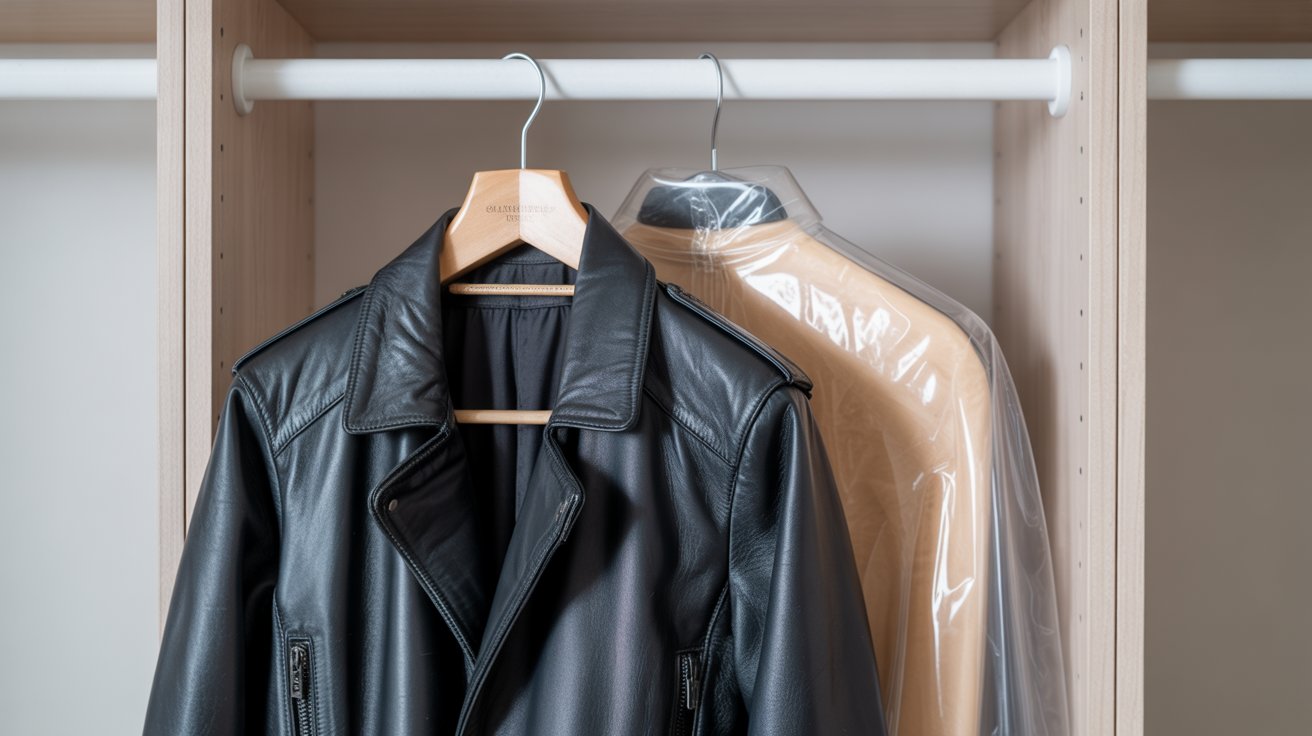
Poor storage causes as much damage as poor cleaning. The shape of a leather jacket can be permanently distorted by incorrect storage, and mold, dryness, or odor buildup can develop without proper conditions.
The Proper Storage Method
Use a wide, padded hanger. Thin wire or plastic hangers distort the shoulder seams and create permanent creases at the shoulder. The hanger should be wide enough to support the full width of the jacket shoulders without any overhang.
Store in a cool, dry, ventilated space. The ideal storage environment is moderate temperature, low humidity, and good airflow. Basements and attics are both poor storage locations. Basements tend toward humidity that causes mold. Attics experience temperature extremes that dry leather out rapidly.
Keep away from direct sunlight. UV light degrades leather in the same way it damages skin. Extended sun exposure dulls color, weakens the leather fibers, and strips natural oils. Even indirect strong light over long periods causes fading.
Use a breathable garment bag. If covering the jacket for storage, use a cotton garment bag or a breathable woven bag. Never store leather in plastic. Plastic traps moisture and prevents the airflow that leather needs, creating the exact conditions for mold growth and oil degradation.
Never fold leather for long-term storage. Folding creates permanent creases along the fold lines. If you must fold a jacket for transport, fold it as few times as possible and try to follow natural seam lines. Hang it immediately upon arrival.
Clean and condition before seasonal storage. Any dirt left on the leather during storage will continue to degrade the surface. Any dryness present before storage will worsen over the months without use. Always prepare the jacket fully before putting it away for a season.
How to Spot Cleaned and Remove Stains
Speed is the most important factor in stain removal. A liquid that is blotted immediately has almost no chance of setting permanently. The same liquid left for thirty minutes or overnight becomes a difficult or impossible stain.
Immediate Response to Fresh Spills
Use a clean, dry cloth and blot the liquid immediately. Do not rub. Rubbing pushes the liquid deeper into the leather and spreads the stain. Blot from the outside edges of the spill toward the center to prevent spreading. Allow the area to air dry naturally.
For most fresh spills caught quickly, blotting followed by air drying is sufficient. No cleaner is needed.
Treating Set-In Stains by Type
Water stains: Allow the area to dry completely first. Then dampen the entire panel evenly with distilled water and allow it to dry uniformly. This prevents a visible water line at the edge of the stain.
Oil and grease stains: Sprinkle a small amount of cornstarch or baking powder directly onto the stain and leave it for several hours or overnight. The powder absorbs the oil from the leather. Brush it off gently and repeat if needed. Do not apply water or cleaner to a fresh oil stain.
Ink stains: This is one of the most difficult stains to remove from leather. Apply a tiny amount of leather-specific ink remover on a cotton swab and work very carefully on the affected area only. Test on a hidden area first. Ink stains often require professional treatment.
Mold and mildew: Mix equal parts white vinegar and water. Apply the solution with a soft cloth to the affected area. Do not saturate the leather. Allow to air dry naturally and apply conditioner afterward. Address the storage conditions that allowed mold to develop.
Salt deposits from winter: Gently sponge the affected areas with a clean cloth dampened with plain water. Allow to air dry. Apply conditioner once fully dry to restore the oils that salt exposure removes.
What Never to Do With Stains
Never rub a stain aggressively. Never apply bleach, ammonia, alcohol, or acetone. Never use baby wipes, which contain chemicals that degrade the leather surface. Never apply heat to speed up drying after stain treatment.
Solving Common Leather Jacket Problems
This is the section that most care guides skip entirely. These are the actual problems that leather jacket owners face, and the correct responses to each.
| Problem | Likely Cause | Correct Response |
| Stiff and inflexible | Dried out natural oils | Apply leather conditioner immediately and wear regularly |
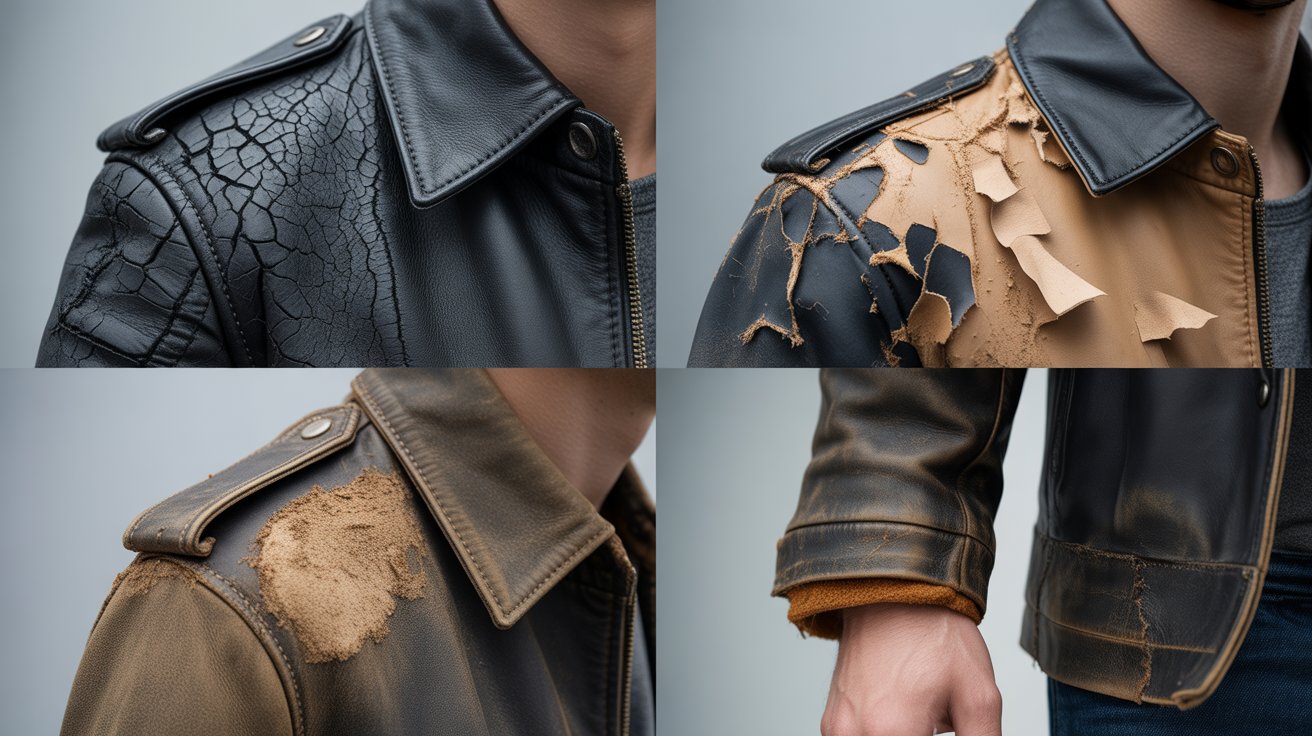
| Cracking surface | Severe oil depletion or solvent damage | Condition if early stage; professional repair for deep cracks |
| Peeling or flaking | Bonded leather breakdown or surface coating failure | Conditioner may slow it; bonded leather cannot be permanently repaired |
| Squeaking when moving | New stiff leather or dried areas at flex points | Condition the squeaking areas specifically |
| Wrinkles and creases | Improper storage or folding | Hang on padded hanger; most light wrinkles relax with hanging |
| Mold or mildew growth | Humid storage environment | Clean with vinegar solution, dry naturally, improve storage |
| Fading color | UV exposure and oil depletion | Use specialist leather balsam or color-matched conditioner |
| Chemical smell when new | Poor tanning or faux leather | Coat in baking soda for 24 hours; if persistent, do not wear |
| Smell of sweat or body odor | Lining absorption, not leather | Identify lining material and clean accordingly |
| Smoke smell | Leather absorbed smoke from environment | Apply 50/50 vinegar and water solution, air outdoors, condition |
Why Leather Cracks and How to Prevent It
Leather cracks because the natural oils that keep the fiber structure flexible have been depleted, and the fibers become rigid and brittle. Once leather cracks deeply, the damage is irreversible. A specialist can improve the appearance, but the structural integrity is permanently affected.
The prevention is simple and reliable: condition your jacket before it starts to feel stiff or dry. Do not wait for visible dryness. By the time the leather looks dry, the oil depletion has been progressing for weeks. Conditioning on schedule, every three to six months, prevents the cycle from starting.
Why Leather Peels and What It Means
Quality full-grain and top-grain leather does not peel. If your jacket is peeling, it is almost certainly bonded leather or faux leather with a surface coating that is delaminating. Bonded leather is made from leather scraps and adhesives, and peeling is a structural failure of the material that cannot be permanently repaired. Conditioning can temporarily improve the appearance, but the process will continue.
The presence of peeling is one of the most reliable indicators that a jacket is not made from quality leather.
How to Remove Wrinkles From a Leather Jacket
Light wrinkles caused by storage or transport almost always relax on their own within a day or two of hanging on a proper padded hanger. Gravity and the weight of the leather smooth out minor creases without any intervention.
For deeper or more persistent wrinkles: hang the jacket in your bathroom and run a hot shower to create steam. Ensure the jacket does not get wet directly. The indirect steam relaxes the leather fibers. After approximately fifteen minutes, dry the jacket gently with a dry cloth, stretch the creased areas very gently by hand, and hang to finish drying. Apply conditioner afterward to restore flexibility.
Never iron a leather jacket directly. If ironing is attempted at all, use the lowest heat setting, place multiple layers of cloth between the iron and the leather, and move quickly without letting the iron rest in one spot. Even these precautions carry a significant risk of damage. Steam and hanging are always safer first options.
Seasonal Leather Jacket Care Guide
Leather responds to environmental conditions. A care routine that does not account for seasonal changes leaves the jacket poorly protected for significant parts of the year.
Winter Care
Indoor heating during winter is one of the most overlooked threats to leather. Central heating systems reduce indoor humidity significantly, which accelerates oil depletion from leather stored or worn in these environments. Condition more frequently in winter, every three to four months, rather than every six months, if your jacket is worn regularly or stored in a heated space.
After any rain or snow exposure, allow the jacket to air dry completely at room temperature before storing. Apply conditioner once fully dry to restore the oils that water exposure removes.
Apply a waterproof leather protector spray before the wet season begins. This creates a barrier against moisture penetration without affecting breathability.
Spring Care
Spring is the ideal time to clean and condition a jacket coming out of winter storage. Inspect for any mold or mildew that may have developed over winter. Check all zippers, snaps, and hardware. Condition before returning to regular wear.
Summer Care
Avoid leaving a leather jacket in a hot car or in direct sunlight for extended periods. Heat and UV exposure are among the most damaging environmental factors for leather. If the jacket is not being worn regularly through summer, ensure its storage location is cool and ventilated.
Autumn Care
Before the main wear season begins in autumn, clean the jacket thoroughly, apply conditioner, and apply waterproof protector spray. Check all hardware and stitching. Fix any small issues before they are subjected to regular use and cold weather. This is also the right time to have any professional maintenance done if needed.
What Absolutely Never to Do to a Leather Jacket
These are the mistakes that cause permanent damage. Most of them are surprisingly common.
Never put a leather jacket in the washing machine. The combination of water, agitation, and detergent strips all natural oils from the leather, causing irreversible structural damage and almost certainly shrinking the jacket. This cannot be undone.
Never put a leather jacket in a clothes dryer. Heat causes rapid oil evaporation, shrinkage, warping, and cracking. Even low heat settings cause damage.
Never use a hairdryer, radiator, or direct heat to dry a wet leather jacket. Always air dry at room temperature away from all heat sources.
Never use standard dry cleaning. Standard dry cleaning removes the natural oils from leather. If dry cleaning is necessary, it must be done by a specialist in leather who understands how to replenish the oils after the process.
Never apply household cleaners, bleach, ammonia, or alcohol. These strip the surface finish, cause discoloration, and accelerate oil depletion.
Never store in a plastic bag or plastic cover. Plastic traps moisture and prevents airflow, creating conditions for mold growth and accelerating leather dryness.
Never use shoe polish on a leather jacket. Shoe polish clogs the leather’s pores and causes discoloration and dryness over time. Use leather-specific balsam or conditioner for shine restoration.
Never apply conditioner to damp leather. The conditioner cannot absorb properly into wet leather and will sit on the surface, attracting dirt and leaving an uneven finish.
Never spray perfume or hairspray directly onto leather. The alcohol and chemical content in these products damages the leather surface and finish.
When to Use a Professional Leather Specialist
Home maintenance handles the vast majority of leather jacket care needs effectively. However, there are situations where professional treatment is the correct choice.
Go to a leather specialist when:
- Deep stains that do not respond to careful home treatment
- Significant color fading that needs restoration
- Deep cracks in the leather surface
- Tears, holes, or structural damage to the leather panels
- Broken stitching along stress points
- Zipper replacement or hardware repair
- Lining replacement or repair
- Vintage or high-value jackets that need any form of treatment
- Mold or mildew that has penetrated beyond the surface
Important: A standard dry cleaner is not a leather specialist. Many dry cleaners will accept leather jackets, but do not have the expertise or products to handle them correctly. Seek out businesses that specifically specialize in leather care and repair.
Before committing to any professional cleaning or restoration, discuss exactly what results to expect. Color restoration, especially, can vary significantly in outcome depending on the leather type, original color, and extent of fading.
Quick Reference Care Summary
Daily and after each wear:
- Hang on a wide padded hanger immediately after wearing.
- Allow any moisture to air dry naturally before storing.
- Wipe visible surface dirt with a dry soft cloth.
Every few wears:
- Light wipe with a barely damp cloth to remove body oils and surface buildup
Every 4 to 6 weeks during active wear:
- Deep clean with leather-specific cleaner
Every 3 to 6 months:
- Full conditioning treatment
Each season:
- Apply waterproof protector spray before wet weather.
- Clean and condition before seasonal storage
- Inspect hardware and stitching.
Before storage:
- Full clean and conditioning
- Hang on a padded hanger in a breathable cotton bag.
- Store in a cool, dry, ventilated space away from light
FAQs
Every 3 to 6 months for most jackets worn regularly. If your jacket is exposed to frequent rain, direct sunlight, or stored in a heated space, condition it every 3 months. If you notice the leather beginning to feel stiff or dry before that interval, condition it immediately rather than waiting for the scheduled time.
Yes, but only a very small amount on a soft cloth for surface cleaning. Use distilled water rather than tap water, which can leave mineral deposits. Never soak, saturate, or immerse leather in water. Never machine wash. After any water contact, air dry completely at room temperature before applying conditioner.
No. Machine washing permanently damages leather by stripping all natural oils, causing the leather to dry out, crack, and shrink. This damage cannot be reversed. Never machine wash any leather jacket.
Apply a leather conditioner containing lanolin to the stiff areas and allow it to absorb fully. Wear the jacket regularly, as body heat and movement are the most effective natural softeners. Stiffness from a new break-in period will resolve with regular wear. Stiffness from oil depletion requires conditioning. If the leather has already cracked, professional treatment may be needed.
This depends on the smell. For smoke or mildew odor, apply a 50/50 solution of white vinegar and water with a soft cloth, allow to air dry, and condition afterward. For sweat odor, the lining is usually the source rather than the leather itself. Clean the lining according to its material label. For a new chemical smell, coat the jacket in baking soda for 24 hours and air it in a well-ventilated space. A persistent, strong chemical smell may indicate poor tanning or faux leather.
Clean and condition the jacket fully before storage. Hang on a wide padded hanger. Place in a breathable cotton garment bag, never plastic. Store in a cool, dry, well-ventilated space away from direct sunlight, heat sources, and humidity. Check the jacket at least monthly during storage for any mold, shape distortion, or hardware issues.
Quality full-grain and top-grain leather does not peel. Peeling almost always indicates bonded leather, which is made from scraps and adhesives, or faux leather with a delaminating surface coating. Conditioning can temporarily improve the appearance, but cannot stop the underlying process. This is a material quality issue, not a care issue.
Yes, by a qualified leather specialist. Minor scratches, surface scuffs, and light color loss can often be addressed at home with conditioner and leather balsam. Broken stitching can be re-sewn by a specialist. Tears, significant color loss, structural damage, and hardware replacement all require professional leather repair. A standard tailor or dry cleaner is not equipped for leather repair.
Always test any new product on a small, hidden area of the jacket first, such as the inside hem or under the arm. Wait a full five minutes and check for any color change, darkening, or surface reaction before proceeding. This one habit prevents the majority of accidental cleaning damage.
Conclusion
Caring for your leather jacket properly is straightforward once you know the rules. Clean regularly before dirt sets, condition before the leather feels dry, store on a proper hanger away from plastic and heat, and test every product before applying it to the main surface.
The jackets that last thirty or forty years are not made from different materials than the ones that deteriorate in three. They are cared for differently. A quality leather jacket maintained with the right routine develops a patina, a personal richness in color and texture that comes from years of wear and proper care and cannot be replicated any other way.
The investment in fifteen minutes of maintenance every few months is what separates a jacket you pass down from one you replace.