
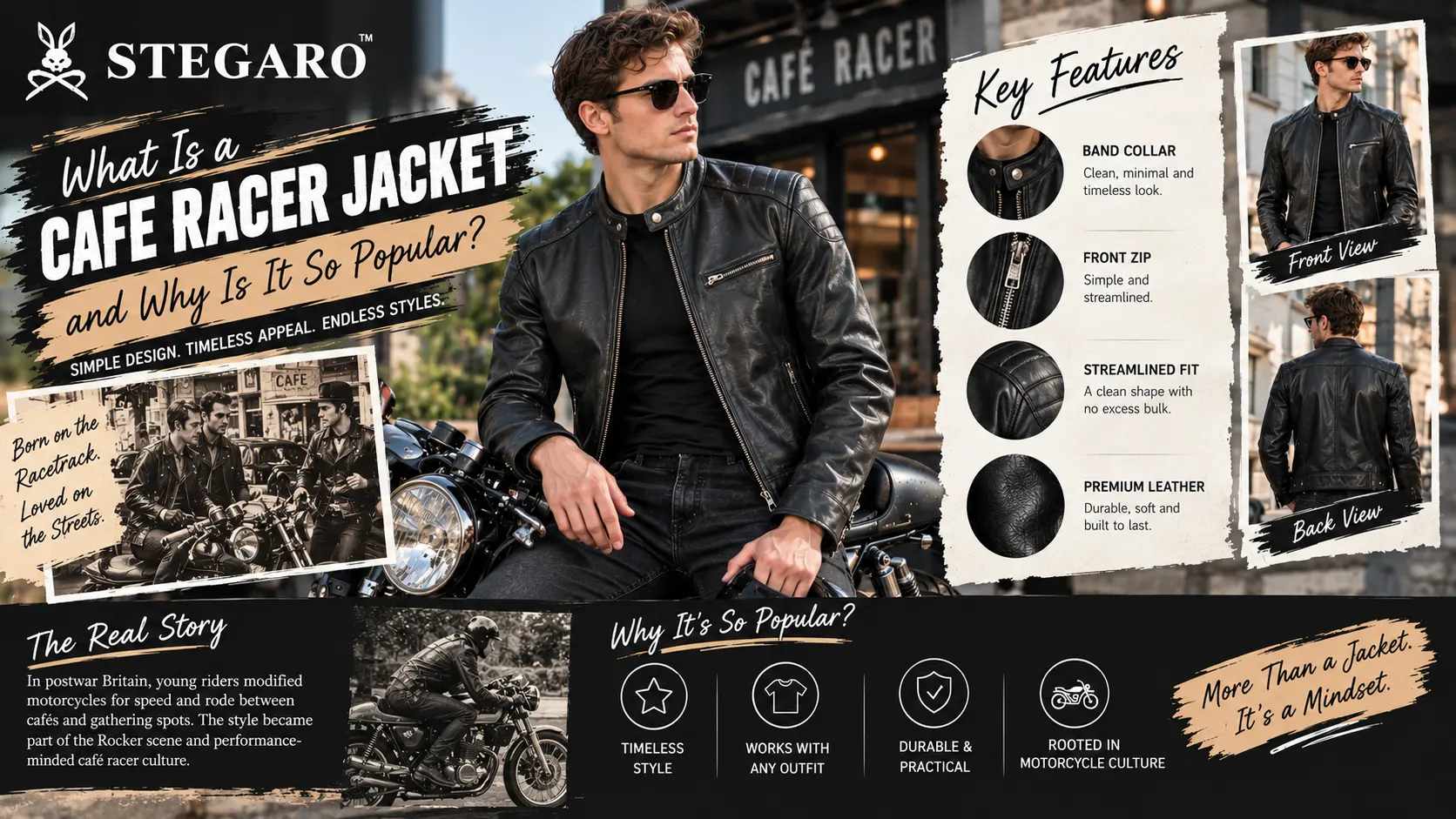
A cafe racer jacket is easy to recognize once you know what to look for: a clean front zip, short stand or band collar, streamlined shape, and very little unnecessary hardware. Its appeal comes from this restraint. It looks sharp without trying too hard, which may explain why the style moved from motorcycle culture into everyday menswear and womenswear.
The name, however, has a real motorcycle story behind it. In postwar Britain, young riders modified motorcycles for speed and rode between cafés and gathering spots. The style became associated with the Rocker scene and performance-minded café racer motorcycles. Modern motorcycle retailers still describe the jacket tradition as rooted in 1950s English café-racer culture, where speed, simplicity, and style met.
So, what exactly makes this jacket different from an ordinary leather jacket? And why has a design born around motorcycles remained relevant decades later?
From British Cafés to Everyday Style
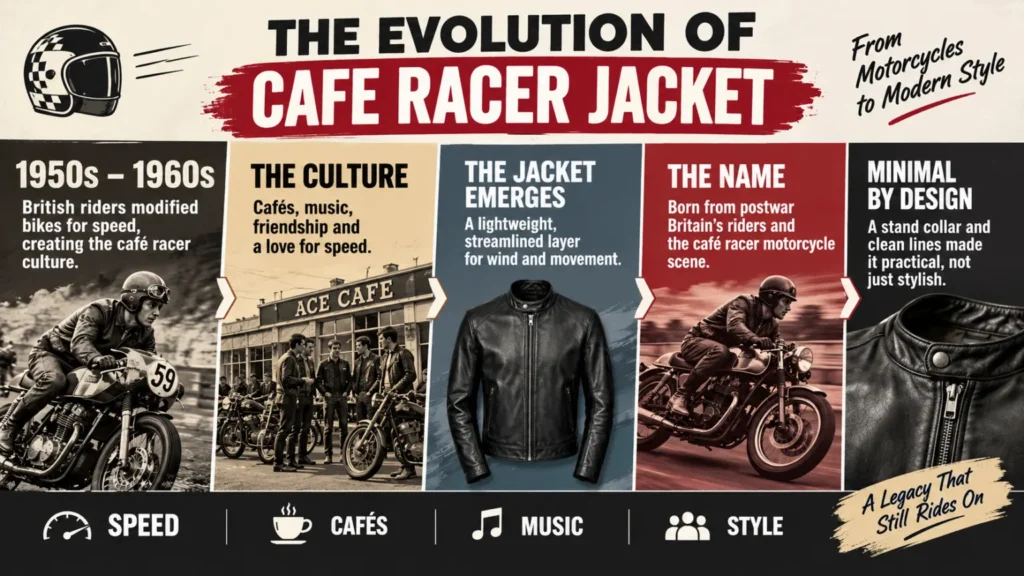
The story begins with motorcycles rather than fashion runways.
During the 1950s and 1960s, British riders customized bikes to make them lighter, faster, and more responsive. The goal was performance, but the surrounding culture developed its own unmistakable visual identity. The café racer motorcycle became closely connected with youthful motorcycle culture, music, cafés, and a fascination with speed.
The clothing followed the same practical mindset. Riders wanted outerwear that could handle wind and movement without the bulk of more elaborate motorcycle designs. That helped establish the streamlined silhouette associated with the cafe racer leather jacket.
There is an important detail here, though: the jacket did not become popular because someone simply decided that a stand collar looked cool. Its pared-back design made sense for riders who wanted fewer distractions and a close-fitting layer.
That practical beginning is part of what gives the style its staying power.
The Four Details That Give It Away
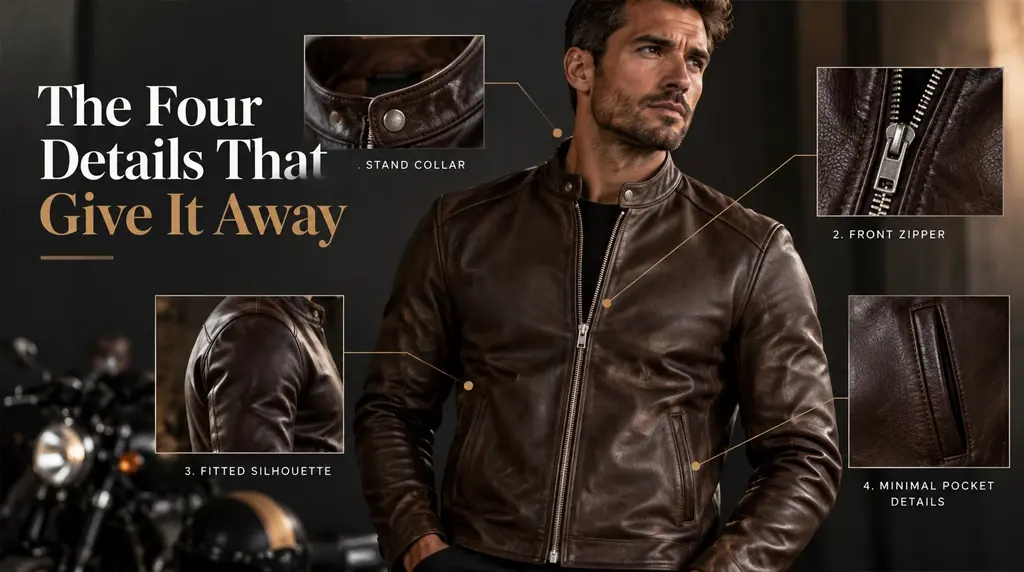
You do not need to be a motorcycle expert to identify a café racer. Look for four defining features.
1. The Stand Collar
The short band or stand collar is perhaps the easiest clue. It usually sits close to the neck and may close with a snap.
Compared with the wide notched lapels of a classic biker jacket, this collar creates a much cleaner outline. Some modern versions use a slightly lower collar or different fastening, but the upright neckline remains a strong visual reference. See our cafe racer vs biker jacket comparison for a side-by-side look.
2. The Straight Front Zip
A traditional leather cafe racer jacket normally uses a central zipper rather than the dramatic diagonal zipper associated with many double-rider biker jackets.
That straight line gives the jacket a neat, symmetrical appearance. It also makes the piece easier to wear with shirts, knitwear, and simple T-shirts.
3. A Streamlined Silhouette
The cut tends to sit closer to the body than a loose trucker or oversized leather coat. However, “close-fitting” should not mean restrictive.
Modern riding jackets can be shaped around a forward-leaning riding position, with features such as pre-curved sleeves, stretch panels, or adjustment systems. RevZilla’s café-style examples show how contemporary versions can combine the classic shape with practical riding construction.
4. Controlled Hardware
This is where the minimalist character really shows.
You may see a few zipped pockets, sleeve zippers, snaps, or waist adjustments, but the design generally avoids the belts, oversized lapels, and layers of hardware found on more traditional biker styles.
Think of it as motorcycle-inspired design with the visual volume turned down.
Why the Minimal Look Has Such Staying Power
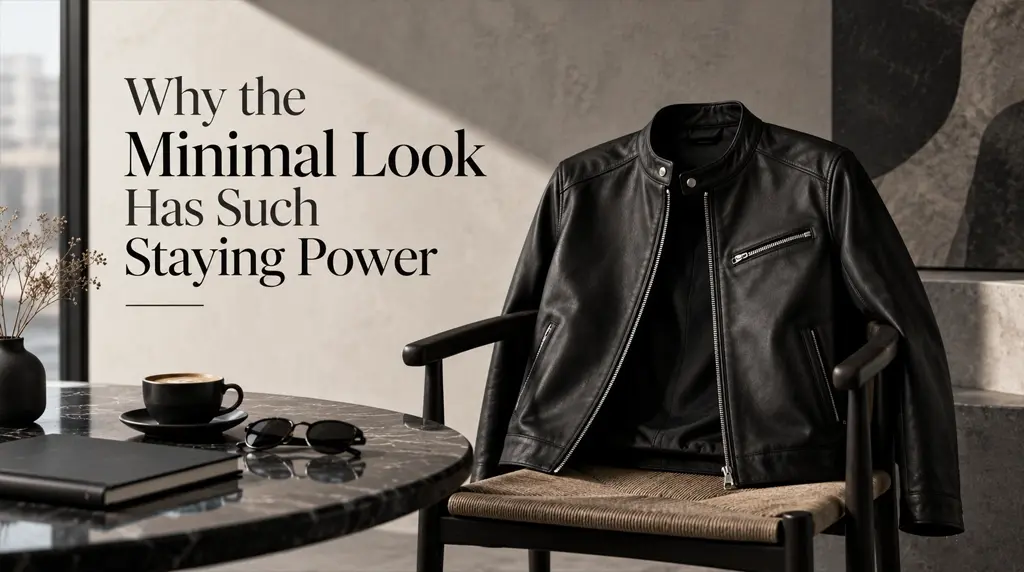
Fashion has a funny habit of making tricky things complicated all over again. The café racer goes in the opposite direction.
Its clean shape gives you fewer styling problems. A black version can work with blue denim and sneakers on Saturday, then sit neatly over a button-down and dark trousers for dinner. Brown leather brings a warmer, heritage feel, while suede versions can look softer and more relaxed.
That flexibility is one reason cafe racer leather jackets continue to appear in both motorcycle and casual-fashion collections. Browse our men’s leather cafe racer jackets in black, brown and vintage finishes.
The style also avoids being tied too closely to one decade. It carries a vintage reference without requiring the wearer to dress from head to toe like a 1960s rider.
That balance is difficult to achieve. It feels familiar without looking like a costume.
Leather Changes the Personality of the Jacket
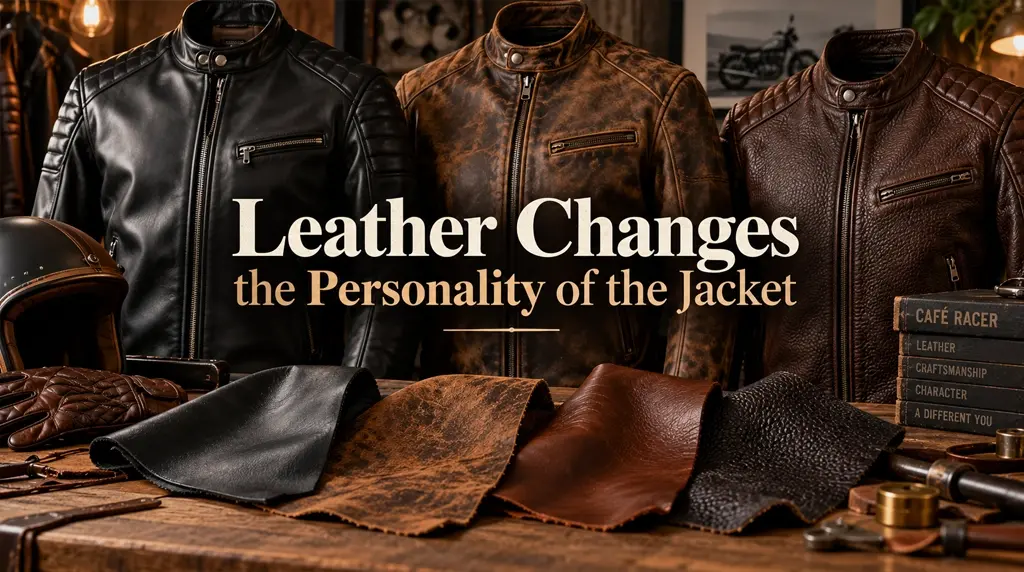
Not every café racer feels or behaves the same way because leather can vary considerably.
Cowhide: Structured and Hard-Wearing
Cowhide is a common choice when durability and structure matter. It tends to feel firmer when new and can develop more flexibility with wear.
Modern riding examples show how substantial cowhide can be combined with protective construction. For example, Certified Dainese motorcycle jackets are made of cowhide, but other café-type jackets use full or top-grain cowhide for a more realistic leather feel.
Sheepskin: Soft and Lightweight
Sheepskin is typically softer and lighter in feel. That makes it appealing for everyday fashion when comfort and drape matter more than heavy-duty riding protection.
It can also give a cafe racer leather jacket a smoother, more refined appearance.
Goatskin and Other Hides
Goatskin is another option found in leather outerwear. It has a distinctive grain and can offer a useful balance between flexibility and durability.
The important point is simple: do not assume that every jacket described as a café racer uses the same leather. Material, thickness, tanning, finish, lining, and construction all influence how the finished jacket feels.
Fashion Jacket or Motorcycle Gear? Know the Difference
This distinction deserves more attention than it usually gets.
A fashion leather cafe racer jacket may borrow the silhouette, collar, zipper, and motorcycle heritage without being designed as protective motorcycle equipment.
A genuine riding jacket has additional requirements. Depending on the garment, these can include abrasion-resistant materials, impact protectors, connection systems, ventilation, adjustment points, and certification under motorcycle protective-clothing standards.
For example, Dainese currently lists leather motorcycle jackets certified under EN 17092, with shoulder and elbow protectors certified to EN 1621.1 and provisions for back or chest protection.
So if you plan to ride, do not judge protection by appearance. A jacket can look extremely “biker” and still be intended only for casual wear. For certification and ventilation details, read our cafe motorcycle jackets guide.
That is probably the most important distinction to remember when shopping.
The Style Has More Than One Personality
The classic design has also evolved into several variations.
Classic Minimal Racer
This version keeps things simple: stand collar, central zip, clean front, and restrained pocket detailing. It is the easiest option for someone who wants the original aesthetic.
Quilted Racer
Quilted shoulder or elbow sections introduce texture without abandoning the streamlined shape. This works particularly well when you want something slightly more contemporary.
Vintage or Distressed Racer
Distressed finishes give the leather cafe racer jacket a worn-in appearance from day one. Instead of looking perfectly polished, the jacket carries a more rugged heritage feel.
Modern Protective Racer
This is where fashion and motorcycle equipment overlap. Contemporary riding versions can include armor, ventilation, stretch sections, pre-curved sleeves, and fit adjustments while retaining the recognizable café silhouette.
Why It Works With So Many Outfits
The secret is the jacket’s visual simplicity.
- For an everyday outfit, try a plain T-shirt, straight-leg jeans, and boots. The jacket adds structure without requiring another statement piece.
- For smart casual dressing, replace the T-shirt with a button-down shirt or fine-knit sweater. Dark trousers and Chelsea boots can push the outfit in a more polished direction.
- For colder weather, layer a lightweight knit underneath. A café racer generally looks better when the layers remain relatively clean rather than bulky.
- And if you prefer an all-black outfit? That works too. The texture of leather creates enough contrast to keep black-on-black from looking flat.
How to Choose One That Actually Works for You
Before buying, ask yourself three questions.
Where will I wear it?
A jacket intended for daily outfits does not need the same construction as dedicated motorcycle gear.
What leather feel do I prefer?
Choose softer leather if comfort and flexibility are priorities. Consider heavier hides when structure and ruggedness matter more.
What will I wear underneath?
A slim T-shirt and a thick winter sweater require very different amounts of room. Your jacket should allow natural movement without looking excessively loose.
Then inspect the practical details. Stitching should appear even and secure. Zippers should operate smoothly. The collar should sit comfortably. Pockets should be properly finished. If you are buying online, clear product photographs and detailed specifications are much more useful than vague claims about “premium quality.” Our guide to choosing cafe racer jackets for men has the full checklist.
Five Easy Ways to Style a Cafe Racer Jacket
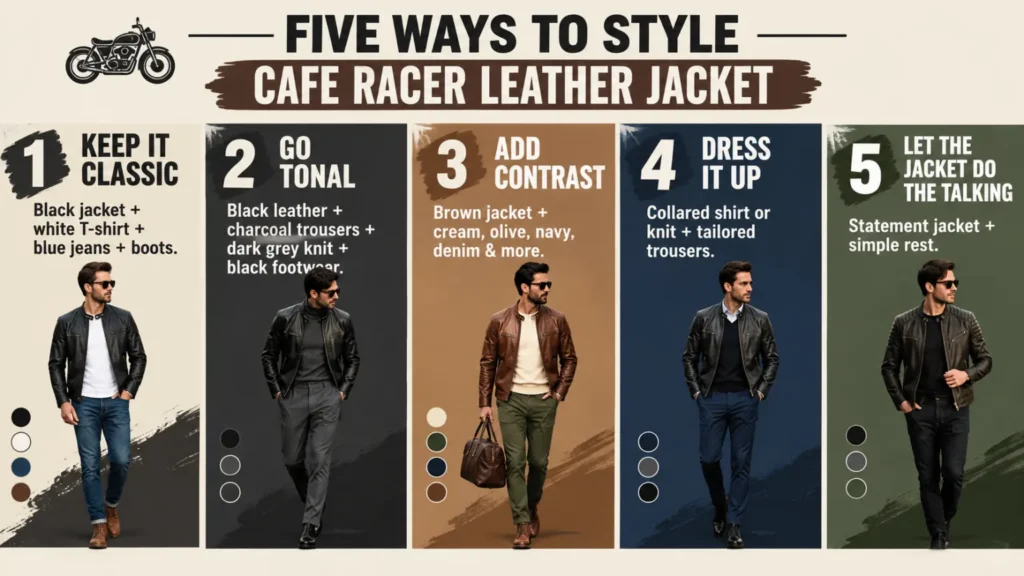
Keep It Classic
Pair a black jacket with a white T-shirt, blue jeans, and boots. It is simple because it works.
Go Tonal
Try black leather with charcoal trousers, a dark grey knit, and black footwear. The different textures add depth without introducing another color.
Add Contrast
A brown racer works beautifully with cream, olive, navy, denim, and other earthy shades. This creates a softer interpretation of the motorcycle aesthetic.
Dress It Up
Wear the jacket over a collared shirt or fine-gauge knit with tailored trousers. Keep the accessories restrained so the clean silhouette remains the focus.
Let the Jacket Do the Talking
If your jacket has quilting, contrasting panels, distressed leather, or bold hardware, simplify everything else. You do not need five statement pieces competing for attention.
How to Care for the Leather
Good leather can age beautifully, but it still needs sensible care.
Keep the jacket away from prolonged direct heat. If it gets wet, allow it to dry naturally rather than placing it beside a heater. Use a leather conditioner appropriate for the specific finish, and always test care products on a discreet area first.
Storage matters too. A broad, sturdy hanger helps the shoulders retain their shape. Avoid cramming the jacket into an overfilled wardrobe where the leather stays compressed.
And perhaps the biggest rule: do not clean leather aggressively just because it has developed a little character. Some creases and changes in color are part of how natural leather ages.
Final Thoughts
The café racer style has survived because it does not depend on excessive decoration. Its appeal comes from proportion, useful details, leather texture, and a genuine connection to motorcycle history.
That combination makes the café racer jacket remarkably adaptable. It can reference its riding roots while still working with ordinary jeans, tailored trousers, knitwear, or sneakers.
For anyone who likes classic outerwear but finds traditional biker jackets a little too busy, the cleaner silhouette can make an excellent alternative. Stegaro follows that same appreciation for versatile leather outerwear, where heritage details can meet modern everyday styling.
FAQs
A classic biker jacket is made with an asymmetrical zipper, wide lapels, many pockets, and extra metal. A café racer usually has a straight front zip, stand collar, cleaner lines, and less decoration. Some modern riding jackets blur the distinction, so construction and intended use matter as much as appearance.
Start with simple pieces such as a T-shirt, jeans, chinos, boots, or sneakers. For a smarter outfit, layer it over a button-down shirt or fine knit and pair it with tailored trousers. Keep the rest of the outfit relatively clean, so the jacket’s streamlined shape remains visible.
Yes. The style continues to appear in modern motorcycle gear and everyday leather collections because its simple shape works across different wardrobes and trends. Its design can also be updated through leather finishes, quilting, color, fit, and technical riding features.
Absolutely. Age does not determine whether a leather jacket works. The key is choosing a cut, color, and level of detailing that suits your wardrobe. A clean café racer can be especially easy to wear because its simple silhouette looks polished without feeling overly youthful or costume-like.
It is based on what you want to use it for. Cowhide is ideal for durability and motorcycle use, while sheepskin is softer, lighter, and more suited for everyday fashion. Goatskin is supple, yet tough. When considering riding, don’t just look at the type of leather. Look for the abrasion resistance, protective armor, and certification as well.
Yes. A cafe racer motorcycle jacket can serve as a good everyday jacket. Its simple design easily matches jeans, T-shirts, chinos, shirts, and boots, though a fashion version may not offer the protective features needed for motorcycle riding.
Your cafe racer jacket should fit snug but not tight or loose. The shoulders and chest should be roomy enough to allow natural movement, and the sleeves should end at the wrist. If you’re wearing it over other layers, make sure you can still move comfortably but still retain the jacket’s trim profile.