
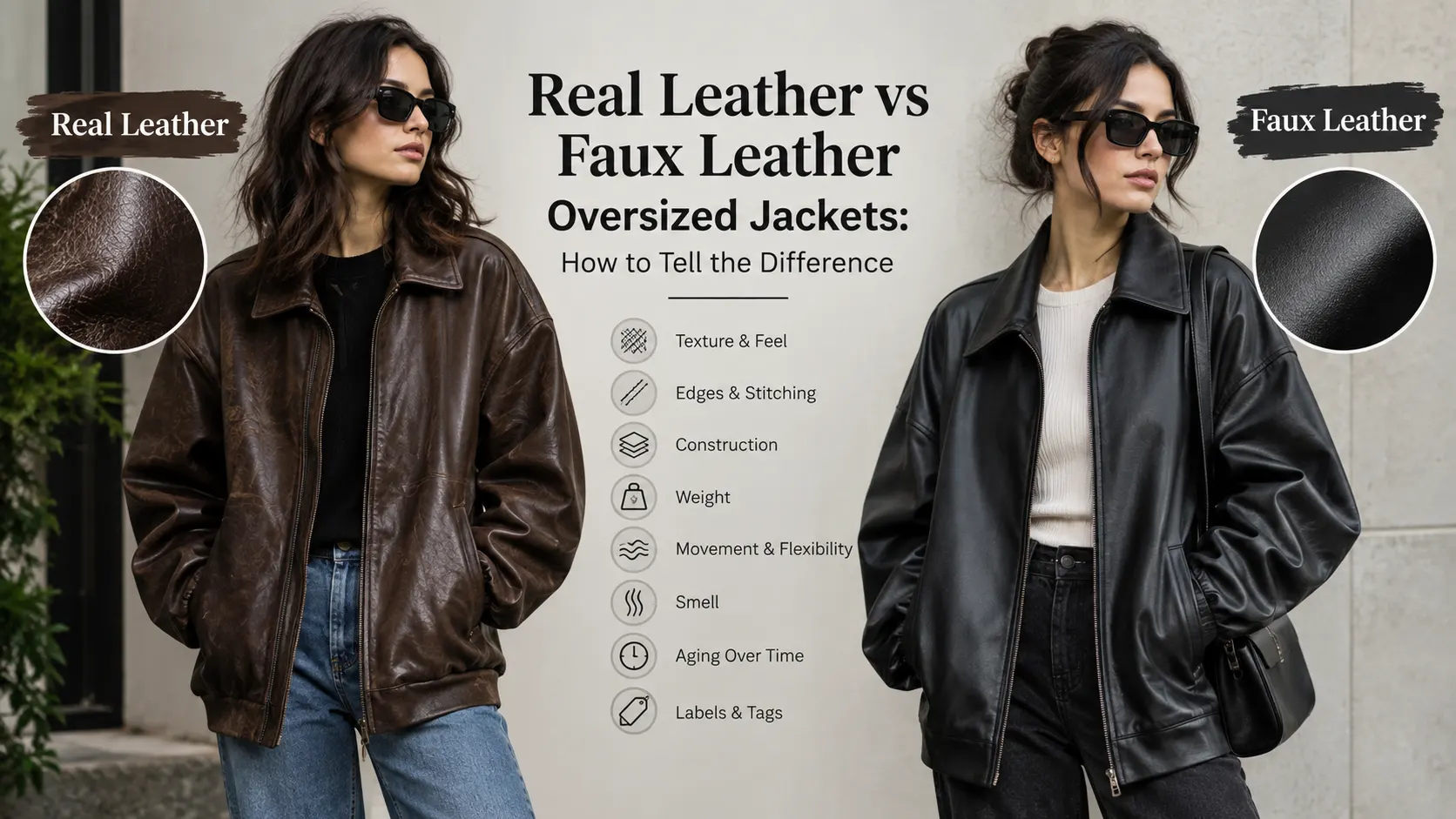
Two oversized jackets can look almost identical in photos. Same relaxed shoulders, same roomy body, same color and shine. In person, they often feel completely different. One may have more weight, a warmer touch, or softer creases. The other may feel lighter, smoother, or stiffer through the shoulders. That gap between how something looks online and how it behaves in real life is why shoppers get confused. This guide covers practical ways to tell the material apart by texture, edges, construction, weight, movement, smell, aging, and labels. If you have ever compared an oversized faux leather jacket to one made from animal hide and wondered why they feel different, these checks will help you identify what you are actually looking at.
The Difference Starts With the Material
Real leather comes from animal hide that has been tanned and finished for outerwear. The alternative is manufactured with a base fabric and a surface coating that is made to resemble leather. Both can be cut into an oversized shape, dyed in similar colors, and finished with a similar sheen, which is why product photos can be misleading. A single front-facing image shows fit and color but not how the surface feels or how the edge looks up close. Larger panels on oversized cuts can also hide small surface differences. That is why appearance alone is not enough and why several clues should be considered together. An oversized genuine leather jacket often shows slight shifts in texture from panel to panel, while the manufactured option tends to look more uniform across the same areas.
Look at the Texture and Grain
Texture is the most useful place to start because you can see and feel it directly. Real leather usually shows natural grain variation. You may notice tiny differences in pore pattern, small shifts in texture from the shoulder to the side panel, or gentle undulations that come from the original hide. No two hides are identical, so even within one jacket there can be minor differences that look organic and not perfectly repeated.
The manufactured option often has a more regular pattern. The grain may repeat in a consistent way across a wide front panel, which is easier to spot on oversized jackets because the panels are larger and there are fewer seams. Softness also matters. Real leather often feels warm to the touch and has a bit of depth when you run your fingers over it. The alternative can feel smoother or more coated. Press lightly with your fingertip and see how quickly the surface returns. Gently flex the material near the elbow and watch how it creases. An oversized real leather jacket will usually form soft, slightly irregular creases that follow movement, rather than sharp, uniform lines.
Examine the Edges and Construction
Beyond the main surface, construction details can reveal a lot. Look at cut edges, seams, stitching, collar, cuffs, pockets, and panel construction. On many jackets made from animal hide, the edge shows a dense, solid cross-section when it is not heavily painted. On many manufactured options, you may see a fabric backing or a layered edge, or you may see thick edge paint used to seal the layers. Both approaches can be well made, but the edge appearance is often different.
Check how the material behaves around stitching. Are the seams smooth? Is the stitching even and secure? How does the collar roll? How are the cuffs and pocket edges finished? Oversized jackets often use larger pattern pieces, which makes it easier to judge grain consistency across the chest and back. Thickness alone does not prove much, since both types can be made thin or thick. Close-up photos of these areas are often more informative than full-body shots, especially when you are trying to understand how an oversized faux leather jacket is finished at the edges and seams.
Consider Weight, Flexibility, and Movement
How a jacket feels when you pick it up and how it hangs from your shoulders tells you a lot. Real leather often has a density that feels substantial in the hands. The manufactured option can be lighter, though not always, since backing, lining, and coatings affect weight. So weight should be considered together with flexibility, not on its own.
Flexibility is about how easily the material bends and how it drapes. Animal hide usually has a natural give that allows it to soften with movement. Some manufactured options have a stiffer hand feel when new and may hold a more rigid shape through the shoulders and back. An oversized cut changes this. With extra room through the chest and sleeves, the jacket should swing slightly when you walk rather than standing away from the body. Try bending an elbow, rolling your shoulders forward, and sitting down. Notice whether the material moves with you or resists. An oversized genuine leather jacket will often develop a more fluid drape as it softens, while the other material may keep a more structured shape longer.
Smell and Aging Offer More Clues
Smell is one of the most talked-about clues. Real leather has a recognizable smell that comes from the hide and tanning process. However, smell should never be the only test. Finishes, dyes, storage, and packaging can all affect how a jacket smells when you first encounter it. A jacket that has been in plastic or stored near other materials may carry those scents at first.
Aging is often more revealing than a first glance. With regular use, animal hide can soften, the color may shift slightly in high-wear areas, and creases from movement become part of the jacket. The surface develops character that is specific to how you wear it. The alternative material may behave differently over time. It can keep its original surface longer without much change, or it may show wear in different areas, such as along stress points, if care is not appropriate. Storage and heat also influence how either material looks after months of use. Long-term customer photos can be useful for this reason, because they show how a jacket changes after real wear, whether it is an oversized faux leather jacket or one made from animal hide.
How to Check the Material Online
Many people buy without touching the jacket first, so online details matter. Start with the material description and product specifications. Look for clear wording about what the shell is made from. Phrases that describe appearance, such as leather-look, describe style rather than content. A listing that mentions percentage of animal hide or type of tanning is more specific than a general style phrase.
Look for close-up photos. Zoom in on grain, texture, cuffs, collar, and seams. Check for photos of interior labels and construction. Good listings often show the inside of the jacket, the lining, pocket construction, and zipper details. Those areas show how the material is finished and whether there is a fabric backing. If information is unclear, ask the seller what the shell is made from and how the edges are finished. Specific answers are more helpful than broad marketing language.
What Women Should Look For
For women shopping for an oversized silhouette, fit and comfort matter as much as material. The extra room should feel intentional, not like a size that is simply too large. Check shoulder placement. The seam should sit slightly beyond your natural shoulder for an oversized look without dropping too far down the arm. Check sleeve length. You want coverage at the wrist with enough room to bend your elbow.
Check overall length. Some styles hit at the hip, others go to mid-thigh, and that length changes how the jacket pairs with jeans and boots. Make sure there is room for layering over a sweater without pulling at the chest. Consider weight. A very heavy jacket can feel tiring if you wear it all day. An oversized real leather jacket women shoppers often try on gets styled with straight-leg jeans and a simple tee, or layered over a knit sweater when temperatures drop, so test it with the outfits you actually wear.
Which Material Should You Choose?
There is no single best choice for everyone. Choose animal hide if you value natural material, long-term use, and how a jacket softens and develops personal wear patterns over time. You may like subtle texture variation and a surface that becomes more personal the more you wear it. In that case, an oversized real leather jacket may line up with what you want.
Consider the alternative if you have a specific budget, prefer different maintenance, or want a particular finish or color that is easier to achieve in a manufactured material. Some shoppers prefer a surface that stays more consistent over time. Look at construction, fit, lining, and care instructions before deciding, not just the main photo.
Quick Buying Checklist
Use this short list before you buy. Read the material label and full product description. Examine texture for natural variation versus repeating pattern. Check edges, cuffs, collar, and pocket finishing. Look at stitching quality and seam construction. Consider weight, flexibility, and drape. Review close-up photos of grain and interior. Think about how you will layer and care for it. For a final fit check, an oversized real leather jacket women buyers evaluate often comes down to shoulder fit, sleeve length, and room for layering without pulling.
Final Thoughts
Appearance alone rarely tells the full story. Look at texture for natural variation, check edges and stitching for construction clues, and consider weight and movement. Smell can offer a hint but aging shows more. Online, labels and close-ups matter most. Choose based on how you want the jacket to feel, age, and fit. If you want to compare well-made options side by side, Stegaro offers a range of oversized outerwear that makes those differences easier to see.
FAQs
Feel for depth and variation. Animal hide often feels warm with slight grain shifts, while the manufactured option feels smoother and more uniform.
Not on its own. Backing and coating change weight. Check weight together with flexibility, edge finish, and grain.
Photos show color and fit but hide texture and edge details. Finish and lighting can make different materials look alike.
It helps but should not be the only test. Finishes, dyes, and packaging can change initial smell. Use it with other clues.
Ask what the shell is made from, if there is a fabric backing, how edges are finished, and if interior label photos are available.