

Blog
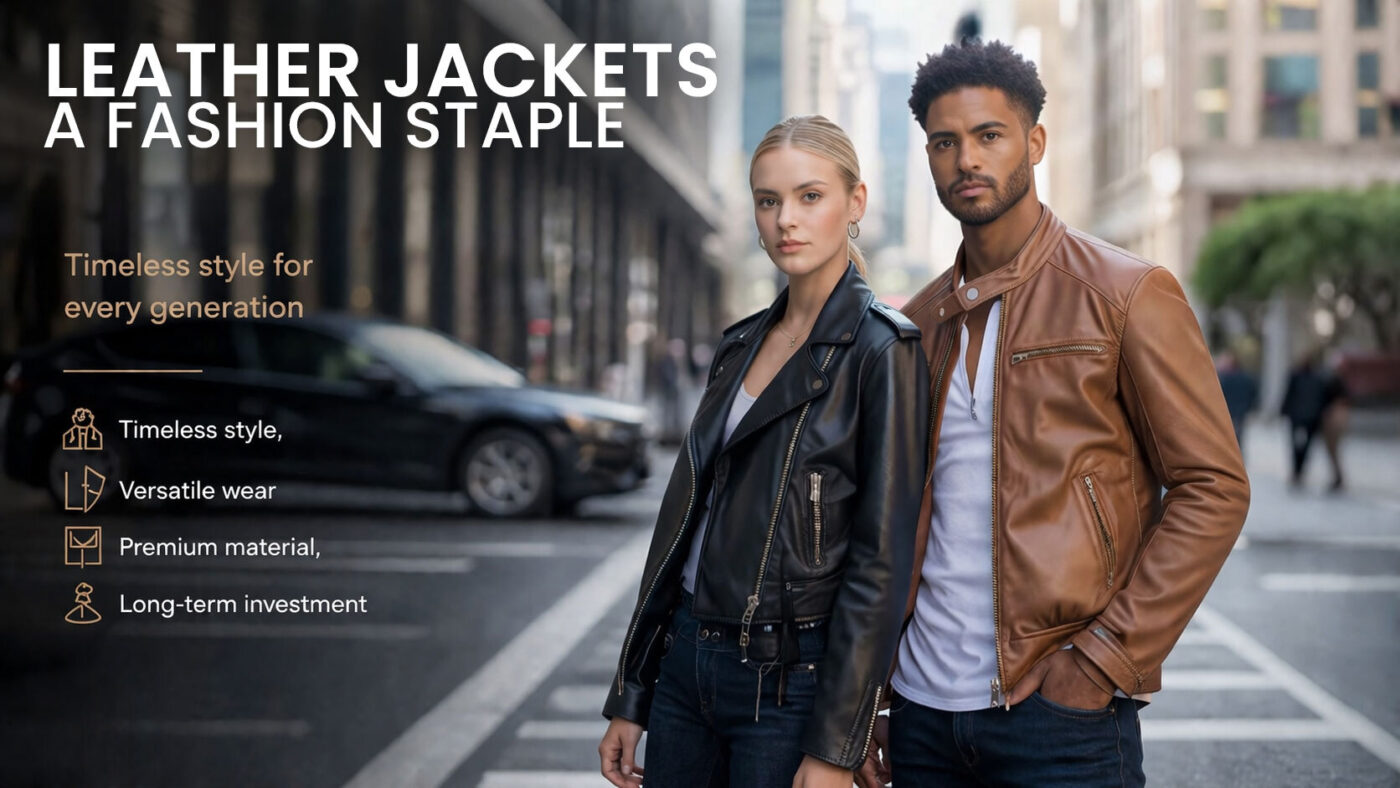
Leather Jackets: A Fashion Staple
Apr
Every generation thinks it has discovered the leather jacket. The reality is that every generation simply found its own way to wear the same garment that aviators wore in 1918, that Marlon Brando wore in 1953, that punk bands wore in 1977, and that has appeared on runways in every decade since. No other single piece of clothing has crossed that many cultural moments without becoming a costume or a relic.
The question worth answering is not whether leather jackets are in style. They always are. The more useful question is why, and what that means when you are deciding which one to buy, how to wear it, and whether it is worth the investment.
This guide covers all of it. The actual history behind the garment’s staying power, the styles available and what each one does for different body types and occasions, how to wear a leather jacket across different contexts, what makes one worth buying versus what to avoid and the specific price ranges that correspond to specific quality levels.
Why Leather Jackets Never Go Out of Style: The Real Reason
Most articles about timeless leather jackets say some version of the same thing: they have history, they are versatile, they look cool. All of that is true, but none of it explains the mechanism. Why does a leather jacket keep coming back when almost every other specific garment eventually dates itself?
The answer is that a leather jacket sits at an unusual intersection of three properties that very few garments share simultaneously.
First, it has a genuine function. Leather is wind-resistant, abrasion-resistant, and provides real protection. A leather jacket was not originally designed as a fashion statement. It was designed because pilots needed to survive cold open cockpits and motorcyclists needed protection from road surfaces. Function-first garments tend to have longer fashion lives than purely aesthetic ones because they continue to justify their existence beyond trend cycles.
Second, it improves with age in a way almost nothing else does. A quality leather jacket develops a patina over the years of wear. The leather darkens, softens, and acquires creases and character that are specific to how you moved in it, what you did in it, and how you stored it. This aging process makes each jacket progressively more personal and more valuable to its owner. No other common clothing material does this. Fabric fades and wears out. Leather deepens and gains character.
Third, it carries cultural weight without being tied to a specific cultural moment. The leather jacket has been worn by too many different subcultures, in too many different contexts, over too long a period for any single association to dominate it permanently. It means rebel, pilot, punk, rockstar, fashion, motorcycle, streetwear, and luxury simultaneously. That breadth of meaning means it can be claimed by any new generation without feeling borrowed or ironic.
These three properties together produce a garment that cannot be permanently retired by any trend cycle because it is not dependent on trends in the first place.
A Brief History That Explains the Present
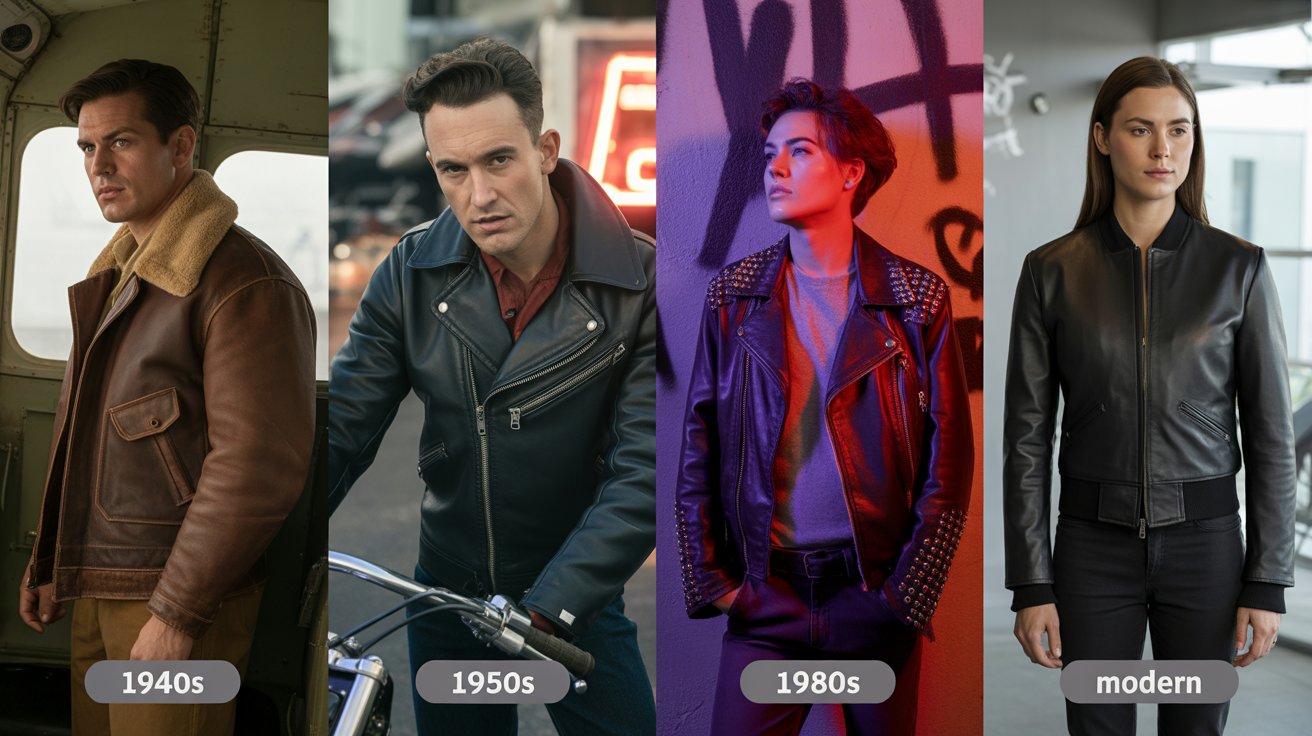
Understanding where leather jackets come from explains why they feel the way they do when you wear one today.
1910s to 1940s: Function Before Fashion
The leather jacket began as flight gear. Early aviation aircraft had open cockpits and extreme temperature conditions. Military pilots and aviators needed something that blocked wind and retained body heat. Leather was the material that could do both. The bomber jacket, with its ribbed cuffs, waistband, and front zipper, was designed specifically for this purpose and worn by pilots in both World Wars.
The aviator jacket with its sheepskin collar and lining was standard equipment for pilots who needed genuine cold-weather protection at altitude. None of these garments was designed with fashion in mind. They were designed to keep people functional in extreme conditions, which is precisely why they became fashionable.
1950s: The Moment Everything Changed
In 1953, Marlon Brando appeared in The Wild One wearing a black leather motorcycle jacket. That image defined the cultural meaning of the leather jacket for the following seven decades. Suddenly, the same garment worn by military pilots became a symbol of rebellion, independence, and rejection of mainstream convention.
James Dean reinforced it. The emerging motorcycle culture reinforced it. The leather jacket became the uniform of everyone who wanted to signal that they did not follow rules. Its association with rebellion was so complete that it was briefly banned in some schools and considered inappropriate for polite contexts.
1970s to 1990s: Every Subculture Claims It
Punk adopted the leather jacket in the 1970s and covered it in studs, patches, and paint. Rock musicians of the 1980s made it part of the visual language of their genre. The grunge movement of the 1990s stripped it back to its most basic form and wore it over flannel. Each subculture adapted it without abandoning it. The studded leather jacket, the distressed leather jacket, and the vintage leather jacket each carry the marks of these specific moments while the underlying garment remains the same.
2000s to Present: Fashion Absorbs the Rebel
The leather jacket moved into high fashion without losing its streetwear identity. Saint Laurent under Hedi Slimane made sleek black leather jackets the centerpiece of its collections in the early 2010s. Simultaneously, the same basic garment was available at every price point from mass market to luxury. The leather bomber jacket became the most searched outerwear style for multiple consecutive years on major fashion platforms.
In 2025 and 2026, the dominant trends are oversized leather bombers, vintage-inspired distressed finishes, earthy and muted tones alongside the permanent relevance of black, and minimalist hardware that removes the visual noise from classic silhouettes. These trends update the presentation without changing what the jacket fundamentally is.
Every Leather Jacket Style and What It Actually Does
Understanding the different types of leather jackets is the practical core of choosing the right one. Each style has a specific visual geometry that produces specific effects.
Biker or Moto Jacket
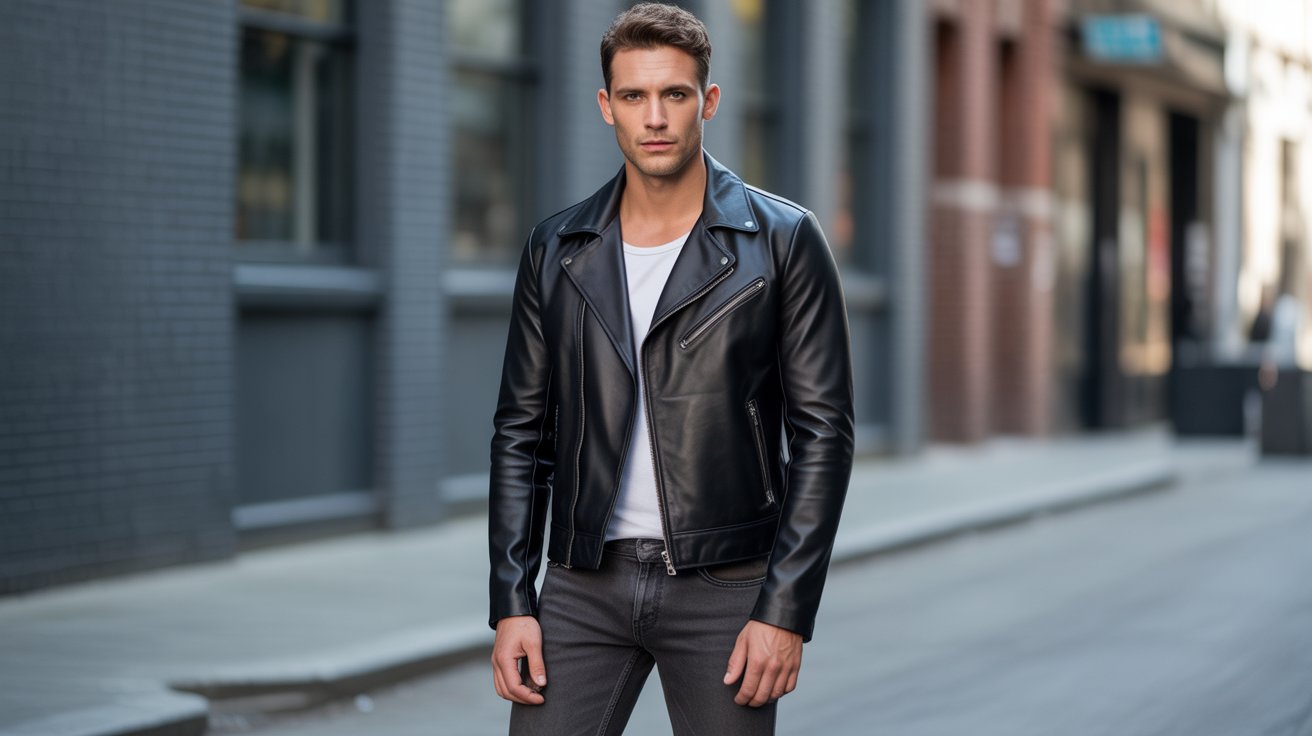
The biker leather jacket has an asymmetric front zip, snap lapels, and a close-fitting silhouette. The diagonal zip creates a dynamic visual line across the chest. The close fit emphasizes the shoulder-to-waist taper on athletic frames. This is the jacket most directly associated with rebellion and motorcycle culture.
Who it suits: Athletic builds who want the V-shape emphasized. Slim frames who want structure. Anyone who wants maximum versatility from a single leather jacket across casual and semi-casual occasions.
Occasions: Casual, smart-casual, evening. Effectively, any context is short of formal.
At Stegaro: Classic biker styles from $169 to $199 with free delivery.
Bomber Jacket
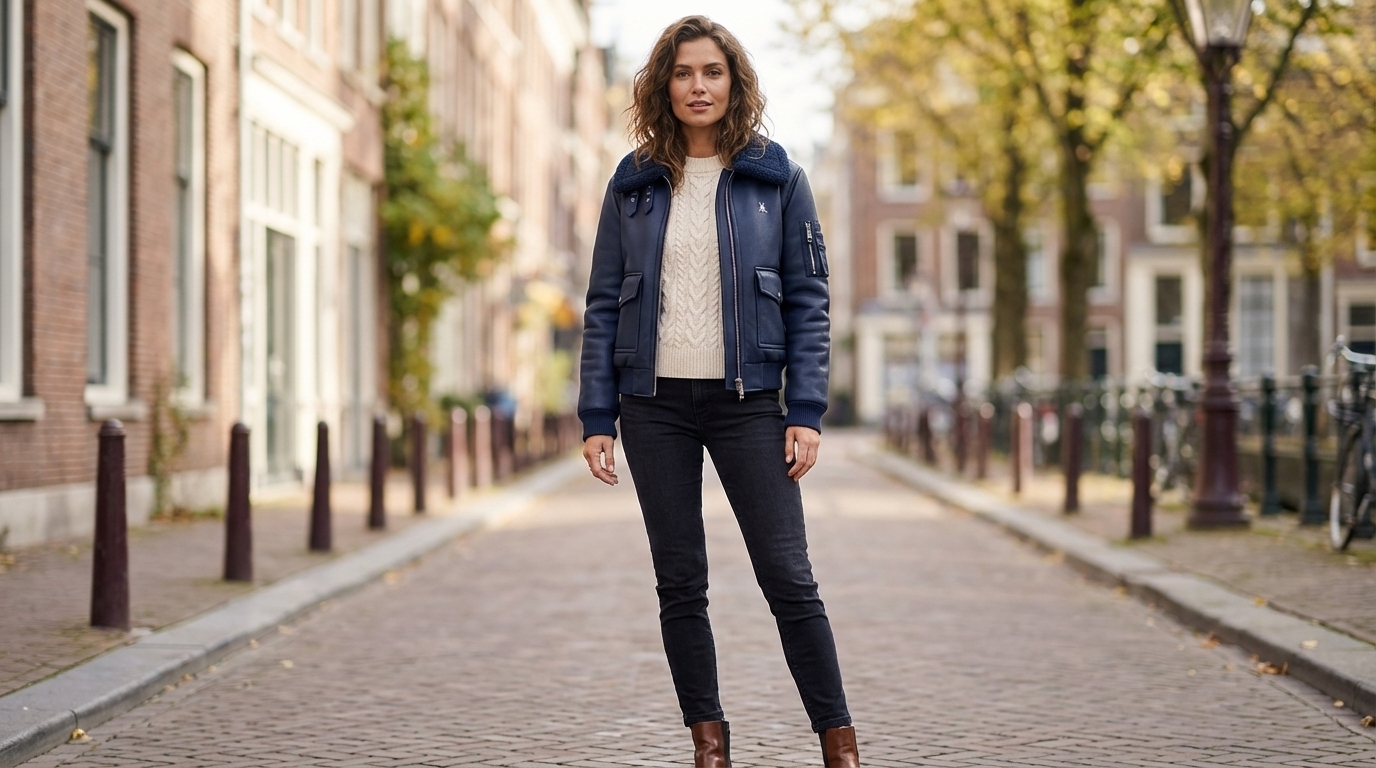
The leather bomber jacket has ribbed cuffs and a waistband, a simple front zip, and a more relaxed fit than the biker jacket. Its origin is military aviation. Its modern identity is the most versatile leather jacket style available. The ribbed waistband creates a natural break that defines the waist even on frames without strong natural definition.
Who it suits: All body types. For slim frames, the chest volume adds presence. For broader frames in a regular fit, the waist ribbing provides definition. For petite frames, a cropped bomber creates the best proportions.
Occasions: Casual, streetwear, weekend, smart-casual when worn in a fitted version over a clean outfit.
At Stegaro: Bomber styles from $169 to $219 with free delivery.
Aviator Jacket
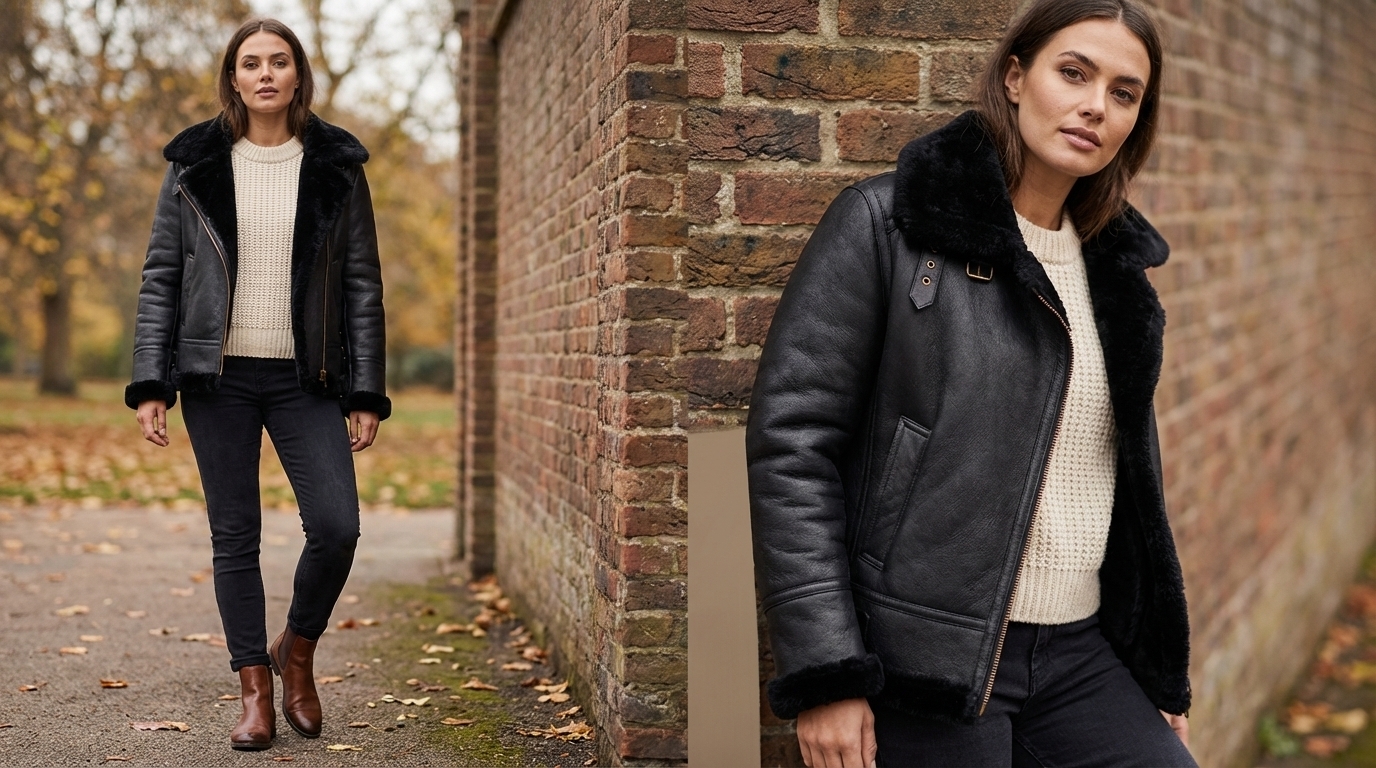
The leather aviator jacket has its sheepskin or shearling collar and lining as its defining feature. It adds substantial volume at the neck and chest, provides genuine warmth, and carries a vintage military aesthetic that reads cool without being aggressive.
Who it suits: Slim and lean frames who benefit from the volume at the collar and chest. Tall frames who can carry the added visual weight without being overwhelmed. Anyone dressing for genuinely cold conditions where the shearling provides real insulation.
Occasions: Casual to smart-casual in cooler weather. One of the strongest cold-weather style choices available.
At Stegaro: Aviator styles from $199 to $229 with free delivery.
Cafe Racer Jacket
The cafe racer leather jacket is defined by its minimal design, snap or band collar, and clean front without the aggressive hardware of a biker jacket. It emerged from the British motorcycle culture of the 1960s and carries a sleeker, more refined aesthetic than the biker jacket.
Who it suits: Athletic and slim frames who want a clean, contemporary look. Anyone who finds biker jacket hardware visually too heavy for their preference.
Occasions: Smart-casual, semi-formal, office-casual. More adaptable to elevated occasions than most other leather jacket styles.
At Stegaro: Cafe racer styles from $189 to $219 with free delivery.
Leather Blazer
The leather blazer takes the silhouette of a tailored business jacket and executes it in leather. The result is a piece that crosses the line between professional and edgy, works in offices with casual dress codes, and eliminates the need for a separate smart jacket for most social occasions.
Who it suits: All body types. Slim and fitted versions suit slim and athletic frames. Oversized versions suit broader builds and create a deliberate fashion-forward statement.
Occasions: Office-casual, smart-casual, evening, professional settings where a standard leather jacket would be too casual.
At Stegaro: Leather blazer styles from $179 to $229 with free delivery.
Quilted Leather Jacket
The quilted leather jacket adds horizontal stitching across the surface that creates both a distinctive visual texture and additional insulation. The horizontal lines add perceived width to the chest, which benefits lean frames. The quilted construction provides more warmth than the unquilted leather of the same weight.
Who it suits: Lean and slim frames who benefit from the horizontal visual weight. Anyone wanting a leather jacket that performs better in cold weather.
Occasions: Casual, smart-casual, cold weather contexts where insulation matters alongside appearance.
At Stegaro: Quilted leather styles from $169 to $219 with free delivery.
Hooded Leather Jacket
The hooded leather jacket combines the structure of leather with the practical coverage of a hood. It bridges leather jacket style with the casual functionality of a hoodie, making it one of the most wearable everyday leather options. Many versions have removable hoods.
Who it suits: Anyone who wants a leather jacket style with added practical weather coverage. Works across all body types.
Occasions: Casual, weekend, everyday. Less suited to smart-casual or elevated occasions than non-hooded styles.
At Stegaro: Hooded leather styles from $169 to $199 with free delivery.
Studded Leather Jacket
The studded leather jacket and punk leather jacket carry the most direct visual reference to the subcultures that defined leather jacket culture in the 1970s and 1980s. Metal studs, spikes, or decorative hardware across the shoulders, collar, or body create a deliberately bold aesthetic.
Who it suits: Those who want maximum visual impact and are comfortable with a jacket that makes a clear statement. Best on frames where the studs are proportional to the body size.
Occasions: Concerts, events, fashion-forward social contexts. Less adaptable to everyday or professional settings than plain styles.
At Stegaro: Studded and embellished styles from $169 to $199 with free delivery.
Leather Long Coat and Trench
The leather trench coat and leather long coat extend the jacket to knee or below-knee length. They add formality, coverage, and a strong visual statement that hip-length jackets cannot match. The additional length creates a continuous vertical line through the silhouette that reads both imposing and elegant.
Who it suits: Taller frames who can carry the additional length. Apple-shaped bodies that benefit from the elongating vertical line. Anyone dressing for formal or semi-formal occasions where a hip-length jacket would be too casual.
Occasions: Formal, semi-formal, evening, professional. The most elevated leather outerwear option available.
At Stegaro: Longline and trench coat styles from $199 to $249 with free delivery.
Complete Style and Occasion Guide
| Occasion | Best Leather Jacket Style | What to Wear With It |
| Everyday casual | Biker, bomber, or hooded jacket | Jeans, t-shirt, sneakers |
| Smart-casual | Cafe racer or leather blazer | Chinos, clean shirt, leather shoes |
| Weekend | Bomber or oversized biker | Joggers, hoodie, sneakers |
| Date night | Fitted biker or cafe racer | Dark denim, clean shirt, boots |
| Office casual | Leather blazer | Tailored trousers, shirt, loafers |
| Evening out | Fitted biker or cafe racer | Dress or tailored outfit, heels or boots |
| Formal event | Leather long coat or trench | Suit, dress, polished shoes |
| Concert or event | Studded or biker jacket | Band tee, jeans, boots |
| Cold weather | Aviator, quilted, or shearling | Layered knitwear, heavy boots |
| Transitional weather | Standard bomber or biker | Single mid-layer, any shoe style |
What a Leather Jacket Does for Your Wardrobe That Nothing Else Can
This is the practical argument that goes beyond “it is timeless” and explains the specific value a leather jacket adds.
It Instantly Elevates a Basic Outfit
A white t-shirt and jeans is one of the most ordinary outfit combinations possible. Add a leather jacket, and the same combination reads as deliberately styled. The jacket does not just add a layer. It adds structure, attitude, and a point of visual interest that changes how the entire outfit reads. No other single outerwear piece achieves this transformation as reliably.
It Creates Consistent Confidence
There is a specific feeling that comes with wearing a leather jacket that is difficult to replicate with other garments. The weight of the leather, the way it sits on the shoulders, and the sound it makes when you move all create a physical experience that translates into a psychological state. People who wear leather jackets regularly describe this effect consistently. It is the reason the jacket has been associated with confidence and attitude across every culture and generation that has adopted it.
It Is the Only Outerwear That Improves Over Time
Every other outerwear category, from wool coats to synthetic puffers to denim jackets, looks best when new and progressively worse with age. A quality full grain or top grain leather jacket does the opposite. The patina it develops over years of wear makes it more personal, more distinctive, and in many cases more visually interesting than it was when new. This reversal of the normal clothing aging trajectory is unique to quality leather.
It Covers the Widest Range of Occasions
No other single jacket style covers as many different contexts as a leather jacket. A puffer is casual only. A wool overcoat is formal or smart-casual. A denim jacket is casual only. A leather jacket in the right style can move from genuinely casual through smart-casual to semi-formal without changing the jacket. The occasion is determined by what you wear with it rather than by the jacket itself.
The Investment Argument: Is a Leather Jacket Worth the Price?
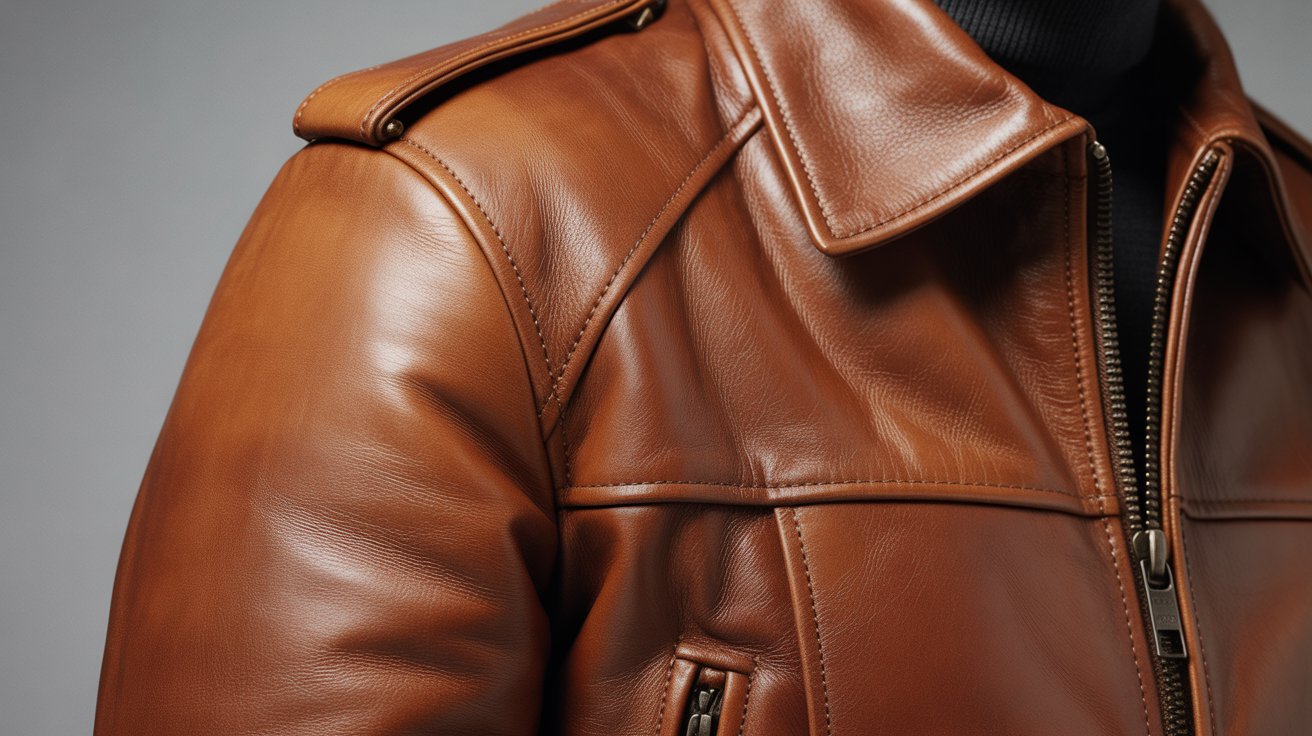
The most common hesitation when buying a leather jacket is the price. A quality leather jacket costs more than most other outerwear. The case for the investment is straightforward when the calculation is done correctly.
Cost Per Year of Use
| Jacket Type | Purchase Price | Realistic Lifespan | Cost Per Year |
| PU / Faux Leather | $50 to $80 | 1 to 2 years | $40 to $80 per year |
| Bonded Leather | $80 to $130 | 2 to 3 years | $30 to $65 per year |
| Genuine Leather | $130 to $180 | 4 to 7 years | $20 to $45 per year |
| Top Grain Leather | $180 to $250 | 10 to 20 years | $10 to $25 per year |
| Full Grain Leather | $250 and above | 20 to 40+ years | $6 to $15 per year |
At Stegaro, genuine and real leather jackets start from $119 for entry styles and reach $249 for premium pieces, with most quality options in the $169 to $229 range and free delivery on all orders. At the mid-range price point with a realistic 10 to 15 year lifespan, the annual cost per wear is lower than almost any other outerwear purchase.
The Resale and Inheritance Factor
Quality leather jackets retain value in a way that synthetic outerwear does not. A well-maintained full grain leather jacket from a reputable brand can be resold at a meaningful fraction of its original price decades after purchase. Some vintage leather jackets sell for more than their original retail price. This residual value is not available from any other common outerwear category.
Leather Jacket Trends in 2025 and 2026
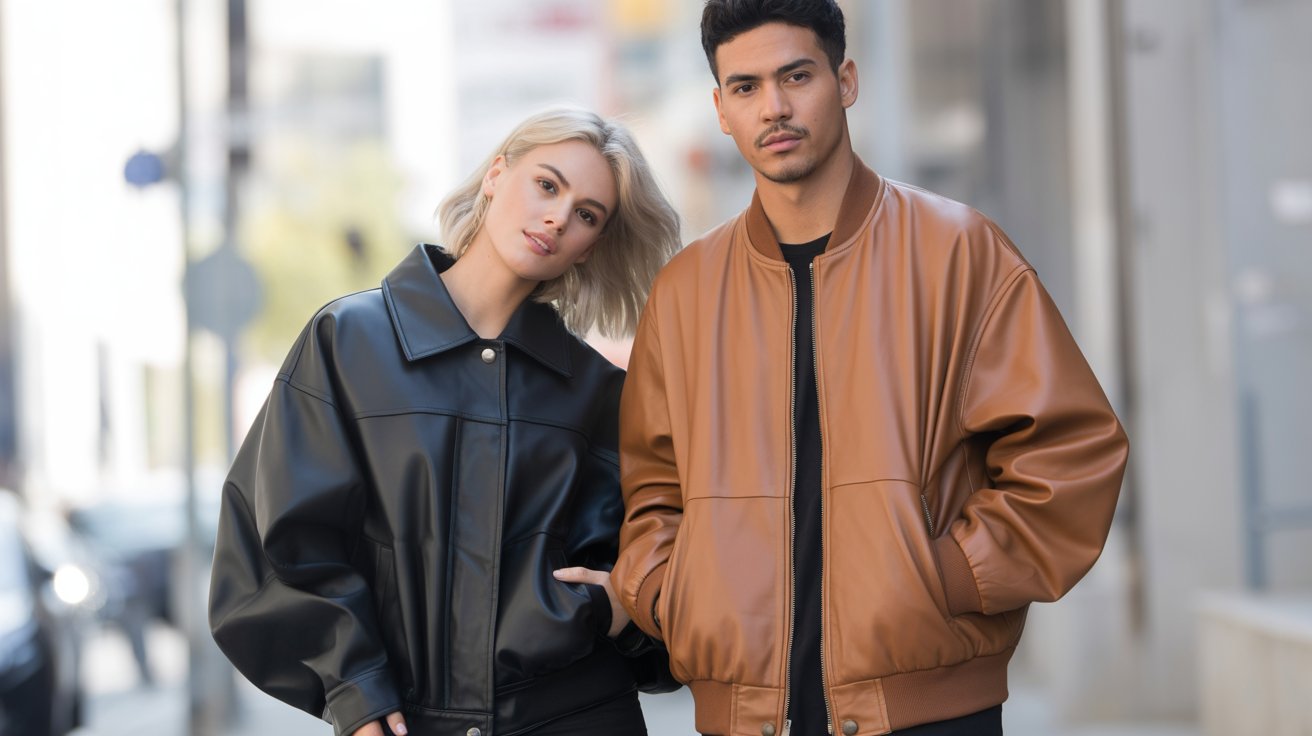
Understanding current trends helps you buy something that feels current without sacrificing the timeless quality that makes a leather jacket worth buying in the first place.
Oversized Silhouettes
The oversized leather bomber and relaxed-fit biker have been the dominant trend for several consecutive seasons and continue into 2026. The key is that the jacket is deliberately large rather than simply too big. Shoulder seams sitting slightly off the natural shoulder, generous chest room, and longer sleeve lengths are all deliberate design choices rather than fit mistakes.
Earthy and Muted Tones
Black remains the single most versatile and most purchased color. But brown, cognac, tan, olive, and burgundy leather jackets have gained significant ground. These tones photograph differently from black, layer differently with autumn and spring wardrobes, and develop more visible patina over time, which is part of their appeal for buyers who understand how leather ages.
Minimal Hardware
The heavy silver zipper and stud era has given way to matte hardware, concealed closures, and cleaner overall aesthetics. This minimalism makes jackets more versatile across occasions and ensures they age without looking like they belong to a specific moment.
Vintage and Distressed Finishes
Distressed leather jackets with controlled fading, washed finishes, or worn edges have been consistently relevant. The appeal is that they look broken-in from the start, giving the appearance of a jacket with history, even when new.
Collarless and Unconventional Silhouettes
Runway designers have introduced collarless leather jackets, covered-button closures, funnel necks, and other departures from classic silhouettes. These styles are more fashion-forward and less versatile than classic styles, but they indicate the direction of the market and will filter into accessible price points over the following seasons.
How to Style a Leather Jacket: Outfit Formulas That Always Work
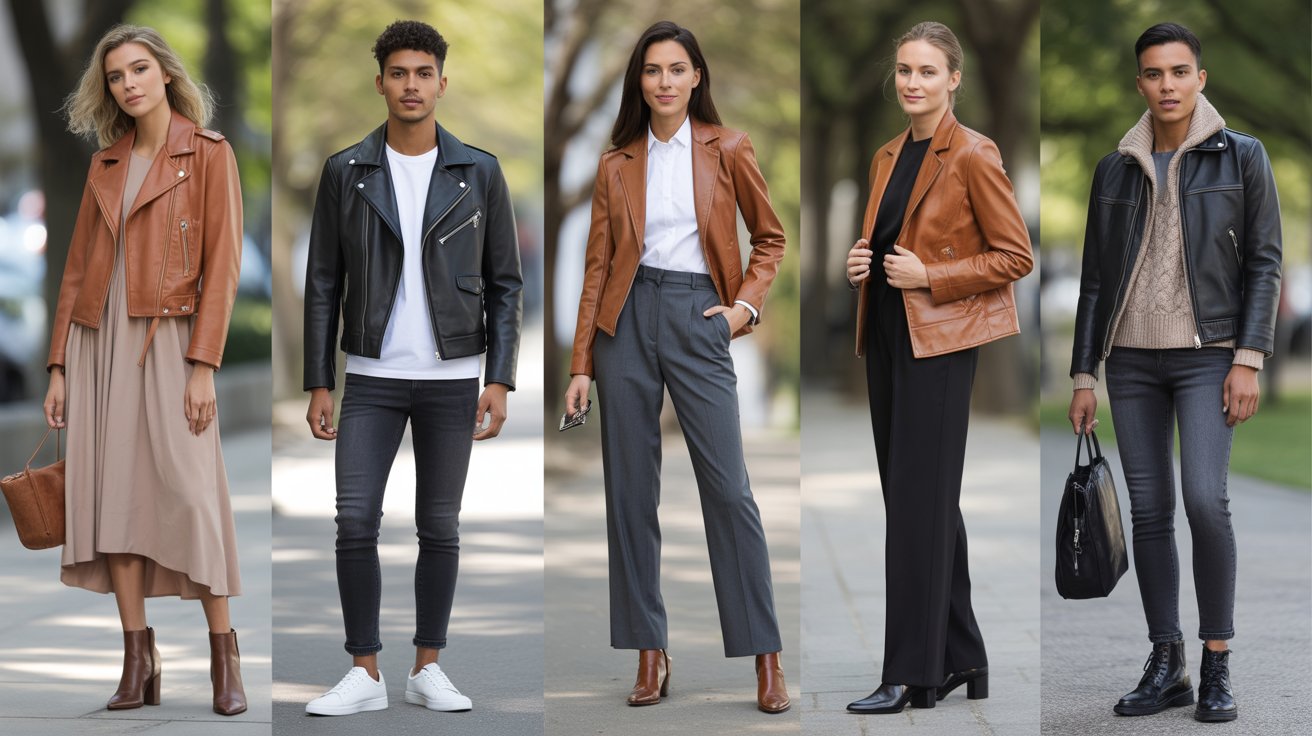
These are reliable combinations that work for both men and women across occasions.
The Classic
Leather biker jacket + white t-shirt + dark slim jeans + white sneakers or black boots. This is the baseline. Simple, clean, and consistently effective. Change the shoes and the outfit shifts from casual to smart-casual without any other change.
The Elevated Casual
Cafe racer jacket + fine merino crew-neck + straight-leg trousers + leather loafers. The cafe racer sits close enough to a blazer in visual tone that it works with trousers and loafers in a way that most leather jackets do not. This combination reads as intentionally dressed without being formally stiff.
The Feminine Balance
Fitted biker or cropped jacket + midi dress or slip dress + ankle boots. The structure of the leather jacket against the softness of a dress is one of the most reliable outfit formulas in modern fashion. The contrast is the point. Neither element would be as effective without the other.
The Layered Winter Look
Leather bomber + chunky roll-neck sweater + dark denim + lace-up boots + scarf. The bomber sits over the sweater without too much bulk if the jacket is a regular rather than slim fit. The scarf handles the neck coverage gap and completes the warmth profile.
The Smart-Casual Professional
Leather blazer + dress shirt + tailored chinos or trousers + leather Oxford shoes. The leather blazer replaces the standard wool or cotton blazer and adds the edge that distinguishes the outfit from standard office-casual without breaking any professional conventions.
FAQs
Yes. Leather jackets are consistently relevant across every fashion cycle because their appeal is not trend-dependent. The specific styles that are most prominent shift by season. In 2025 and 2026, oversized leather bombers, earthy tones, vintage finishes, and minimalist hardware are the dominant expressions of the leather jacket trend. But the underlying garment remains relevant regardless of which specific variation is most prominent.
Yes, when you buy the right quality level. A genuine or top grain leather jacket in the $169 to $229 range at Stegaro, with a realistic lifespan of 10 to 20 years, costs less per year of use than most synthetic outerwear that needs replacement every few years. The cost-per-year calculation consistently favors quality leather over cheaper alternatives.
A standard biker or bomber jacket in black or dark brown covers the widest range of occasions, body types, and personal styles. Black is the most universally versatile color. The biker silhouette works from casual through smart-casual. The bomber is slightly more relaxed and works across the same range with the addition of streetwear contexts.
Three properties distinguish it from trend-dependent garments. It has genuine functional origins that justify its existence beyond fashion. It improves with age through patina development, which makes it more personal and distinctive over time. It has been adopted by enough different subcultures across enough decades that no single cultural association dominates it permanently.
Check six things. The back of the leather at any raw edge should be fibrous and rough, not fabric or plastic mesh. Pore patterns should be irregular and random, not repeating. The jacket should feel warm when held in your palm. Zippers should glide smoothly with no resistance. Stitching should be tight and even throughout. The jacket should have a noticeable but comfortable weight. A jacket that passes all six is genuine leather with proper construction.
Top grain leather, with proper care, lasts 10 to 20 years. Full grain leather can last 30 to 40 years or longer. Genuine leather lasts 3 to 7 years. Bonded leather and PU leather last 1 to 3 years before peeling or cracking visibly. Lifespan depends directly on leather grade and maintenance consistency.
Yes. Every leather jacket style, from biker to bomber to blazer, is available in cuts suited to men and women. The styling approach differs, but the garment itself is not gender-specific. Many of the most iconic leather jacket wearers in history, from Joan Jett to Patti Smith to Debbie Harry, have defined women’s leather jacket culture as distinctly as any male equivalent.
Black is the most versatile single color. It works with every other color in a wardrobe, suits every occasion where a leather jacket is appropriate, and shows the patina of aging more subtly than lighter tones. Dark brown and cognac are the second most versatile options and develop more visible patina over time, which appeals to buyers who want the aging quality of leather to be visible.
Conclusion
A leather jacket is a fashion staple in the truest sense of the term. Not because it follows trends, but because it has never needed to. It earned its place in every wardrobe through a combination of functional origins, cultural weight, genuine material quality, and the unique property of improving rather than declining with age.
The specific style you choose matters. A biker jacket serves different purposes than a leather blazer or a quilted leather jacket. The leather type you choose determines the longevity and aging character of the jacket. The fit you choose at purchase determines how the jacket looks for every subsequent year you own it.But across all of those variables, the underlying conclusion is the same one that every generation since the 1950s has reached: a quality leather jacket is one of the most reliable investments any wardrobe can contain. It does not go out of style because it was never in style in the conventional sense. It simply always works, and it gets better every time you wear it.