

Blog
Wearing Leather Jackets in Different Seasons: The Complete Year-Round Guide
Apr
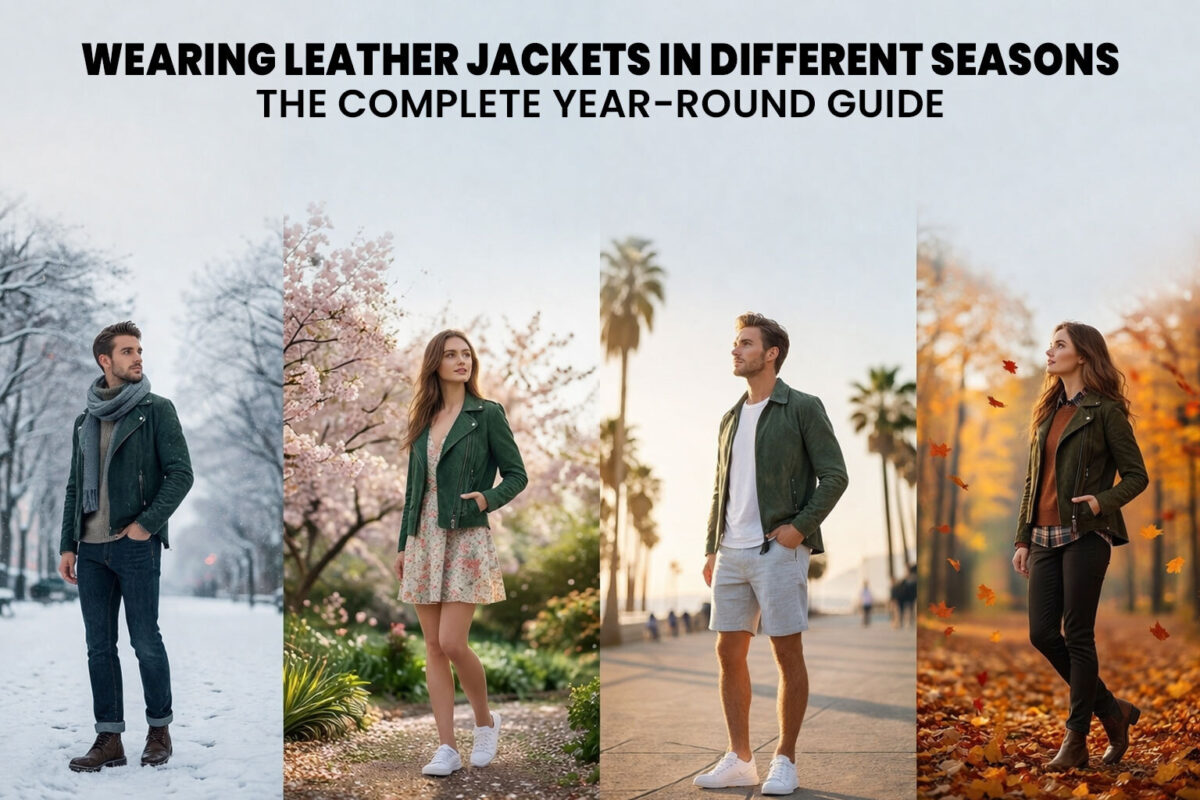
People often assume a leather jacket is a winter or autumn-only piece. That assumption leads to one of the most versatile garments in any wardrobe, sitting unused for half the year. The reality is that leather jackets work across all four seasons when you understand one thing: it is not the jacket that changes, it is what you wear with it, the weight of leather you choose, and the specific temperature window you are dressing for.
This guide gives you the complete picture. Exact temperature ranges, the right leather type for each season, specific outfit combinations that work, what to wear underneath at different temperatures, and how your care routine should shift through the year. Whether you are in a temperate climate, a cold northern winter, or a warm region where seasons are less extreme, everything you need is here.
The Core Principle: Leather Weight Determines Season Range
Before covering each season individually, understand the single most important variable. The leather jacket’s weight and lining determine which temperatures it is suited for. Style, color, and silhouette matter for aesthetics. But weight and lining determine whether you are comfortable with the leather type.
| Leather Type and Construction | Comfortable Temperature Range | Best Season |
| Lightweight lambskin, no lining | 18°C to 28°C / 65°F to 82°F | Summer evenings, warm spring |
| Standard lambskin or goatskin, thin lining | 12°C to 22°C / 54°F to 72°F | Spring and early autumn |
| Top grain cowhide, standard lining | 7°C to 16°C / 45°F to 61°F | Autumn and mild winter |
| Full grain cowhide, quilted or fleece lining | 2°C to 10°C / 35°F to 50°F | Winter |
| Shearling or sheepskin lined aviator | Below 5°C / Below 41°F | Deep winter |
| Perforated leather | 20°C to 30°C / 68°F to 86°F | Summer, warm evenings |
At Stegaro, jackets range from $119 for lighter entry styles to $229 for lined and premium leather pieces, with free delivery on all orders. Knowing which weight suits your climate helps you buy the right jacket the first time.
Autumn: The Prime Season for Leather Jackets
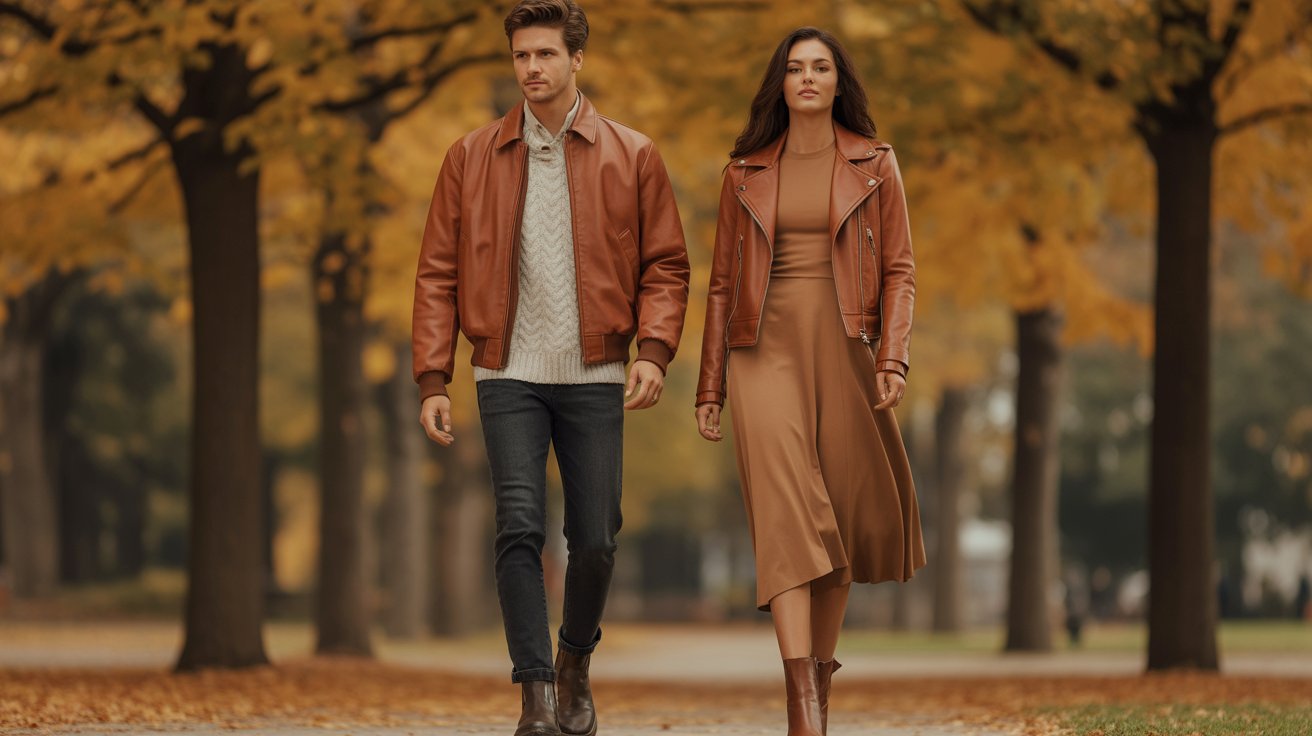
Autumn is when wearing a leather jacket feels most natural and most intentional. Temperatures sit exactly in the comfort range for most leather jacket weights, the visual palette of the season suits leather tones perfectly, and the layering opportunities are the most flexible of any season.
Ideal Temperature Range for Autumn Leather
10°C to 18°C / 50°F to 65°F is the classic leather jacket temperature. At this range, a standard cowhide or top-grain leather jacket worn over a single mid-layer is exactly right. You are warm enough, mobile, and the jacket is doing actual work as outerwear rather than just serving as a style choice.
When temperatures dip to 7°C to 10°C / 45°F to 50°F, add a heavier mid-layer like a chunky knit or a hoodie. The leather jacket handles wind and light rain, while the layer underneath handles warmth.
Best Leather Jacket Styles for Autumn
A classic biker leather jacket in cowhide is the strongest autumn choice. The structure handles autumn wind effectively, and the silhouette works with the heavier fabrics of the season. A leather bomber jacket is equally strong, particularly with its ribbed cuffs and waistband that seal out cold air at the wrists and hem.
For a more refined autumn option, a cafe racer leather jacket worn over a turtleneck creates a clean, polished look that moves from casual to smart-casual depending on the rest of the outfit.
What to Wear Underneath in Autumn
- At 16°C to 18°C: lightweight cotton shirt or thin crewneck
- At 12°C to 16°C: medium knit sweater, flannel shirt, or long sleeve cotton
- At 7°C to 12°C: chunky wool knit, turtleneck, or hoodie
- Below 7°C: thermal base layer plus a substantial knitwear mid-layer
Autumn Outfit Combinations
Casual: Biker jacket over a chunky knit, dark denim, Chelsea boots. A brown or cognac leather jacket reads more autumnal than black at this time of year and works naturally with rust, olive, and charcoal tones.
Smart-casual: Cafe racer jacket over a fine merino turtleneck, slim tailored trousers, clean leather shoes. This combination reads deliberately put-together without appearing overdressed.
Weekend: Bomber jacket over a hoodie, straight-leg jeans, white sneakers. The bomber sits comfortably over a hoodie without looking overstuffed if the fit is regular rather than slim.
Women: A fitted leather jacket over a midi dress with ankle boots is one of the strongest autumn combinations in any wardrobe. The contrast between the structured jacket and the softer dress creates a balance that works across occasions from casual to semi-formal.
Autumn Colors
Brown, cognac, and tan leather jackets become the most relevant in autumn. They reflect the natural color palette of the season without any effort. Black leather jackets remain versatile and work with the deeper tones of autumn knitwear.
Winter: Leather Jackets as Serious Cold-Weather Outerwear
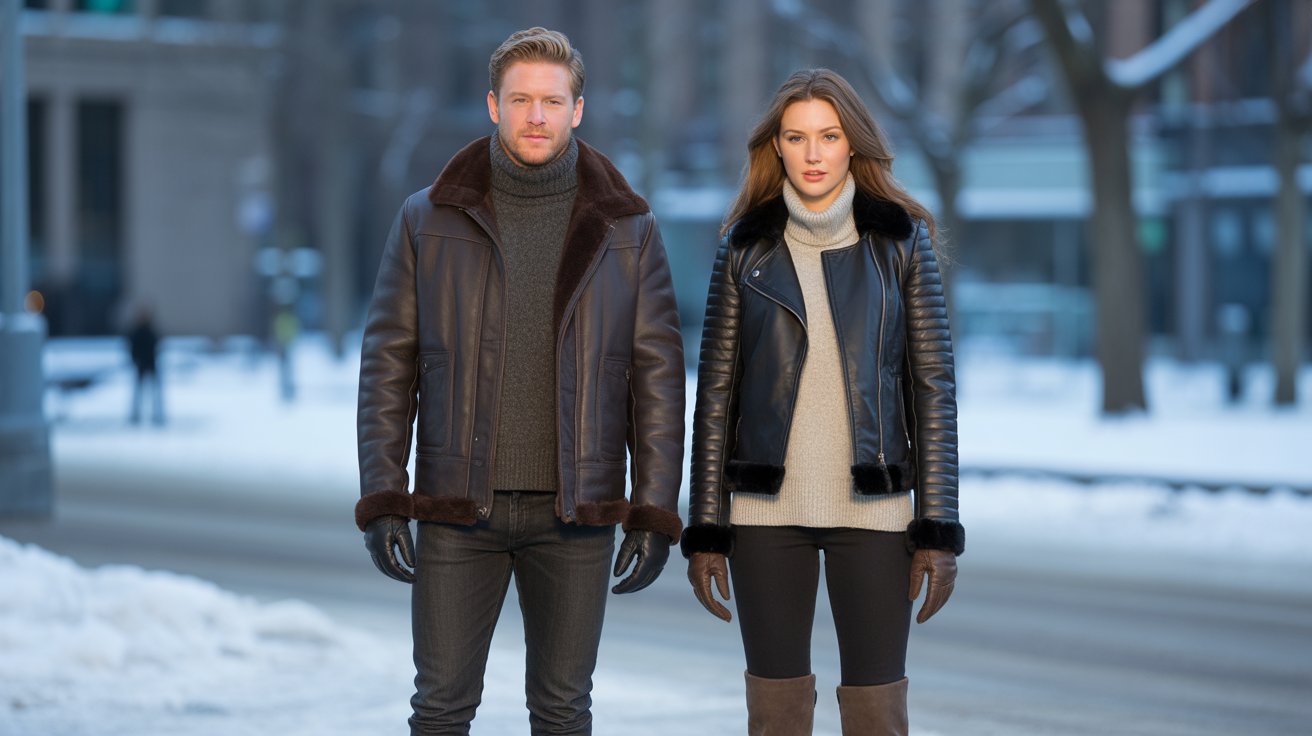
The most common misconception about leather jackets in winter is that they are not warm enough to be practical. This is true of lightweight or unlined leather. It is not true of properly weighted leather with appropriate layering.
Leather is a natural wind barrier. A full-grain cowhide jacket blocks wind more effectively than most synthetic outerwear materials. Combined with the right layering underneath, a leather jacket can be genuinely warm in temperatures as low as 0°C to 2°C / 32°F to 36°F.
Ideal Temperature Range for Winter Leather
2°C to 10°C / 35°F to 50°F suits a well-lined leather jacket with proper layering. Below 0°C / 32°F, a leather jacket becomes the mid-layer over a thermal base, with the leather jacket itself under a heavier outer coat, or you move to a shearling-lined aviator jacket, which provides genuine insulation at those temperatures.
A shearling leather jacket or aviator jacket with sheepskin lining is the most effective leather option for genuine cold. The wool interior traps air and provides real insulation rather than relying entirely on layering. Stegaro’s shearling and aviator styles sit in the $199 to $229 range.
What to Wear Underneath in Winter
This is where most people make their biggest winter leather jacket mistake. They reach for a thick puffer or padded layer underneath, which creates too much bulk under the jacket and makes movement uncomfortable. The more effective approach is multiple thin layers.
- Base layer: Thermal or merino wool fitted top
- Mid-layer: Wool or cashmere sweater, or a fleece sweatshirt
- Outer layer: The leather jacket over the mid-layer
This three-layer combination traps more air and provides more warmth than a single thick layer, while keeping the jacket profile clean and the movement unrestricted.
Best Leather Jacket Styles for Winter
A quilted leather jacket provides additional insulation through the quilted construction itself and is one of the best winter leather options for moderate cold without extreme layering. Stegaro’s quilted leather styles start from $169.
A hooded leather jacket adds neck and head coverage that makes a significant practical difference in cold and wet winter conditions. The hood provides protection that a scarf alone cannot replicate in heavy wind or rain.
A leather long coat or leather trench coat provides coverage that extends to the knee, which dramatically increases warmth compared to hip-length jackets. For formal winter occasions, a leather long coat is both practical and distinctive.
Winter Outfit Combinations
Men, cold city days: Full-grain cowhide biker jacket, thermal base layer, chunky wool roll-neck sweater, heavy dark denim, leather boots. Add a scarf between the jacket collar and your neck for additional wind protection.
Women, winter casual: Quilted leather jacket over a cashmere turtleneck, leather or thick knit leggings, knee-high boots, wool scarf worn outside the jacket collar. The scarf worn outside rather than tucked in adds visible warmth and completes the silhouette.
Smart winter: Leather long coat over a wool blazer and shirt, slim dark trousers, leather Oxford shoes. This combination is one of the sharpest cold-weather looks available and transitions from office to evening without any changes.
Winter Accessories That Complete the Look
A leather jacket in winter works best when accessories fill the gaps it leaves open. A good quality scarf around the neck, leather gloves, and a beanie or wool cap transform the combination from stylish but cold to genuinely warm and complete.
Spring: Leather Jackets in Transitional Weather
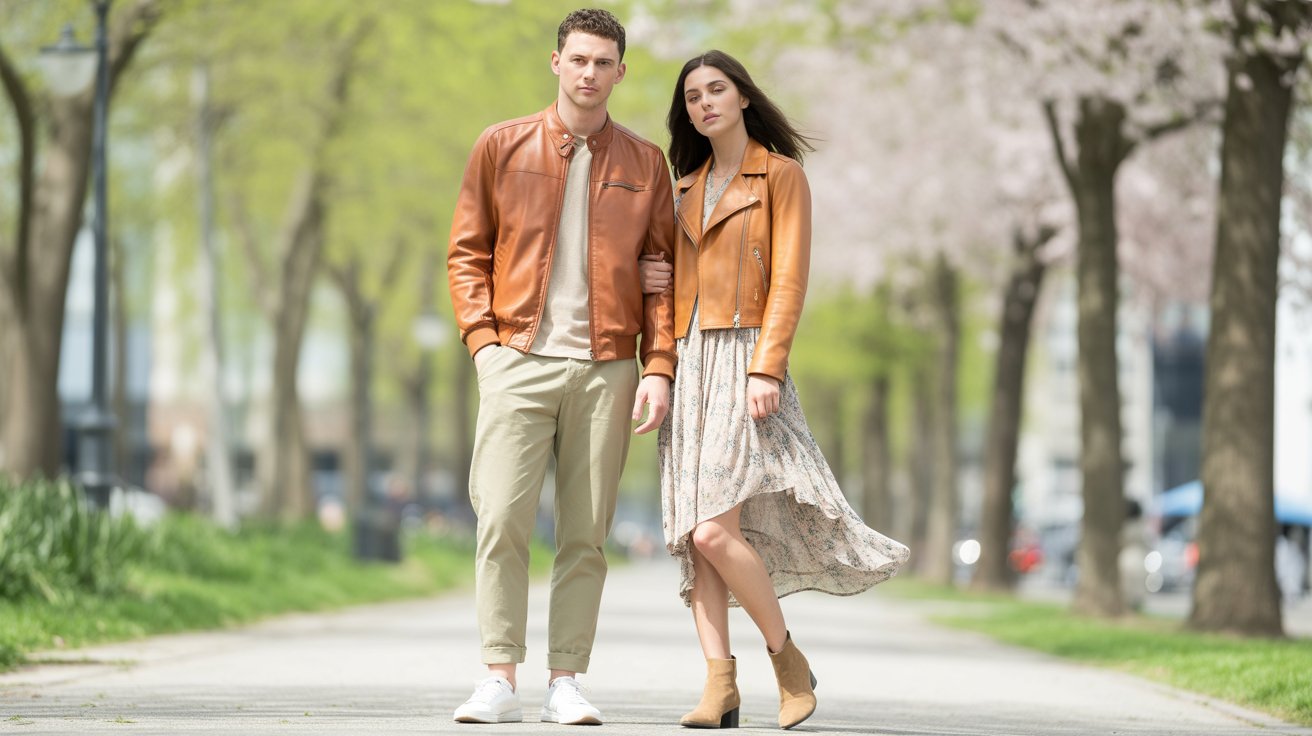
Spring is the second strongest season for leather jacket wear after autumn. The reason is the same: transitional temperatures that fall directly in the comfort range for most leather jacket weights. But spring adds a specific challenge that autumn does not have: temperature swings within a single day.
A spring morning at 8°C / 46°F can reach 18°C / 65°F by early afternoon. A leather jacket is one of the only outerwear options that can be genuinely useful at both ends of that range when layered correctly in the morning and worn without layers by midday.
Ideal Temperature Range for Spring Leather
12°C to 20°C / 54°F to 68°F is the core spring leather jacket range. At this range, a standard cowhide or goatskin jacket over a single layer is comfortable through most of the day with minor adjustments.
What makes spring different from autumn is the direction of temperature change. In autumn, you are layering up as the season progresses. In spring, you should expect to remove layers as the day progresses. Choose what you wear underneath with that in mind. A layer that is easy to remove and carry, such as a thin knit or light shirt that can be tied around the waist or carried in a bag, is more practical than a heavy sweater you are stuck wearing.
Best Leather Jacket Styles for Spring
Lightweight lambskin is the ideal spring leather. It is thin enough to avoid overheating on warmer spring days and soft enough to drape comfortably over lighter spring fabrics. A lambskin bomber or lightweight cafe racer in a neutral or lighter tone like tan, light brown, or cognac reads naturally against the season.
A cropped leather biker jacket is one of the strongest spring choices for women. The shorter length works with the lighter fabrics and silhouettes of spring dressing without adding the weight or coverage of longer jacket styles.
What to Wear Underneath in Spring
- At 18°C to 22°C: single lightweight t-shirt or cotton shirt
- At 12°C to 18°C: thin long-sleeve top or light knit
- At 8°C to 12°C: medium-weight knit or light hoodie, removable as temperature rises
Spring Outfit Combinations
Women, spring casual: Cropped biker jacket over a floral midi dress, white sneakers or ankle boots. The leather adds structure and edge to the softness of the dress, and the combination is one of the most photographed spring style formulas for good reason.
Men, spring weekend: Bomber jacket over a plain white or light grey t-shirt, chinos in a stone or olive tone, clean leather sneakers or loafers. Light and effortless without appearing as though no thought went into it.
Women, smart-spring: Lightweight leather blazer over a silk or cotton blouse, tailored trousers, heeled mule or loafer. This combination moves from a professional to a social context without any changes.
Men, commuter: Cafe racer jacket over a thin merino crew-neck, dark slim jeans, white sneakers. The cafe racer is lean enough to work in warmer spring temperatures while still providing wind protection during cooler mornings.
Spring Colors
Spring is the one season where lighter leather tones become genuinely relevant rather than just an alternative to black. Tan, cognac, caramel, and light brown leather jackets work naturally with the softer, lighter colors of spring wardrobes in a way that they do not always achieve against the heavier fabrics and darker tones of autumn and winter.
Summer: When and How Leather Jackets Actually Work
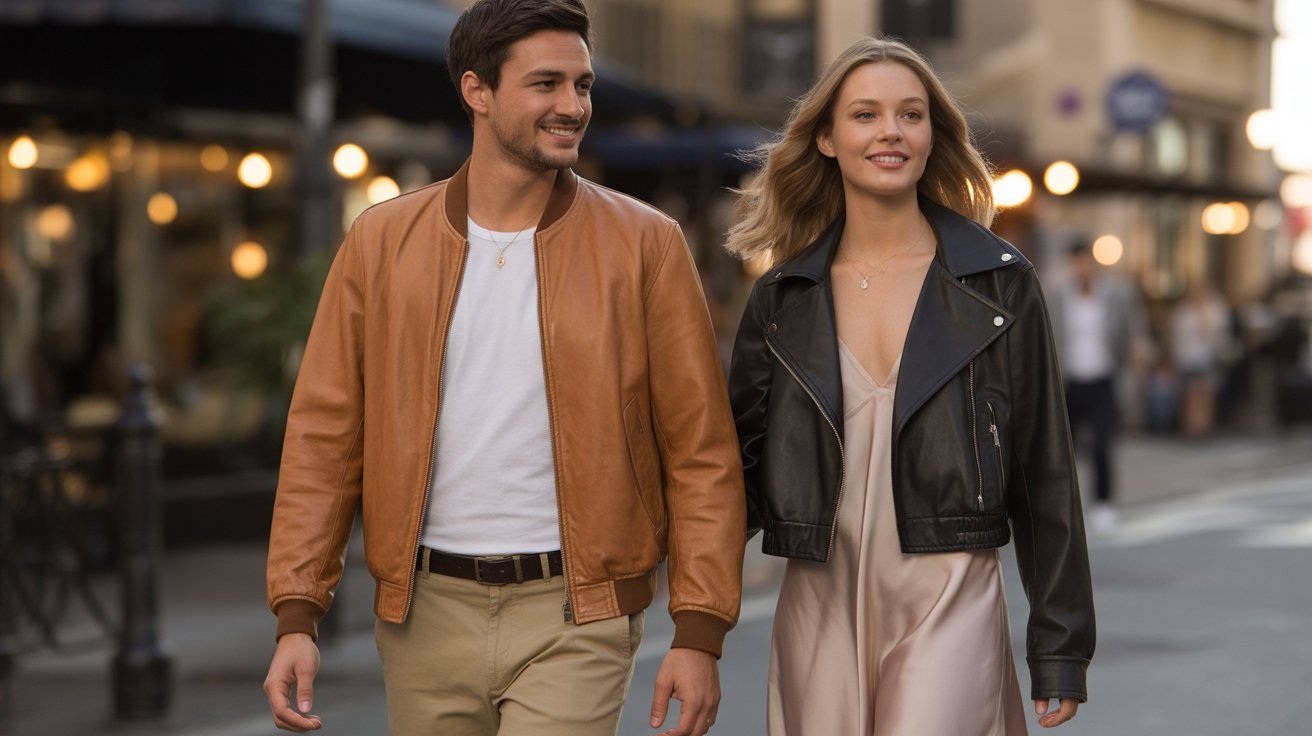
Summer is where most people dismiss leather jacket wear entirely, and where most people miss out. Leather jackets do not work in peak summer heat. But they work very effectively in specific summer contexts that occur regularly.
When Leather Works in Summer
Summer evenings: As temperatures drop after sunset, the 18°C to 24°C / 65°F to 75°F range that often arrives on summer evenings is exactly the right window for a lightweight leather jacket. A jacket that would feel heavy at midday feels exactly right at 9pm.
Air-conditioned environments: Offices, restaurants, cinemas, and shopping centers with strong air conditioning can require a layer even in the middle of summer. A lightweight leather jacket carried to these environments and put on inside is both practical and stylish in a way that a heavy coat or puffer clearly is not.
Coastal and elevated locations: Coastal areas with sea breezes and elevated areas with altitude wind can be significantly cooler than nearby inland or lower-altitude locations even in summer. A lightweight leather jacket is the right tool for these conditions.
Leather Types That Work in Summer
Lightweight lambskin with minimal or no lining is the only smooth leather type that is genuinely viable for summer conditions. Its natural breathability and thin construction avoid the heat retention that heavier cowhide or lined jackets create.
Perforated leather takes this further. Perforations across the shoulders, sleeves, or back panels allow direct airflow through the jacket, making it significantly more comfortable in warmer conditions than unperforated leather of the same weight.
What to avoid in summer: Heavy cowhide, quilted leather, shearling, or any jacket with substantial lining. These materials and constructions retain heat regardless of ambient temperature and will cause discomfort at summer temperatures.
What to Wear Underneath in Summer
The layering philosophy reverses in summer. The goal is minimal coverage underneath the jacket.
- A sleeveless top, tank, or cropped top keeps the jacket as the sole layer without adding any heat underneath.
- A lightweight short-sleeve t-shirt works on cooler summer evenings without creating warmth during movement.
- Avoid anything long-sleeve or knitted in summer conditions under a leather jacket.
Summer Outfit Combinations
Women, summer evening: Lightweight lambskin jacket over a slip dress or silk cami and wide-leg linen trousers, sandals or strappy heels. The leather adds structure and coverage for the cooler evening temperature, while the outfit underneath remains genuinely summer-appropriate.
Men, summer evening: Lightweight leather bomber over a plain t-shirt, shorts or lightweight chinos, clean sneakers or loafers. Simple, and the leather is doing specific work at the cooler evening temperature rather than just being a style choice.
Women, coastal: Lightweight cropped leather jacket over a summer dress, flat sandals. The jacket handles the coastal breeze without the outfit losing its summer lightness.
Summer Colors for Leather
In summer, tan, off-white, and light brown leather feel most appropriate against the lighter colors and lighter fabrics of the season. Black leather in summer reads most naturally as an evening or urban choice rather than a daytime one.
Complete Seasonal Temperature Guide
| Season | Temperature Range | Best Leather Type | What to Wear Underneath | Best Jacket Style |
| Deep Winter | Below 2°C / 35°F | Shearling lined, aviator | Thermal + wool knit | Aviator, shearling jacket |
| Winter | 2°C to 10°C / 35°F to 50°F | Full grain cowhide, quilted | Thermal + sweater | Quilted, biker, long coat |
| Late Autumn / Early Winter | 7°C to 12°C / 45°F to 54°F | Top grain cowhide, standard lining | Chunky knit or hoodie | Biker, bomber, long coat |
| Autumn | 10°C to 18°C / 50°F to 65°F | Cowhide or goatskin | Light to medium knit | Biker, bomber, cafe racer |
| Spring / Early Autumn | 12°C to 20°C / 54°F to 68°F | Lambskin or goatskin | Light knit or shirt | Bomber, cafe racer, cropped biker |
| Late Spring / Early Summer | 18°C to 24°C / 65°F to 75°F | Lightweight lambskin | T-shirt or sleeveless top | Cropped jacket, lightweight bomber |
| Summer Evenings | 18°C to 28°C / 65°F to 82°F | Lightweight or perforated lambskin | Sleeveless or thin t-shirt | Lightweight bomber, cropped jacket |
How to Build a Year-Round Leather Jacket Wardrobe
If you want genuine year-round coverage, two jackets cover the full calendar more effectively than one heavy jacket.
Jacket one for spring, autumn, and mild days: A standard cowhide or top grain biker or bomber in the $169 to $199 range. This jacket covers the 10°C to 18°C / 50°F to 65°F range with minimal layering and extends into cooler weather with heavier layers underneath.
Jacket two for summer evenings and warm weather: A lightweight lambskin bomber or cropped jacket in the $119 to $169 range. This jacket covers the 18°C to 28°C / 65°F to 82°F range and handles the contexts where a heavier jacket is impractical.
For cold winters, a quilted or shearling-lined jacket in the $199 to $229 range extends coverage below 5°C / 41°F without relying entirely on layering.
At Stegaro, this full range of weights and constructions is available from $119 to $229, all with free delivery and a 30-day return window.
Seasonal Care Adjustments
Your care routine for a leather jacket should shift slightly through the year because the environmental conditions affecting the leather change with each season.
Autumn Care
Clean and condition your jacket before the main autumn wearing season begins. Check all hardware and stitching. Apply a waterproof leather protector spray before the first heavy rain. Autumn rain is the most likely weather event to catch you unprepared.
Winter Care
Indoor heating in winter is one of the biggest threats to leather that most owners overlook. Central heating significantly reduces indoor humidity, which accelerates oil depletion from leather. Condition every three months rather than every six months if the jacket is worn frequently in heated indoor environments. After any rain or snow contact, air dry completely at room temperature before storing. Never place near a radiator or heat source.
Spring Care
Inspect the jacket after winter storage. Wipe down with a damp cloth, check for any mold or mildew that may have developed, condition lightly, and reapply waterproof protector spray if needed before the spring rain season.
Summer Care
During summer, protect leather from prolonged direct sunlight and heat. UV exposure fades color and degrades the leather surface. Store the jacket in a breathable cotton garment bag in a cool location when not in use. Never leave a leather jacket in a hot car.
Leather Jacket and Rain: What You Need to Know
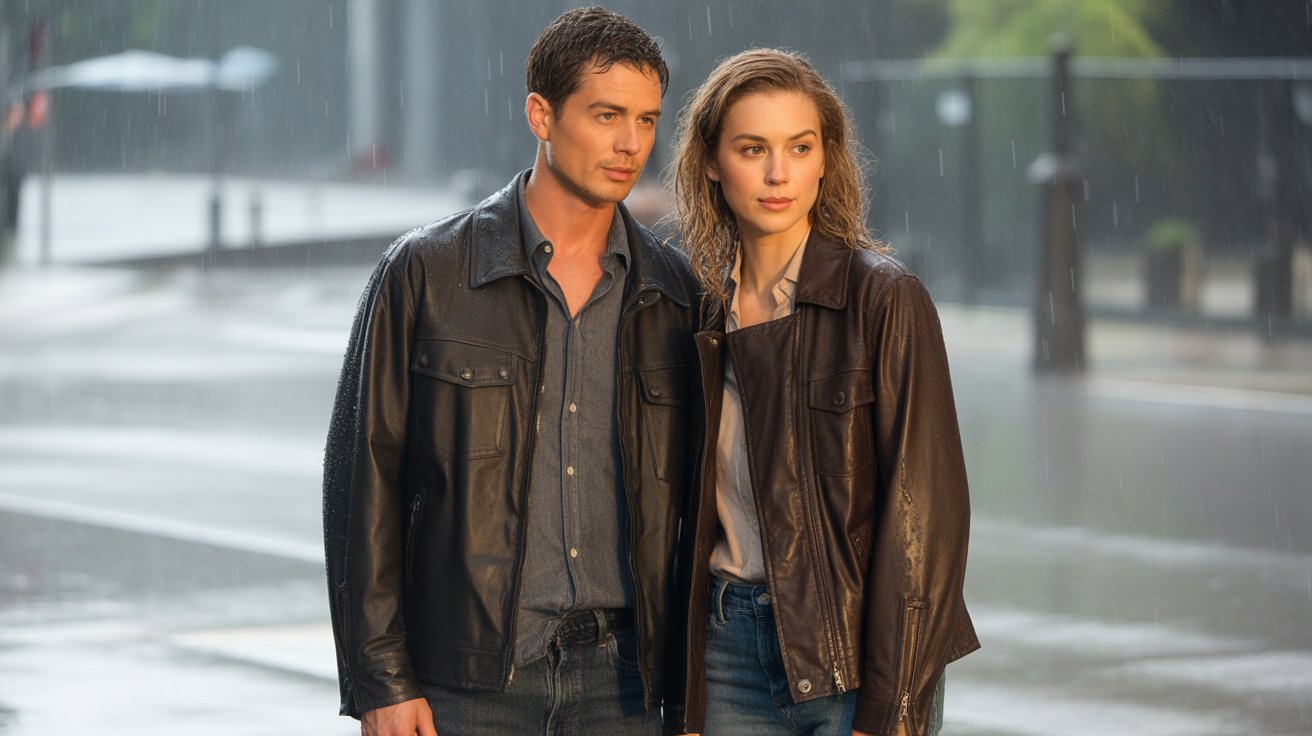
Real leather is water-resistant but not waterproof. A leather jacket can handle brief exposure to light rain and misting without damage. Extended exposure to heavy rain causes moisture to penetrate the leather, strip natural oils, and leave the leather stiff and prone to cracking once it dries.
Practical steps for wet weather:
Apply leather protector spray at the start of each wet season. This creates a surface barrier that repels light moisture without affecting the leather’s breathability. Reapply after any deep cleaning.
If your jacket gets significantly wet in the rain, hang it immediately on a wide padded hanger in a well-ventilated room at room temperature. Do not apply heat. Once fully dry, apply leather conditioner to restore the oils that the water exposure removed.
Do not store a damp leather jacket. Moisture trapped against leather in storage creates mold and mildew rapidly.
FAQs
The ideal temperature range for most standard leather jackets is 10°C to 18°C / 50°F to 65°F, which corresponds to typical autumn and spring conditions. This range suits a standard cowhide or top grain jacket worn over a single mid-layer. Lightweight lambskin extends the comfortable range higher to around 24°C / 75°F. A lined or quilted leather jacket extends the range lower to around 2°C / 35°F.
Yes, in specific conditions. A lightweight lambskin or perforated leather jacket works well on summer evenings when temperatures drop to 18°C to 24°C / 65°F to 75°F, in coastal or elevated locations with wind, and in air-conditioned indoor environments. Wearing heavy cowhide or lined leather in peak summer heat is not practical.
Real leather is water-resistant but not waterproof. A leather jacket handles light rain and misting without damage. Extended exposure to heavy rain causes moisture to penetrate the leather. Apply waterproof leather protector spray before the wet season for protection. If the jacket gets wet, air-dry completely at room temperature before storing.
For genuine winter warmth under a leather jacket, use a three-layer system: a fitted thermal or merino wool base layer, a wool or cashmere sweater or fleece mid-layer, and the leather jacket over both. This traps more warm air than a single thick layer and keeps the jacket’s silhouette clean. Add a scarf, gloves, and a hat to cover exposed areas.
Both seasons fall in the same temperature range, and both are ideal for leather jacket wear. Autumn typically offers more consistent temperatures within the leather jacket comfort range. Spring involves more day-to-day temperature swings, which makes layering flexibility more important in spring than in autumn.
A standard biker or bomber jacket in top grain cowhide in black or dark brown covers the widest range of seasons and occasions. In spring and mild autumn, wear it over a single layer. In cooler autumn and winter, layer underneath. For summer, a separate lightweight lambskin jacket covers the contexts where leather is practical in warmer conditions.
Two jackets cover the full year effectively. One standard weight cowhide jacket for autumn, winter, and cooler spring days. One lightweight lambskin jacket for spring, summer evenings, and warm-weather contexts. A third shearling or quilted jacket covers deep winter if your climate reaches below 0°C / 32°F regularly.
Yes, when used correctly. Leather is a natural wind barrier that blocks cold air effectively. Combined with proper layering underneath, a leather jacket provides real warmth in moderate winter temperatures of 2°C to 10°C / 35°F to 50°F. For colder temperatures below 0°C / 32°F, a shearling-lined or heavily insulated leather jacket is needed, or the leather jacket functions as a mid-layer under a heavier outer coat.
Conclusion
A leather jacket worn in every season is not a fashion statement about ignoring the weather. It is the result of choosing the right leather weight for the conditions, layering intelligently underneath, and understanding which specific contexts in each season the jacket is suited for.
Autumn and spring offer the most natural fit, with temperatures that match the comfort range of most standard leather jackets without any special adaptation. Winter is fully achievable with correct layering and a properly weighted jacket. Summer works in the specific contexts of evenings, coastal locations, and air-conditioned environments when the jacket is lightweight enough.
The leather jacket that lasts forty years is not stored half the year. It is worn across all four seasons by someone who understands how to use it in each one.