
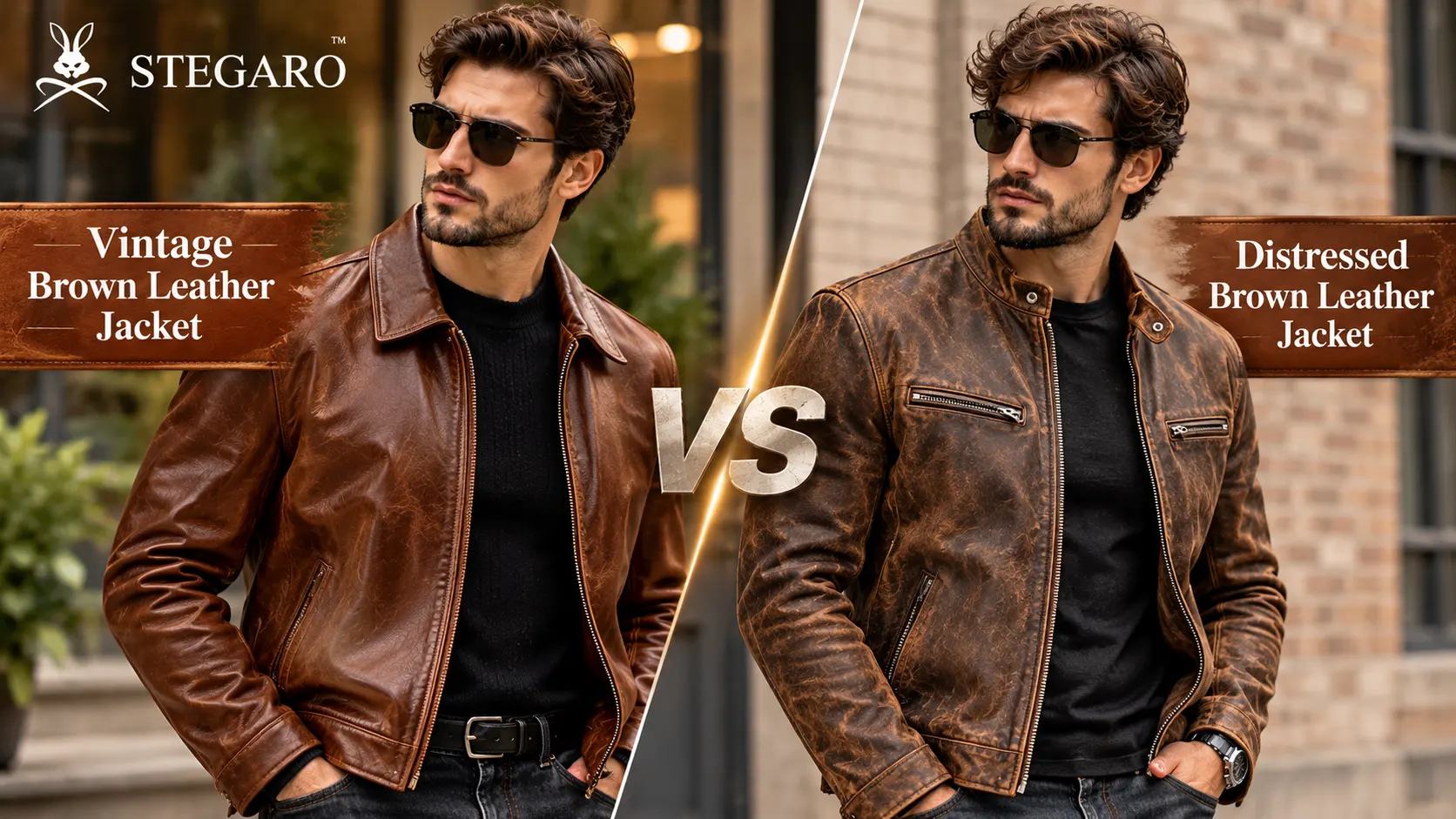
Choosing a brown leather jacket vintage design or a distressed alternative comes down to how you want your outerwear to age over time. Leather outerwear is a long-term investment piece that defines your personal style. Although both options showcase warm brown hues, they rely on entirely different tannery finishing techniques.
Therefore, understanding how these finishes react to daily wear helps you pick the right jacket for your wardrobe, local climate, and maintenance preferences. Whether you wear outerwear for a chilly fall walk or a fresh spring evening, selecting the right leather finish makes all the difference.
Understanding Leather Finishes: Vintage Luster vs. Distressed Ruggedness
The core distinction between these two styles starts long before the jacket reaches your closet. Both styles utilize genuine full-grain or top-grain leather hides. However, the surface treatment applied during the final finishing stage dictates whether the leather looks subtly antiqued or heavily broken-in on day one.
What Is Vintage Leather?
A brown vintage leather jacket is characterized by warm undertones and soft fading, rather than fake surface scratches. In fact, vintage finishing simulates the natural patina of a piece of heritage that has seen decades of wear. Tanneries achieve this effect by applying hand-waxed oils and two-tone aniline dyes to the hide.
As a result, when you invest in a brown leather jacket vintage cut, you enjoy a soft luster with subtle color variations across the shoulders and seams. The leather surface remains smooth, flexible, and soft to the touch. Over time, as you wear it through cold winter months, body heat and movement deepen its character.
What Is Distressed Leather?
On the other hand, if you prefer a rugged, lived-in look from day one, a mens distressed brown leather jacket offers pre-worn scuffs and lighter rubbed edges. Distressing is an intentional manual and mechanical process. During this process, artisans carefully abrade high-friction areas such as the collar, cuffs, seams, and elbow creases.
Consequently, this technique exposes the lighter base shade of the leather hide underneath. It’s important to remember, though, that distressed leather does not mean structurally damaged leather. High-quality hides maintain full strength and tear resistance while offering immediate comfort.
Comparing Vintage vs. Distressed Brown Leather: Key Features
| Style Factor | Vintage Brown Leather | Distressed Brown Leather |
| Surface Finish | Smooth sheen, soft two-tone fading | Textured scuffs, rubbed edges, multi-tone fade |
| Overall Aesthetic | Refined, retro-classic, smart-casual | Rugged, lived-in, casual workwear |
| Scuff Concealment | Moderate; marks blend with conditioning | High; new marks blend into existing texture |
| Best Wardrobe Pairings | Chinos, dark denim, dress shirts, sweaters | Heavy denim, henleys, flannel shirts, boots |
| Care Requirement | Light conditioning every 3 to 6 months | Minimal care; occasional light conditioning |
| Temperature Range | 40°F to 65°F with versatile layering | 35°F to 60°F with heavy casual layers |
Hides and Craftsmanship: How Leather Types Affect Each Finish
The choice of animal hide affects how vintage and distressed finishes age. Hides differ in weight, grain texture, and warming qualities.
Real Lambskin Hides
Lambskin is soft, pliable, and lightweight. It dyes well with vintage dyes, with a subtle gloss of two tones. Lambskin is a delicate material, and distressed lambskin leather needs to be meticulously hand-finished to ensure durability.
Lambskin is ideal for mild fall and spring weather between 50°F and 65°F. It feels light and comfortable during a casual weekend afternoon walk.
Real Cowhide and Goatskin Hides
Cowhide and goatskin are thicker, heavier, and more durable. These hides take distressing exceptionally well. Mechanical buffing creates pronounced scuffs that give cowhide a rugged, heavy-duty appearance.
Vintage cowhide jackets feel substantial and protective. They provide excellent wind blocking during cold winter days between 35°F and 50°F.
The Aging Process: How Patina Develops Over Time
Leather is constantly changing as it interacts with your body, activity, and surroundings. Therefore, knowing how each finish will age helps you select a jacket appropriate to your lifestyle.
- Natural Patina Evolution: Vintage leather darkens where it is handled the most, such as pockets and zippers. Meanwhile, high-friction areas, such as elbows, gradually lighten. Over time, this contrast creates real visual depth over 5–10 years of normal wear. On the other hand, the beauty of distressed leather lies in how any new scuff blends seamlessly with its existing texture and look.
- Handling Daily Scuffs and Scratches: Distressed leather is remarkably low-fuss. Minor scratches from seatbelts, backpacks, or keys simply add to its rugged look. In comparison, vintage leather shows new surface marks more readily. Fortunately, periodic conditioning helps blend those marks into a smooth, rich finish.
- Softness and Flexibility: Both styles bypass the stiff break-in phase of raw, untreated hides. For instance, distressed jackets feel broken-in immediately when you unbox them. Meanwhile, vintage leather gradually molds to your body as it softens with each wear.
Styling Your Brown Leather Jacket: Outfit Ideas for Every Occasion
Brown leather is a versatile wardrobe anchor. In fact, warm brown tones pair effortlessly with earth colors like olive green, cream, rust, navy, and charcoal.
Refined Styling with Vintage Brown Leather
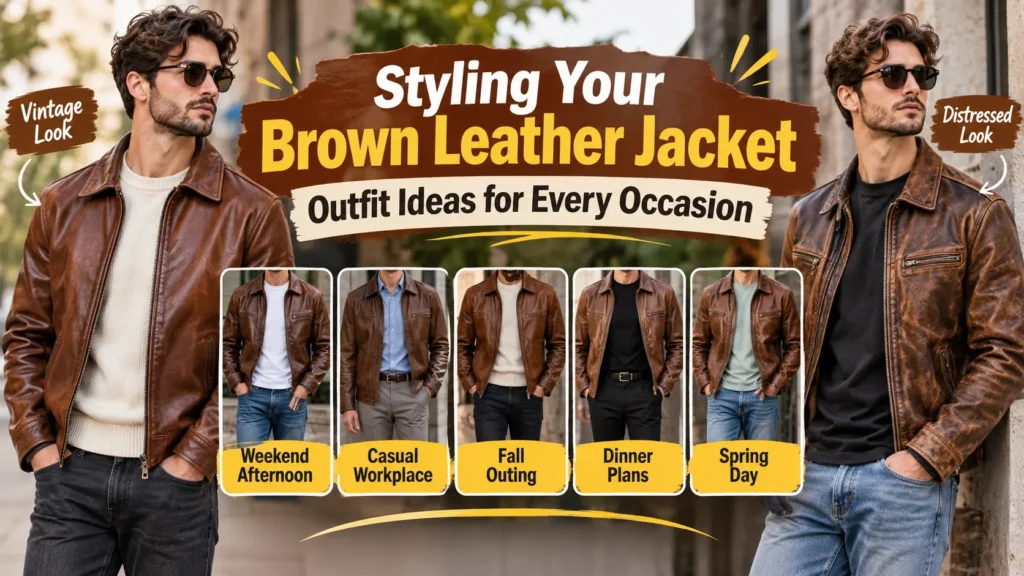
A vintage finish brings a sophisticated retro touch to smart-casual outfits. For example, for a weekend afternoon outing, wearing a brown leather jacket vintage piece, over a cream crewneck sweater creates an effortless retro look.
Similarly, for a casual Monday morning meeting, layer your brown vintage leather jacket over an Oxford button-up shirt, dark denim, and brown leather Chelsea boots. As a result, the subtle luster of vintage leather looks sharp without appearing overly formal.
Casual Styling with Distressed Brown Leather
Distressed leather shines in relaxed, everyday outfits. For a laid-back autumn look, throw your jacket over a waffle-knit henley or a heavy flannel shirt. Then, combine it with medium-wash jeans and rugged leather work boots. Ultimately, selecting a mens distressed brown leather jacket keeps your outfit looking relaxed, practical, and stylish.
| Occasion | Vintage Jacket Outfit | Distressed Jacket Outfit |
| Weekend Afternoon | White T-shirt, blue jeans, and brown boots | Graphic tee, dark denim, and rugged boots |
| Casual Workplace | Button-down shirt, gray chinos, and loafers | Plain knit shirt, black jeans, and simple boots |
| Fall Outing | Cream sweater, dark jeans, and leather boots | Flannel shirt, black denim, and lace-up boots |
| Dinner Plans | Black shirt, dark trousers, and Chelsea boots | Dark crewneck, slim jeans, and ankle boots |
| Spring Day | Lightweight shirt, blue jeans, and sneakers | Basic tee, chinos, and casual sneakers |
For vintage styles, neutral colors help keep the outfit neat. On the other hand, with distressed leather, darker shades can bring out the texture without making the look too busy.
Essential Care and Maintenance: Preserving Leather Quality
Proper care will preserve both vintage and distressed leather, keeping them flexible, robust, and weather-resistant for years to come. To get the best results, follow these simple maintenance tips.
- Regular Conditioning: Use a cream-based leather conditioner every three to six months so the leather does not dry out or crack. For vintage styles, use a neutral conditioner to preserve the surface gloss. Meanwhile, for distressed leather, apply conditioner thinly so you do not saturate the textured finish.
- Handling Rain and Moisture: If you happen to get caught in a fall shower, wipe off standing water with a soft towel. Afterward, hang the jacket on a broad wooden hanger to dry naturally at room temperature. Most importantly, never use direct heat from hair dryers or radiators.
- Off-Season Storage: When the season changes, store leather outerwear in a cool, dark, and well-ventilated closet. Additionally, use breathable textile clothing covers instead of plastic bags to avoid moisture build-up.
Price and Long-Term Value
Similar price ranges are possible for vintage-inspired and distressed coats. Although the finish does play a role, pricing depends more on leather grade, workmanship, lining, hardware, and brand.
Brown vintage leather jackets may be more expensive if they use higher-quality leather or have elaborate workmanship. Similarly, a distressed design can cost more if it features excellent materials and a skillfully created finish.
Before making a purchase, compare products with similar materials and features. Also, check the return policy, sizing chart, and care information. After all, a lower price is less attractive if the jacket doesn’t fit or if you can’t find the product details.
Final Thoughts
Vintage and distressed brown leather jackets both bring character to a man’s wardrobe. The vintage look suits classic outfits and gives you more room to dress up or down. In contrast, distressed leather works well when you prefer rugged details and relaxed everyday clothing.
The brown leather jacket vintage piece has warm, subtle character that becomes richer in patina with every season. At Stegaro, we design quality leather jackets built for long-lasting style, comfort, and durability.
FAQs
Vintage leather features a smooth finish with subtle two-tone fading. Distressed leather displays intentional scuffs, lighter rubbed edges, and a textured lived-in look.
Yes, high-quality distressed jackets use real top-grain or full-grain leather hides that maintain structural strength despite surface weathering.
Yes, vintage brown leather pairs cleanly with button-down shirts, chinos, and sweaters, making it ideal for smart-casual office settings.
Condition your distressed leather jacket every three to six months using a light, neutral leather conditioner to keep the hide soft without over-darkening.
Medium and dark brown are easy to pair with navy, gray, black, cream, and denim. Choose a shade that works with the colors you already wear.
Yes, a leather specialist can repair some issues, such as loose stitching or damaged hardware. Peeling or badly damaged surface finishes may be harder to restore.