
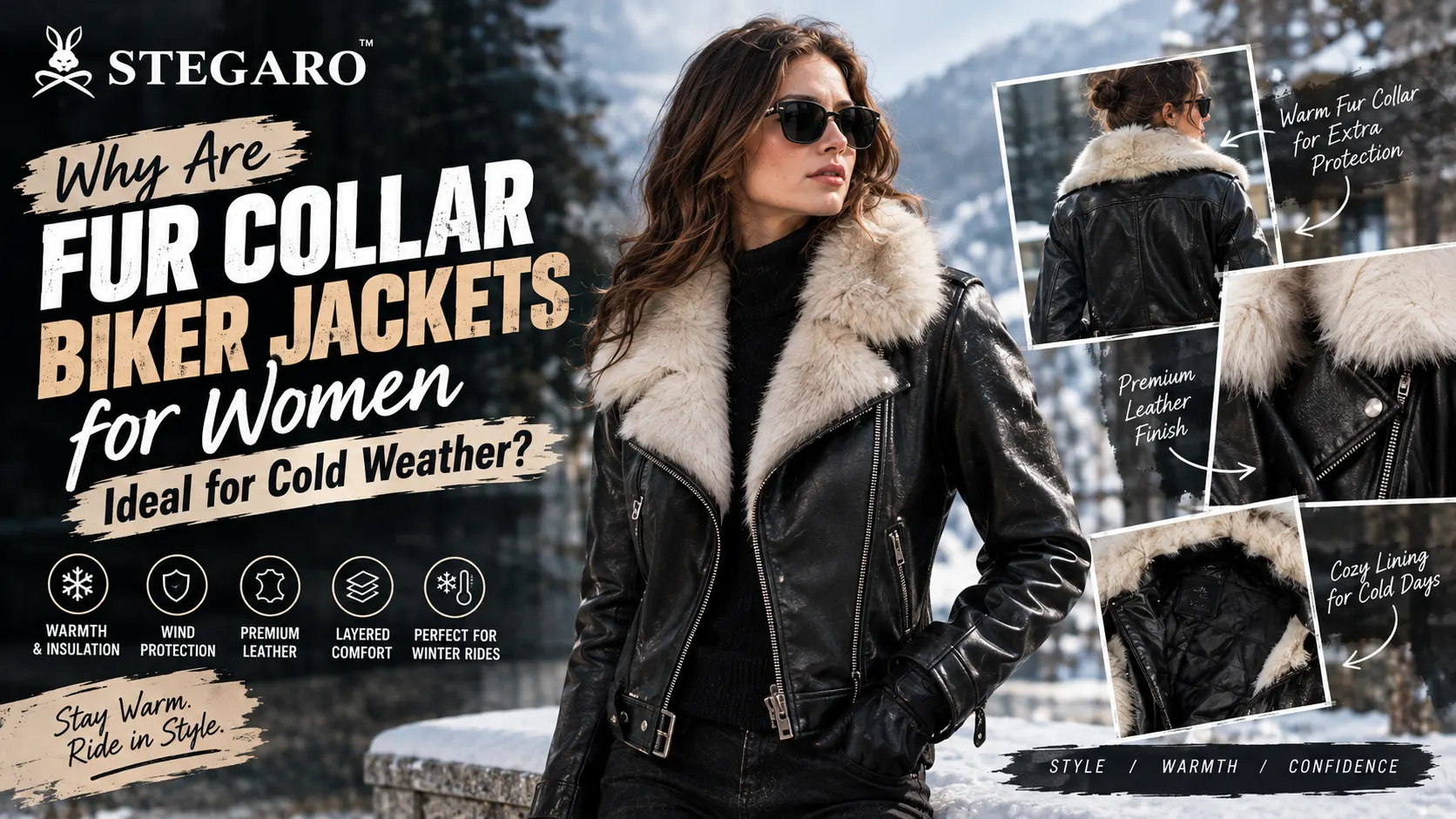
Winter has a funny way of exposing weak points in your wardrobe. A jacket can look fantastic in October and suddenly feel useless when the wind picks up in January. That is where a fur biker jacket womens style starts to make sense. It combines a dense outer shell with a warm collar that helps protect one of the first places where cold air finds its way in: your neck.
But there is more to the warmth than the word “fur.” Leather can help block wind, while a furry or shearling-style collar creates a layer of still air around the neck. When the jacket is properly layered, the result is a practical cold-weather outfit that still has the sharp shape of classic biker clothing.
Why Does a Fur Collar Make a Biker Jacket Warmer?

The secret is not simply that fur feels soft. Fur and other lofted fibers can trap pockets of still air, and still air is a useful insulator. Clothing insulation works by slowing the movement of heat away from the body. A dense outer layer also helps prevent cold air from constantly replacing that warmer air around your body.
That makes the collar particularly useful. Your neck is exposed to direct airflow when you walk outside or ride, so a plush collar can reduce that uncomfortable draft. It does not turn a fashion jacket into arctic equipment overnight, but it can make a noticeable difference in comfort.
This is one reason a ladies fur collar biker jacket feels different from a standard lightweight moto jacket. The collar adds both texture and a small but useful barrier against cold air.
Leather and Fur: A Useful Cold-Weather Combination

Think of the jacket as a two-part system.
Leather works mainly as the outer barrier. Its dense structure can block wind better than an open-knit sweater or fleece worn alone. For motorcycle riding, wind protection matters even more because moving air increases the cooling effect. Cold-weather riding guides consistently recommend a wind-blocking outer layer over an insulating layer.
Fur or shearling contributes loft and insulation. Its fibers hold air close to the surface, helping slow heat loss. But a style including merely a collar will offer warmth mostly around the neck. A jacket with full shearling lining or an insulated body will be far warmer than one with only a fur-trimmed collar.
That distinction is worth remembering when shopping. A fluffy collar looks winter-ready, but the construction underneath matters just as much.
Are Fur Coats Better at Insulating Heat?

Not automatically.
Fur can be an effective insulator because its fibers create spaces that trap air. The same basic principle is used by many modern insulating materials. The amount of warmth you actually get depends on fiber loft, density, garment construction, moisture, wind protection, and how well the clothing fits.
So, it would be too broad to say that every fur coat is warmer than every other material. A well-designed synthetic insulated jacket can outperform a poorly constructed fur-trimmed fashion jacket in cold, wet weather.
There is also an important difference between real fur and faux fur. Both can produce loft, but insulation is dependent on the material and structure. If your priority is warmth, look beyond the collar and inspect the lining, insulation, fasteners, cuffs, and overall jacket design.
What Makes a Fur Biker Jacket Womens Useful in Cold Weather?

A good womens leather biker jacket with fur collar has several features working together rather than relying on one material.
| Feature | Cold-Weather Benefit |
| Leather bound | Helps cut down wind penetration |
| Shearling or fur collar | Keeps the neck warm from cold drafts |
| Thermally lined inside | Adds another layer between yourself and the cold |
| Closed/high neckline | Gaps revealed decreases |
| Long-sleeved T-Shirt | Keeps the arms away from the direct airflow |
| Front closure for security | Aids in sealing the chest area |
| Room Layering | Let you wear a thermal layer or sweater |
The front closure is quite interesting. Traditional biker jackets often use an asymmetrical zipper and overlapping front panels. Besides creating that recognizable moto shape, the overlapping material can help reduce exposed gaps across the chest.
Cuffs matter too. Cold air entering through open sleeves can quickly make an otherwise warm jacket feel less effective. The same goes for the waist. A jacket that sits close enough to your body to limit drafts, while still allowing movement, is usually more comfortable in cold conditions.
How Should a Fur Collar Biker Jacket Fit?

Heat and fit are two sides of the same coin.
A fur collar jacket that is overly tight can squeeze the insulating layers underneath and restrict your movement. However, if a garment is too loose, there can be openings big enough for chilly air to get in.
For everyday winter wear, choose the jacket that fits over the thickest sweater or mid-layer you realistically expect to wear. Raise your arms, cross them in front of your body, sit down, and zip the jacket completely. If the shoulders pull or the sleeves ride too far upward, the fit may be too restrictive.
For a fur biker jacket womens style, pay particular attention to the collar. It should sit comfortably around your neck without feeling like it is pressing against your throat.
The goal is simple: close enough to reduce drafts, loose enough to move. For more on sizing, see our fitted biker jacket guide.
What Should You Wear Under a Fur Collar Biker Jacket?

A fur collar does not mean you have to wear a huge sweater underneath. In fact, smart layering is usually more comfortable.
Start with a moisture-wicking base layer. Then add a middle insulating layer of merino wool, fleece or some other warm fabric. Top it off with the leather jacket as your outer layer. This three-layer solution separates moisture management, insulation, and wind protection rather than expecting one garment to do it all.
For a mild winter day, a thermal top and thin knit may be enough. On a colder morning, adding a fleece or wool layer provides extra insulation without making the jacket excessively bulky.
And yes, you can still look stylish. A black ladies biker jacket with fur collar, charcoal knit, straight-leg jeans, and ankle boots are a combination that needs very little convincing.
Fur Collar Biker Jackets for Different Winter Looks

One reason the ladies biker jacket with fur collar remains appealing is that it does not look like traditional technical winter gear.
For a casual look, pair a black leather version with straight jeans, a fitted thermal top, and chunky boots. The fur collar becomes the statement detail.
For a softer outfit, try the jacket with a knitted dress and tall boots. The contrast between the structured leather and softer knit gives the outfit more depth.
You can also keep everything tonal. Black leather, a dark sweater, black trousers, and a matching fur collar create a sleek winter outfit without needing bright colors.
For daytime errands, add a scarf only if you actually need one. A large scarf wrapped around an already-plush collar can become more bulk than benefit. Sometimes the collar has already done its job.
Can You Ride a Motorcycle in a Fur Collar Biker Jacket?

This is where fashion and riding gear need to be separated.
A regular ladies fur collar biker jacket can be suitable for casual motorcycle-inspired style or short everyday use, but a fashion leather jacket should not automatically be treated as motorcycle protective equipment.
Motorcycle jackets are purpose-built with features such as impact protectors, abrasion-resistant construction, secure fastening, and weatherproof membranes. Some women’s riding jackets also come with removable thermal liners, waterproof membranes, and certified shoulder and elbow protection.
So if you’re genuinely going to be riding in chilly weather, first get motorcycle-specific safety clothing. Then you can think about warmth, fur collars, and styling. Read what to look for in a women’s leather motorcycle jacket before you ride.
Is a Fur Collar Jacket Better Than a Regular Leather Biker Jacket?

It depends on what you need.
| Jacket Type | Warmth Potential | Best Use |
| Lightweight leather biker | Low to moderate | Mild weather |
| Leather biker with fur collar | Moderate | Cold everyday wear |
| Fur-lined leather biker | High | Colder winter conditions |
| Insulated motorcycle jacket | High | Cold-weather riding |
| Shearling-lined motorcycle jacket | High | Cold riding if properly protective |
A fur biker jacket womens design is especially useful when you want winter warmth without giving up the fitted, rebellious character of a biker silhouette.
However, the collar alone should not be confused with full-body insulation. If temperatures are genuinely low, look for a warm lining, enough room for layers, secure cuffs, and a wind-resistant outer shell.
How to Choose the Right Fur Collar Biker Jacket

Before buying, check five things.
1. Check the lining
A fur collar with no major lining will not keep you as warm as a jacket with a thin body that is not insulated.
2. Test the closure
A secure zipper and overlapping front cut down on drafts.
3. Check the collar
It should fit over the neck easily without impeding movement.
4. Leave room for layers
Try it over the type of sweater you actually wear in winter.
5. Think about your weather
A jacket suitable for a cool city evening may not be enough for freezing temperatures or prolonged motorcycle riding.
This is also where personal preference matters. Some women want a cropped biker silhouette. Others prefer a longer hem that covers more of the hips. Neither choice is inherently better. Your climate, layering habits, and daily routine should decide.
Final Thoughts
The appeal of a fur collar biker jacket is easy to understand once you look past the style. You get the structured feel of leather, the cozy texture of a fur or shearling collar, and a practical way to reduce cold air around the neck.
Still, the warmest-looking jacket is not always the warmest jacket. Check the lining, fit, closures, insulation, and weather protection before buying.
For everyday winter fashion, a womens leather biker jacket with fur collar can strike a satisfying balance between warmth and attitude. Stegaro‘s fur collar biker jackets are designed to bring that balance of warmth and attitude to your winter wardrobe. And if you are heading onto a motorcycle, keep the same rule in mind: style can finish the outfit, but purpose-built protective gear should handle the ride.
FAQs
The warmest motorcycle jacket is generally one designed specifically for cold-weather riding, with effective insulation, wind and weather protection, and properly positioned protective armor. A removable thermal liner can make a major difference because it adds insulation without requiring an extremely bulky outer shell.
A fashion leather jacket with a fur collar can be warm for everyday winter use, but it should not be assumed to provide the same impact and abrasion protection as certified motorcycle equipment.
Yes, a fur or shearling collar can provide useful warmth around the neck because lofted fibers trap still air. However, the collar is only one part of the jacket. The lining, body insulation, wind resistance, cuffs and front fastening all impact the warmth you experience in the finished garment.
It depends on the manufacture of the jacket and conditions. If the weather is chilly and dry, a leather shell with a fur collar and warm inside is a good choice. If you are going to encounter heavy snow, cold temperatures, high winds, or prolonged exposure outdoors, you’ll probably want a purpose-built insulated winter coat with more weather protection.
Not in every one of them, perhaps. Real fur can trap air well, but warmth is dependent on fiber structure, density, loft, lining, and overall design. Good-grade synthetic insulation can also give you outstanding thermal performance. Therefore, compare the entire jacket rather than choosing based on the collar material alone.
Yes. That is one of the easiest ways to make a fur biker jacket womens work in winter. Choose a sweater that fits comfortably beneath the jacket without forcing the shoulders or arms to pull. A thinner wool or fleece layer can provide warmth while preserving the jacket’s shape.
Leather is useful as a cold-weather outer shell because its dense structure can reduce wind penetration. But leather should not be relied on as being completely insulating. In really cold weather, add an insulating layer underneath and make sure the jacket seals typical access points like the collar, cuffs and waist.