
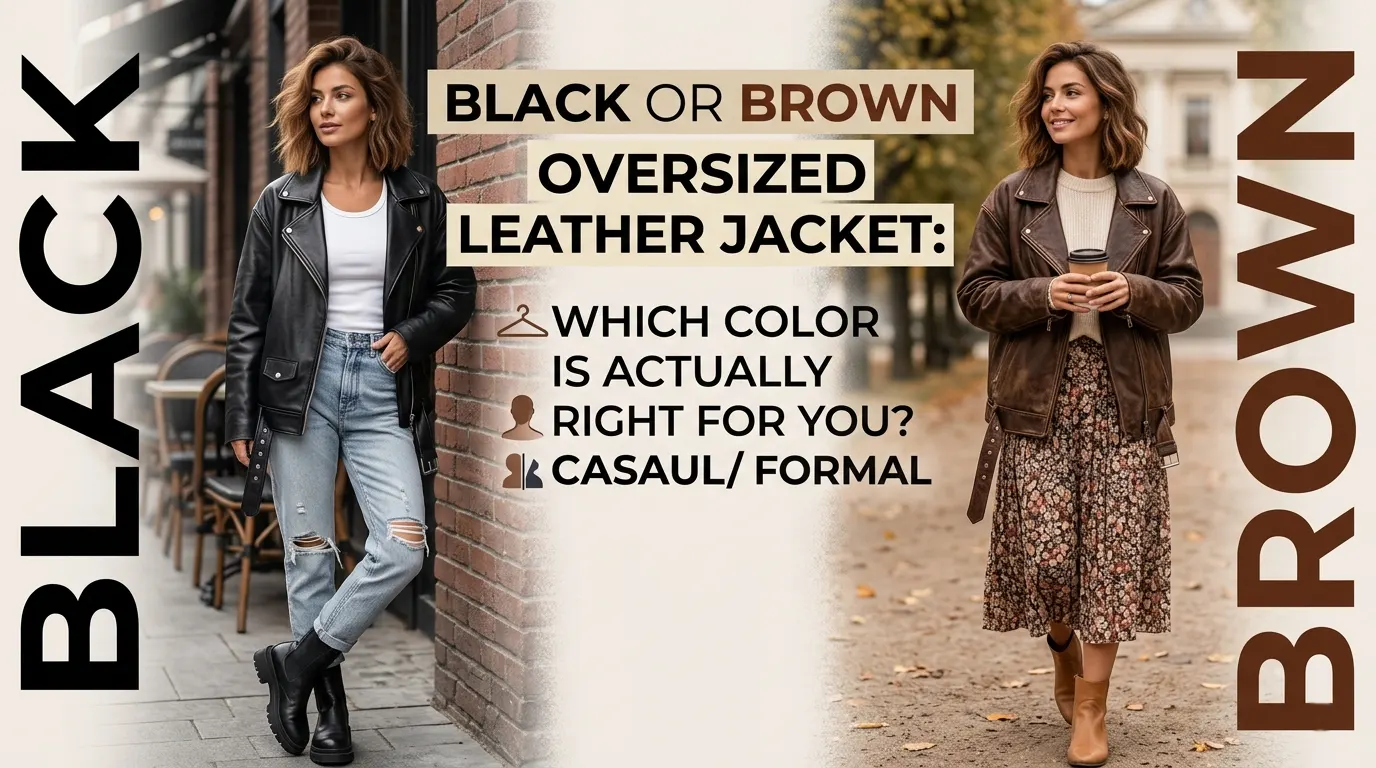
You have found the right oversized leather jacket. The fit is good, the leather feels solid, and the price works. Now you are staring at two options on the screen – black and brown – and you cannot decide.
This is where most people either pick randomly or just go with black because it feels safer. Both are understandable. But the right color for you is not random – it comes down to three things: your existing wardrobe, your skin tone, and how you actually dress day to day.
Here is the honest breakdown.
Why Color Matters More Than You Think
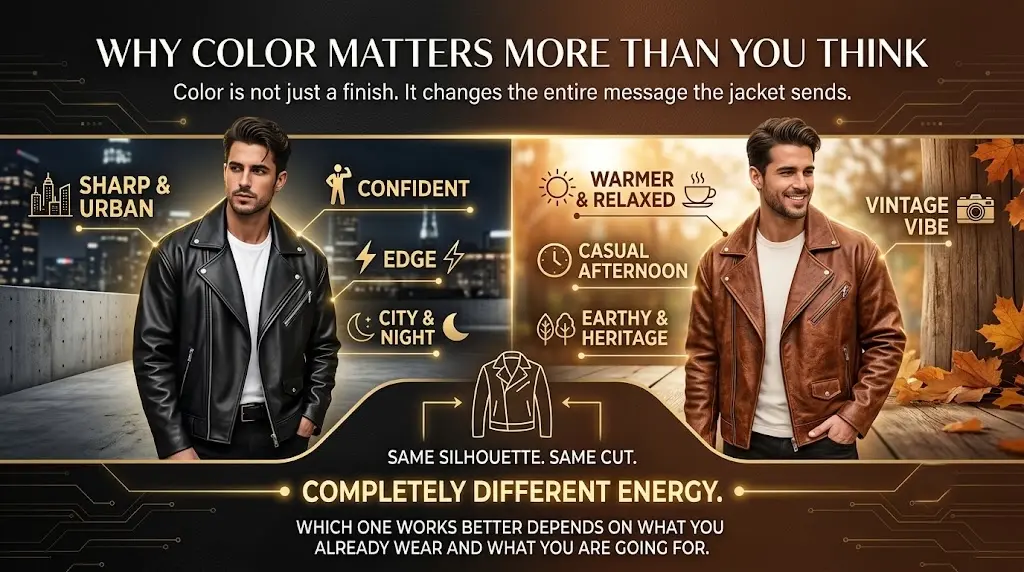
Color is not just a finish on a jacket. It changes the entire message the jacket sends.
An black leather jacket oversized reads as sharp, urban, and confident. It works in the city, at night, and with anything that has an edge to it. A brown oversized leather jacket is the opposite – warmer, more relaxed, more at home on a casual afternoon than a night out. It fits into casual days, earthy wardrobes, and outfits that lean vintage or heritage-inspired.
Same silhouette. Same cut. Completely different energy. Which one works better depends entirely on what you already wear and what you are going for.
The Case for Black
A black jacket is the most versatile leather color for one simple reason – it goes with everything. White, grey, navy, burgundy, camel, olive – black leather sits next to all of them without clashing.
It is the default choice for people who wear a lot of monochrome outfits or build around neutral basics. It is also the easier choice for evening wear and anything slightly more dressed-up.
Black works well for:
- City streetwear and everyday urban outfits
- Evenings out and night looks
- Monochrome and all-black outfits
- Wardrobes built around black, white, and grey
- Smart casual situations where you want the jacket to look put-together
Specific outfit: Black oversized leather jacket + slim black jeans + white fitted tee + white leather sneakers. Hard to go wrong with this one.
For a night out: Black oversized leather jacket + straight dark jeans + black turtleneck + black ankle boots. The leather adds texture to an all-dark outfit without changing the tone.
Skin tone: Black leather works across all skin tones but creates particularly strong contrast on fairer skin. On deeper skin tones, black leather looks rich and intentional.
The one downside: Black shows dust, lint, and light surface scratches more visibly than brown. It needs wiping down more regularly to look its best.
The Case for Brown
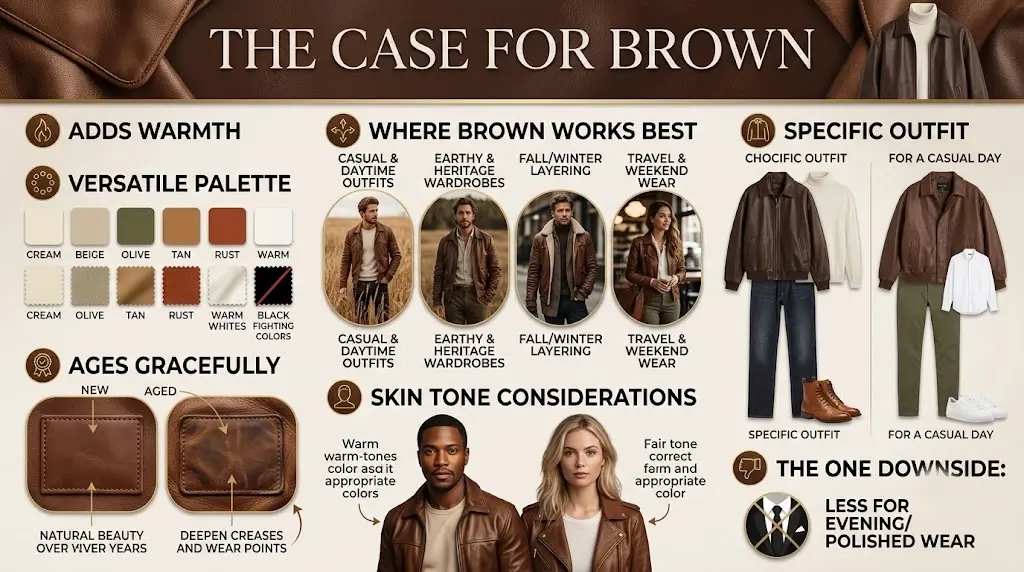
A brown oversized leather jacket does something black cannot – it adds warmth to an outfit. The earthy tone works with colors that black can sometimes fight against: cream, beige, olive, tan, rust, and warm whites.
Brown leather also ages more visibly than black. The patina it develops over years of wear – deepening at the creases, lightening at the wear points – looks genuinely beautiful on brown leather in a way that is harder to see on black.
Where brown works best:
- Casual and daytime outfits
- Earthy, tonal, and heritage-inspired wardrobes
- Fall and winter look with warm layering pieces
- Anyone whose wardrobe runs toward beige, olive, cream, and rust
- Travel outfits and weekend wear
Specific outfit: Chocolate brown oversized leather jacket + cream turtleneck + straight dark jeans + tan leather boots. A complete outfit built around warm tones that feel effortless rather than assembled.
For a casual day: Brown oversized leather jacket + olive slim chinos + white shirt + white sneakers. The brown and olive combination is one of the most natural pairings in a casual wardrobe.
Skin tone: Brown leather tends to look really natural on medium and warmer skin tones – the earthy tones sit well together rather than fighting. On fairer skin, go for a richer, darker brown like chocolate or cognac rather than a light tan shade.
The one downside: Brown is less versatile for evening wear and anything that needs to look sharp or polished. It has a casual warmth to it that works against more dressed-up outfits.
Black vs Brown: Direct Comparison
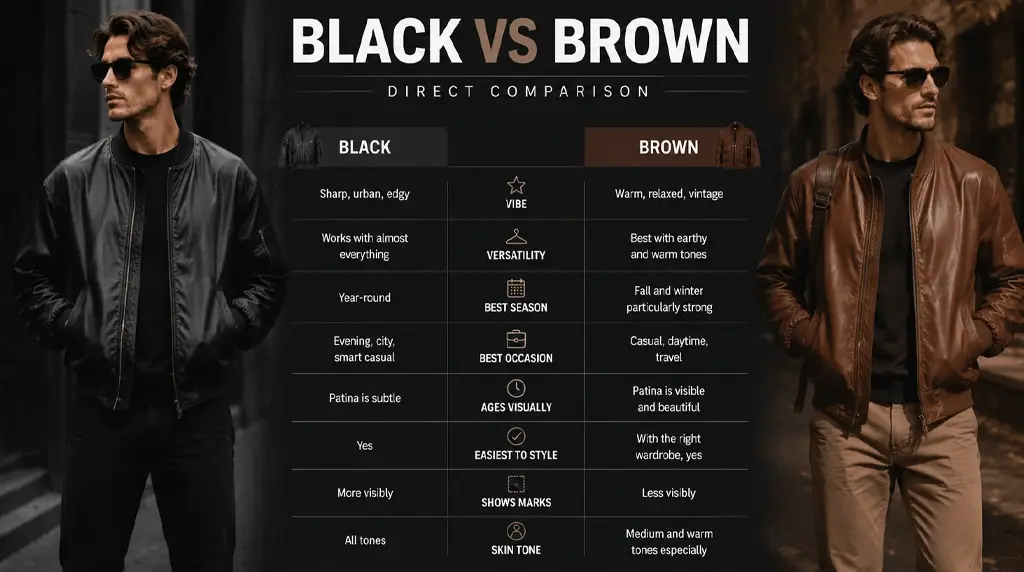
| Feature | Black | Brown |
|---|---|---|
| Vibe | Sharp, urban, edgy | Warm, relaxed, vintage |
| Versatility | Works with almost everything | Best with earthy and warm tones |
| Best season | Year-round | Fall and winter particularly strong |
| Best occasion | Evening, city, smart casual | Casual, daytime, travel |
| Ages visually | Patina is subtle | Patina is visible and beautiful |
| Easiest to style | Yes | With the right wardrobe, yes |
| Shows marks | More visibly | Less visibly |
| Skin tone | All tones | Medium and warm tones especially |
How to Actually Choose
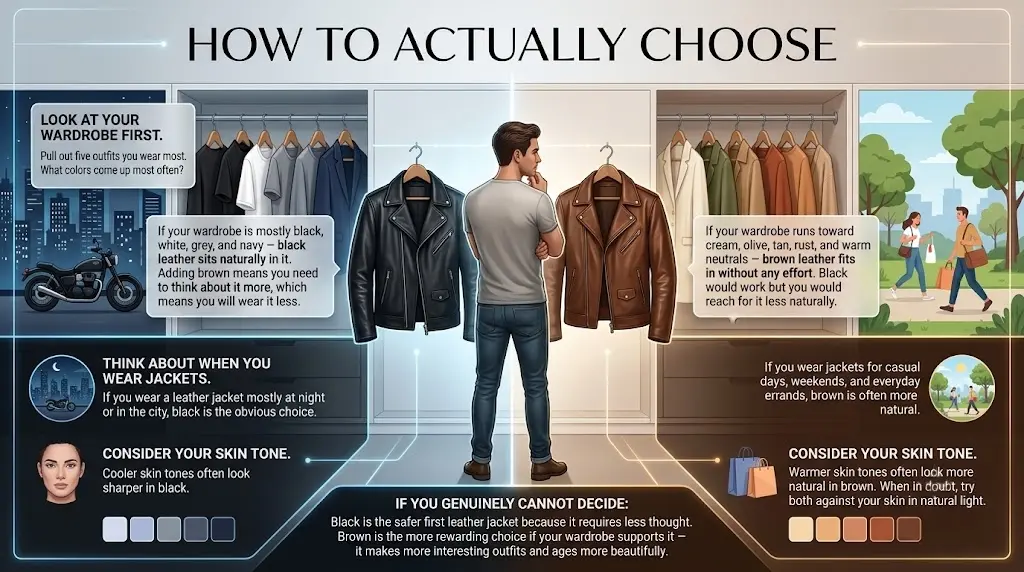
Look at your wardrobe first. Pull out five outfits you wear most. What colors come up most often?
If your wardrobe is mostly black, white, grey, and navy – black leather sits naturally in it. Adding brown means you need to think about it more, which means you will wear it less.
If your wardrobe runs toward cream, olive, tan, rust, and warm neutrals – brown leather fits in without any effort. Black would work but you would reach for it less naturally.
Think about when you wear jackets. If you wear a leather jacket mostly at night or in the city, black is the obvious choice. If you wear jackets for casual days, weekends, and everyday errands, brown is often more natural.
Consider your skin tone. This is not a rule but it is a real factor. Cooler skin tones often look sharper in black. Warmer skin tones often look more natural in brown. When in doubt, try both against your skin in natural light.
If you genuinely cannot decide: Black is the safer first leather jacket because it requires less thought. Brown is the more rewarding choice if your wardrobe supports it – it makes more interesting outfits and ages more beautifully.
What About Other Colors?
Black and brown get most of the attention but they are not the only options worth considering.
Cognac sits between brown and tan – warm, rich, and very strong right now in 2026. It works similarly to brown but reads slightly more premium. A cognac oversized leather jacket pairs particularly well with dark navy, cream, and white.
Burgundy and oxblood add depth without going fully dark. They work well in fall and winter wardrobes and bring something different without being a statement color. Pair with dark jeans, black or grey knitwear, and dark boots.
Tan and camel are lighter on the brown spectrum and sit better in spring and early fall than deep winter. They are softer and more casual than chocolate brown but pick up marks more easily than darker shades.
Styling Both Colors: Quick Reference
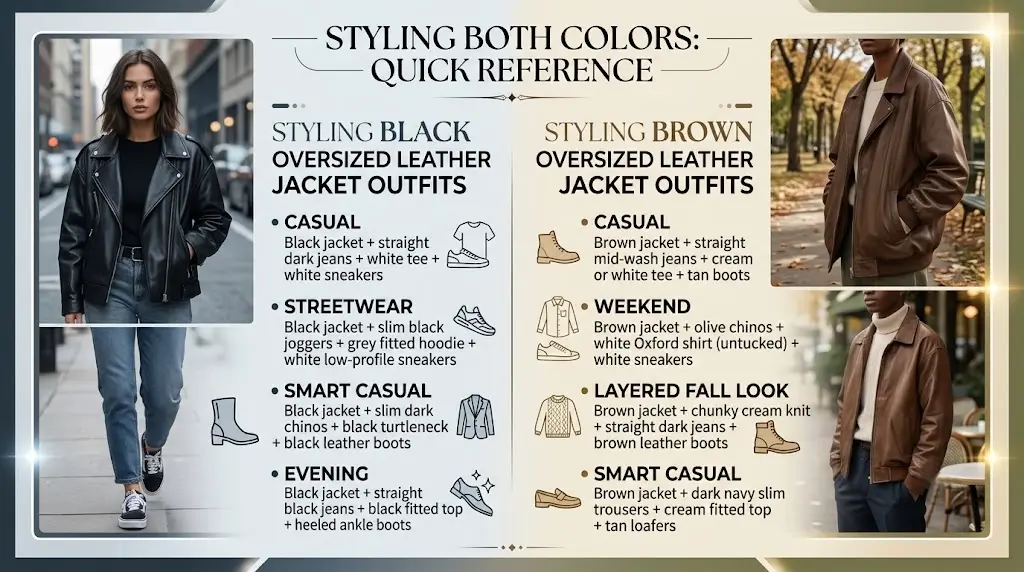
Black Oversized Leather Jacket Outfits
Casual: Black jacket + straight dark jeans + white tee + white sneakers
Streetwear: Black jacket + slim black joggers + grey fitted hoodie + white low-profile sneakers
Smart casual: Black jacket + slim dark chinos + black turtleneck + black leather boots
Evening: Black jacket + straight black jeans + black fitted top + heeled ankle boots
Brown Oversized Leather Jacket Outfits
Casual: Brown jacket + straight mid-wash jeans + cream or white tee + tan boots
Weekend: Brown jacket + olive chinos + white Oxford shirt (untucked) + white sneakers
Layered fall look: Brown jacket + chunky cream knit + straight dark jeans + brown leather boots
Smart casual: Brown jacket + dark navy slim trousers + cream fitted top + tan loafers
Final Thoughts
There is no wrong answer between black and brown. Both are genuinely good leather colors that work in different ways.
Black is easier. It requires less thought, works in more situations, and is the right call if your wardrobe is neutral and versatile.
Brown is more rewarding. It builds more interesting outfits, ages more beautifully, and stands out more in a sea of black leather. If your wardrobe supports it, brown is often the more satisfying long-term choice.
The best outcome – if your budget allows – is to own one of each. A black large leather coat for evenings and city wear. A brown jacket for days, weekends, and everything earthy. Between the two, you have a leather jacket for every situation.
Looking for an oversized leather jacket in the right color for your wardrobe? Browse Stegaro’s collection – black, brown, cognac, and more in real leather built to last.
FAQs
Black is more commonly owned because it is the safer, more versatile choice. Brown is less common but often more distinctive – people who wear brown leather jackets tend to wear them with more considered outfits.
Both hold up the same way over time if you look after them. The difference is how the aging shows. Brown leather develops a visible patina – the color deepens, wear points lighten slightly, and the jacket genuinely looks better at year five than year one. On black leather that same aging happens but you notice it less.
Yes, but it creates a warm-cool contrast that needs to be intentional. Brown leather over an all-black outfit works when the brown is rich and dark – chocolate or cognac. Lighter brown tones with all-black can look like a mismatch.
Black. It works with more colors, more occasions, and more outfit styles than any other leather color. If you only own one oversized leather jacket, black gives you the most options.
Not at all. Brown leather is having a real moment right now – chocolate brown and cognac are showing up constantly in 2026 street style and on runways. If anything, brown feels more current than it has in years. People used to reach for black by default. Now brown is often the more deliberate, interesting choice.
Brown and cognac tend to work really well with warmer and medium skin tones – the tones sit together naturally. That said, deep black leather looks great on warmer skin too. It really comes down to whether you want a contrast effect or a more tonal, harmonious look.