
There is a particular kind of winter morning when getting dressed feels like assembling furniture without the instructions. You put on a shirt, add a sweater, reach for another layer, and somehow still end up shivering on the way outside. Meanwhile, your wardrobe contains three jackets that look lovely but seem to have absolutely no interest in keeping you warm.
This is where shearling starts looking rather tempting.
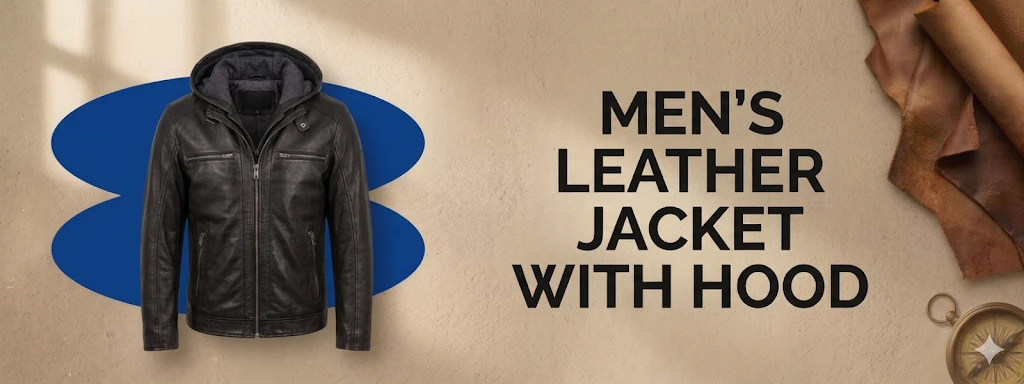
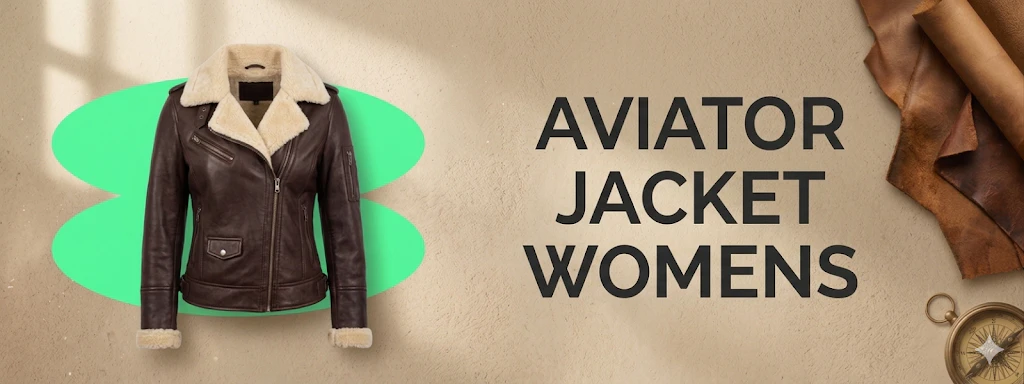
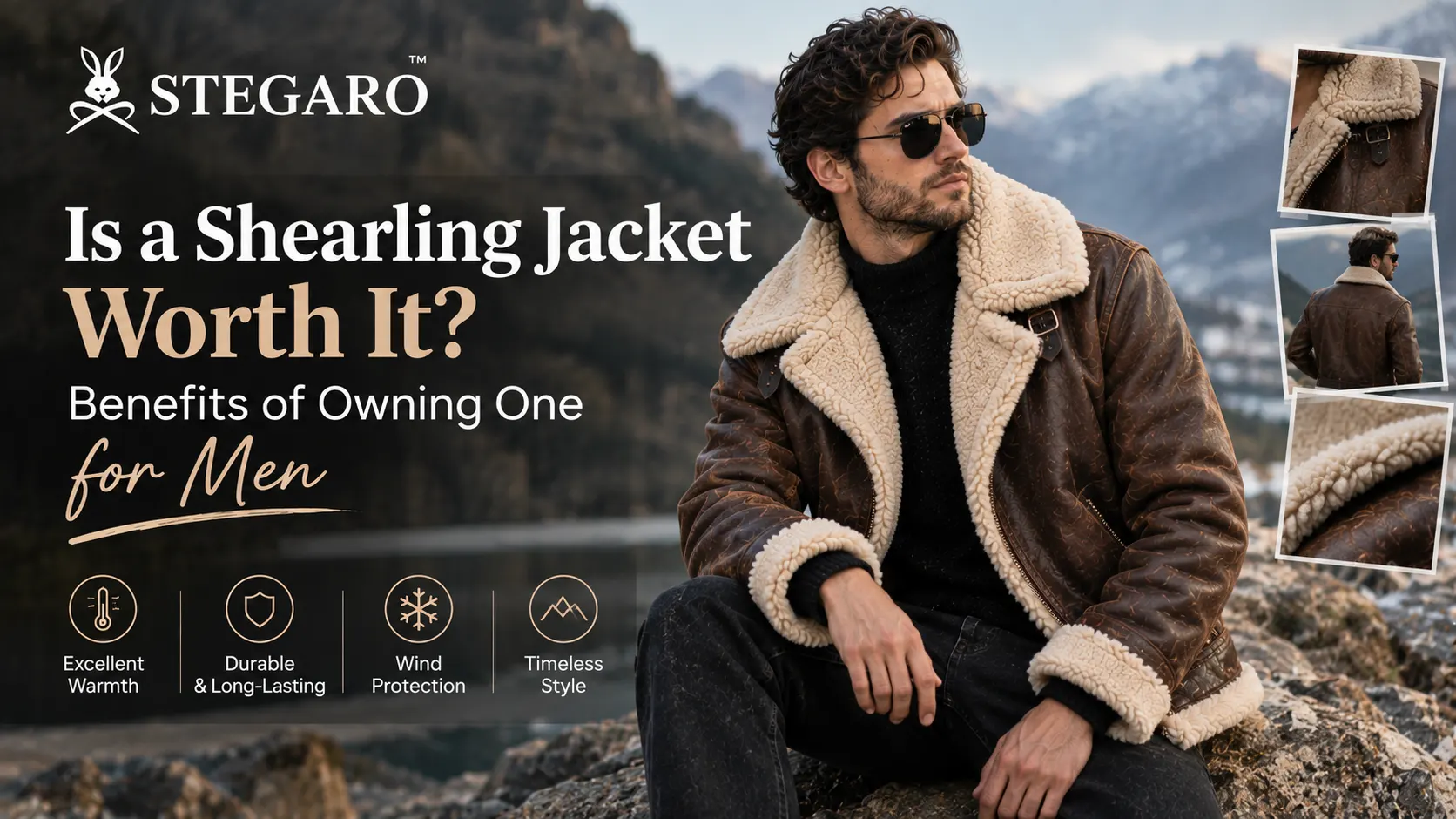
A mens shearling leather jacket combines a leather hide with natural wool attached to its inner side. It offers insulation, helps block chilly winds, and brings a distinctive look that works with everything from jeans to boots. The catch? Genuine shearling can cost considerably more than an ordinary winter jacket.
So, is it worth spending extra on one, or are you paying for a fashionable coat with an impressive price tag?
The honest answer depends on where you live, how cold your winters are, and how often you wear it. Let’s look at what shearling actually offers, where it falls short, and what you should consider before making the purchase.
Why Shearling Jackets Are Worth the Investment
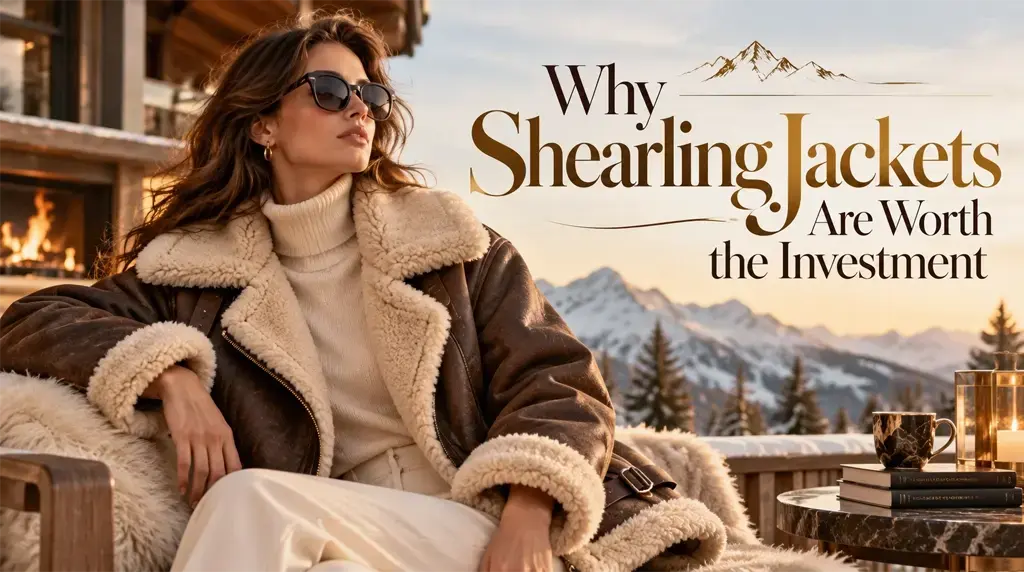
A good mens lambskin leather jacket should do more than look impressive on a hanger. It should keep you comfortable when the temperature drops, work with clothes you already own, and survive more than a couple of seasons.
Shearling has several advantages, although its value becomes clearer when you consider how you will use it.
Warmth Without the Wardrobe Olympics

The wool in shearling traps small pockets of air between its fibers. Since still air slows heat loss, that natural insulation helps your body retain warmth. The leather hide also provides a useful barrier against wind.
Put those features together, and a well-made shearling jacket can keep you comfortable without requiring half your wardrobe underneath it.
Picture a cold morning when you need to grab breakfast, run errands, and meet a friend. You probably don’t want to spend ten minutes deciding which combination of thermals, sweatshirts, and coats might work. A substantial shearling jacket paired with a sweater can simplify the whole business.
Of course, not every design offers the same warmth. A short jacket with a little fleece around the collar will perform differently from a fully lined winter coat. Construction, fit, wool density, and coverage all matter.
If warmth is your main priority, look beyond the product photographs. Check how much of the garment is real fleece and whether the design is suitable for the temperatures you actually get.
A Jacket You Won’t Be Eager to Replace Next Winter
Some clothes look wonderful for a season and then mysteriously lose their appeal. Others become the things you reach for without thinking. A well-made mens sheepskin coat jackethas the potential to belong in the second category.
Leather can be durable, and quality wool remains useful when it receives proper care. The garment may soften with wear, developing creases and changes in texture that give it a more personal appearance.
That doesn’t mean every shearling jacket will last for decades. Weak stitching, poor tanning, damaged fastenings, and careless storage can shorten its life. A high price won’t keep a poorly made garment from wearing out.
Before buying, inspect the seams and zipper, check that the collar sits comfortably, and make sure the fleece feels consistent. Try moving your arms and sitting down in the jacket, too. Looking good while standing perfectly still is a rather limited talent for winter clothing. Our shearling coat buying guide covers the full inspection checklist.
If you want a mens shearling leather jacket that stays in your wardrobe for years, choose sound construction over unnecessary decorative details.
It Doesn’t Need a Special Occasion
One reason people hesitate over expensive outerwear is the fear that they’ll never wear it enough. A jacket might look fantastic, but if it only works with one outfit, its cost becomes harder to justify.
Shearling is surprisingly easy to style once you stop treating it like a costume.
For a relaxed weekend, wear a brown jacket with blue jeans, a plain T-shirt, and sturdy boots. When the weather gets colder, swap the T-shirt for a knitted sweater. A black jacket looks good with dark denim and a simple crew-neck top, while a longer coat can work with chinos and tailored trousers.
You don’t need to dress like a vintage aviator unless that’s your thing. The jacket can make a statement while the rest of your outfit stays simple. For full outfit ideas, see how to style a shearling jacket.
That versatility also makes it easier to calculate whether the purchase makes sense. If you can wear the same coat to work, on weekend outings, and to dinner with friends, you’re more likely to get your money’s worth.
The Cost-Per-Wear Test
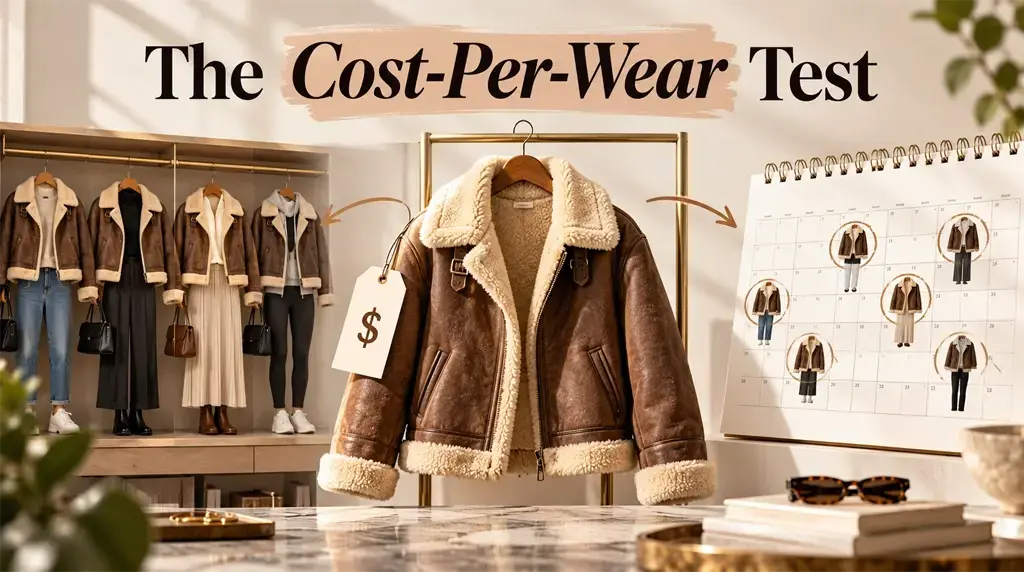
Let’s talk about the part nobody particularly enjoys: the price.
Suppose you buy a shearling jacket for $800 and wear it 50 times each winter for ten winters. That’s 500 wears, or $1.60 per wear before maintenance and repairs.
Now imagine buying a $200 jacket that you wear 20 times each winter for three winters. That works out to approximately $3.33 per wear.
These are hypothetical examples, not promises about how long either jacket will last. Still, they demonstrate why the cheapest option isn’t always the best value.
A mens lambskin leather jacket may appeal to someone who prefers a softer, more flexible leather feel. However, lambskin leather and genuine shearling aren’t interchangeable terms. Check the product description to establish whether the garment contains natural fleece or simply uses a separate lining.
The sensible question isn’t just, “How much does this jacket cost?” It’s also, “How much use will I get out of it?” You can compare options in our shearling leather jackets for men collection.
The Downsides Nobody Should Skip
Shearling has plenty going for it, but it comes with a few inconveniences.
- It can be expensive. Genuine sheepskin requires processing, tanning, and careful construction. Quality varies, so the price alone doesn’t tell you whether a jacket is worth buying.
- It can feel heavy. If you like to travel light or pack light, a large coat can be an inconvenience.
- It requires thorough cleaning. A washing machine is normally not an option. Depending on the finish, an expert may be required for extensive cleaning.
- Doesn’t work well in every environment. If the weather is nice, you may find that a thick shearling coat spends more time in storage than on your shoulders.
- It employs animal stuff. If you’re avoiding animal goods for ethical reasons, you may be better off with a synthetic jacket or alternative lining.
A mens real sheepskin jacket makes the most sense when its warmth, appearance, and expected lifespan fit your everyday needs. Buying one simply because it looks luxurious is a little like purchasing hiking boots when you never leave the pavement.
Environmental Impact of Shearling Production
Natural materials are often labeled “sustainable” as if the word settles the argument. Unfortunately, environmental impact isn’t quite that simple.
Shearling can make useful use of animal hides, and a long-lasting garment may reduce the need for frequent replacements. But there is a part for cultivation, tanning, manufacture, shipping, and disposal.
Does Shearling Put an Existing Material to Use?
Most sheepskins come from animals slaughtered for meat. They can be a useful material and not thrown away if the hides are used to make clothes.
That’s a nice bonus, but it doesn’t make the jacket footprintless. Animal agriculture uses resources and produces emissions. The hide itself needs to be processed to be usable leather.
There is also an ethical question. Some shoppers are comfortable using a material recovered from another industry. Others prefer not to wear animal products at all. Neither position needs a marketing slogan to explain it.
What matters is understanding where the material comes from instead of assuming that every product described as natural is automatically environmentally friendly.
Tanning Matters More Than a Pretty Label
Raw hides cannot simply be turned into finished jackets without treatment. Tanning and finishing protect the leather and provide it with the characteristics needed for apparel. These operations can involve water, electricity, and chemicals.
What happens to the factory’s effluent, chemicals, raw materials, and emissions is an important factor in the environmental impact.
If a brand claims to be boldly sustainable, ask for proof. Does it say where it sources its materials? Is the information about how it is produced reliable? Are the environmental claims verified by third-party standards or certifications?
A nebulous statement about being green tells you very little. Clear information about how a garment is made is much more useful.
Can a Longer-Lasting Jacket Be a Better Choice?
Potentially, yes. If you extend the life of the items you have, you’ll lessen the need to replace them, especially if a garment is still comfortable, useful, and a good fit for your wardrobe.
Instead of having to replace a lesser one every few years, consider buying a good shearling coat and using that for several winters. You can buy less clothing over time.
But the environmental outcome depends on the whole life cycle. A durable jacket has a production footprint, and it is contingent upon how long you really wear it.
Another choice is to buy second-hand. If you can find a shearling jacket that fits well and is in good condition, you can extend the life of an existing item without buying a freshly created one.
The main lesson is simple: durability can help, but it doesn’t erase every environmental cost.
Comparing Shearling with Other Winter Jacket Materials
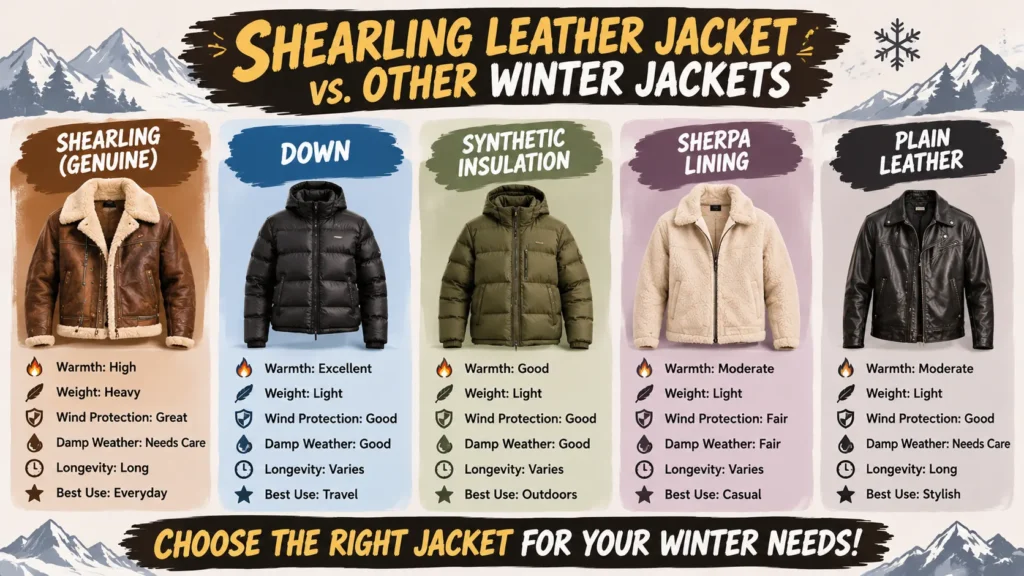
Not everyone needs genuine shearling to get through winter. Down, synthetic fill, sherpa fleece, and plain leather can all be sensible choices, depending on your budget and routine.
Here’s how they compare.
| Feature | Genuine shearling | Down | Synthetic insulation | Sherpa lining |
| Warmth | Often substantial | Excellent for its weight | Varies by construction | Varies by thickness |
| Weight | Often heavier | Usually lightweight | Light to moderate | Usually light to moderate |
| Wind protection | Leather hide helps block wind | Depends on outer fabric | Depends on outer fabric | Needs a suitable outer layer |
| Damp weather | Not waterproof; needs care | Can lose insulating performance when wet | Many types retain more warmth when damp | Depends on the outer fabric |
| Cleaning | Often requires specialist care | Depends on the garment | Often easier, depending on the label | Often easier, depending on the label |
| Longevity | Can last many years with proper care | Depends on quality and maintenance | Depends on quality and maintenance | Depends on construction and wear |
| Best use | Everyday cold-weather wear | Lightweight warmth and travel | Practical outdoor use | Casual, cozy clothing |
These are general comparisons, not guarantees. A well-designed mens real sheepskin jacket may outperform a poorly made shearling coat in cold rain, while a quality shearling jacket may be more appealing for everyday wear.
Shearling vs. Down: Warmth or Lightweight Comfort?
Down is popular because it insulates very well and is very light. This makes it helpful for travel, trekking, and other circumstances where carrying large clothes is inconvenient.
Mens shearling leather jackets tend to be heavier, but the leather hide blocks the wind, and the wool insulates. If you want a substantial winter jacket for city walks, commuting, or everyday outings, that combination can be appealing.
For outdoor activities in which every gram matters, down often has the advantage. If you want something that looks good, feels warm, and lasts for years to come, shearling is worth a look for your winter wardrobe.
Synthetic Insulation vs. Shearling: Practicality Has a Place
Synthetic insulation can be found in all types of gear, from light-weight everyday jackets to technical outerwear. Some designs dry relatively quickly and are easier to clean than genuine shearling.
That convenience matters if you spend lots of time outdoors, encounter wet weather regularly, or simply don’t want to arrange specialist cleaning.
A mens real sheepskin jacket style may seem more traditional and feel more solid, but easy care is a priority for others, and synthetic insulation may be the smarter choice.
No material wins in every category. Your daily routine should determine which benefits are most important.
Shearling vs. Sherpa: Different Material, Same Appearance
Sherpa is a fleece fabric that feels like wool. It is commonly used to line casual jackets, denim coats, and other winter clothing.
It can feel wonderfully cozy and usually costs less than a comparable genuine shearling garment. However, sherpa is a textile, not wool attached to a sheepskin hide. Its performance depends on the thickness of the lining and the material covering it.
If you’re comparing mens leather and sheepskin jackets, read the descriptions carefully. A jacket with faux-shearling trim may look similar to a genuine shearling design in photographs, but the materials and care requirements can be quite different.
Ordinary Leather vs. Shearling
Leather jackets are useful for cool weather, but an unlined or lightly lined design won’t provide the same insulation as a substantial wool lining.
A men’s lambskin leather jacket may feel soft and supple, but it doesn’t mean it is a shearling jacket. Lambskin is the hide; shearling is sheepskin or lambskin treated with the wool still attached.
If you’re shopping for winter warmth specifically, look at the lining, not the product label. A real sheepskin jacket for men with a thick fleece may be more suitable for cold days than a light leather jacket with a thin textile inner.
Shearling Jacket Comfort and Warmth
A jacket can be warm enough for freezing weather and still be a nuisance to wear. If it restricts your arms, feels too heavy, or leaves you sweating the moment you enter a heated building, you’re unlikely to reach for it very often.
Comfort deserves just as much attention as insulation.
What Does Shearling Feel Like?
Genuine shearling has a soft, cushioned wool side and a leather side that gives the garment its structure. The wool fibers can absorb moisture vapor and release it again, helping manage some of the moisture produced by your body.
That doesn’t mean you can wear a heavy shearling coat through every temperature without overheating. Your activity level, the garment’s construction, and the clothes underneath still make a difference.
A thick sheep wool jacket mens style, might feel wonderful on a cold evening walk. Wear the same jacket into a crowded, overheated restaurant, however, and you’ll probably be looking for somewhere to hang it.
For everyday comfort, consider the jacket’s weight, collar, sleeve movement, and room for layering. Try it on with the sweater you expect to wear underneath, raise your arms, and sit down. If the garment pulls across your back or feels restrictive, try another size or design.
Is Shearling Suitable for Rainy Weather?
Shearling may take on some little dampness depending on the finish, but it is not waterproof. Continued wetness or heavy rain could damage the leather and affect the wool.
If you live in an area that has heavy winter rains, a waterproof technical jacket is probably the most practical choice for everyday wear. You can always save your shearling coat for cold, dry days.
A well-made mens sheepskin coat jacket can be excellent for chilly commutes and outdoor gatherings, provided the weather suits the material.
A Little Care Goes a Long Way
Shearling doesn’t need constant attention, but it does need the right kind of care.
- Hang it on a broad, sturdy hanger to support the shoulders.
- If it is damp, air it naturally in a well-ventilated place, away from radiators and direct sunshine.
- Gently wipe up minor spills instead of scouring the surface.
- Do not machine wash or use home cleaning products unless approved by the manufacturer.
- If the item needs more than basic surface cleaning, schedule a professional cleaning.
- Keep it in a cool, dry place where air may circulate around it.
These are hardly complicated behaviors. They just need to realize that your sheep wool jacket mens isn’t a normal sweatshirt with better trimmings.
Shearling Jackets: An Eco-Friendly Fashion Choice
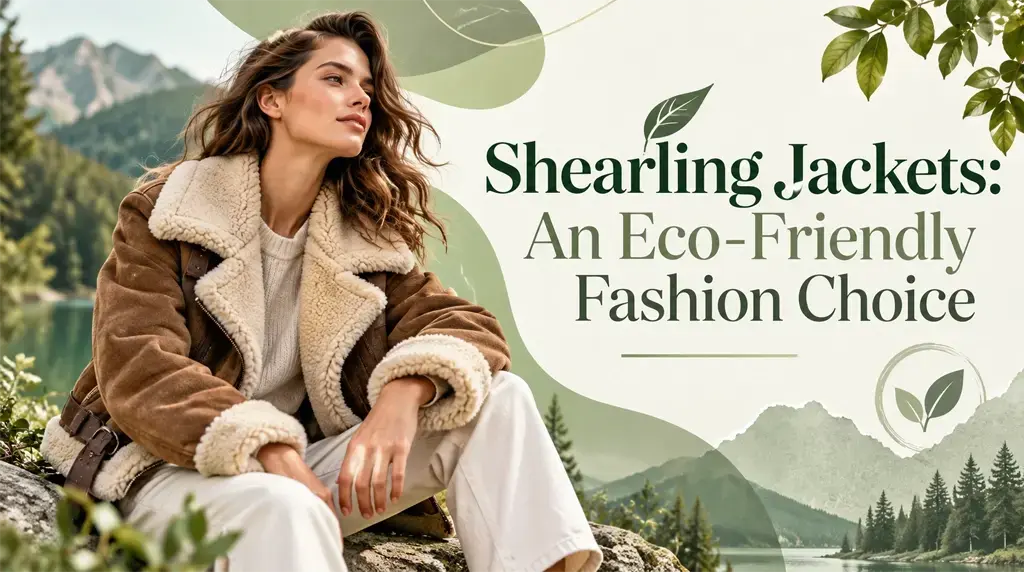
Can a shearling jacket be kind to the planet? Well, it’s not quite that simple. A jacket doesn’t earn an environmental gold star just because it uses natural materials. The real story depends on where those materials come from, how the jacket is made, and how long you actually wear it.
One advantage of shearling is its longevity. Buy a well-made jacket, look after it, and you may wear it through plenty of winters without needing a replacement. That’s a better use of resources than buying a new coat every season because the old one has given up halfway through January.
There’s also the question of where the sheepskin comes from. Some shearling is sourced from sheep raised primarily for meat, meaning the hide can be used rather than discarded. But that doesn’t remove the environmental cost of animal breeding, tanning, dyeing, and manufacturing. Natural is not automatically harmless, and leather processing needs more attention.
What Should You Check Before Buying?
Start by asking a few questions. Where did the materials come from? Does the manufacturer explain its sourcing practices? Are its environmental claims backed by useful information, or are you simply being asked to trust a few attractive words on a product page?
Construction matters, too. Check the seams, fastenings, lining, and overall finish. A jacket that can be repaired when a zip breaks or a seam comes loose has a better chance of staying in your wardrobe instead of ending up in a donation pile after a couple of seasons.
Then consider your own habits. If you live somewhere properly cold and reach for your winter coat almost every day, a shearling jacket might get plenty of use. If your winters are mild and you already own five coats you rarely wear, adding another one probably won’t win any sustainability awards.
And if you prefer to avoid animal-derived materials, there’s no reason to force yourself into buying shearling. You may find that synthetic options work better for you, but you should consider the trade-offs in production, durability, and disposal.
Final Thoughts: Should You Buy a Shearling Jacket?
A mens shearling leather jacket can be a smart investment if you regularly deal with cold weather and want something substantial enough to wear for years. But let’s not pretend it’s perfect. Genuine shearling can be expensive, fairly heavy, and fussy about cleaning.
Before buying, consider how it will hold up over time. Check the construction, learn what you can about the materials, and ask yourself whether you’ll wear it often enough to justify the cost. A jacket that looks great online but never leaves your wardrobe isn’t a good deal.
In the end, the best mens shearling leather jacket isn’t necessarily the most expensive one or the one with the boldest claims. It’s the one that provides the warmth you need, suits your personal style, and earns a spot in your winter rotation year after year. For an authentic shearling leather jacket, you can visit Stegaro. It won’t disappoint you!
FAQs
Absolutely! You don’t need a stylist or a wardrobe full of designer clothes to make one work. Wear your jacket with blue jeans, a plain T-shirt, and boots for an easy weekend outfit. When temperatures drop, swap the T-shirt for a chunky knit. Brown and tan shearling look great with earthy colors, while black works nicely with darker denim and trainers.
Usually, yes, but this depends on whether the leather jacket has a big insulating liner. Shearling has wool that retains warm air and a leather skin to help keep wind out. But warmth depends on the thickness of the wool, the fit of the jacket, and the weather. A lightweight shearling jacket is not going to win against every super insulated winter garment.
No. Genuine shearling may cope with a little moisture, depending on its treatment, but it isn’t designed to keep you dry in heavy rain. If you get caught in a shower, let the jacket dry naturally away from radiators and direct heat. Check the manufacturer’s care instructions before using any cleaning or protective product.
Not necessarily. Some shearling uses sheepskins, which are a by-product of the livestock industry, and a durable jacket may mean fewer replacements are needed. But all those sheep farms, tanneries, dyeworks, and factories have environmental impacts. Material sourcing, production processes, garment longevity, and disposal all affect the net impact.