
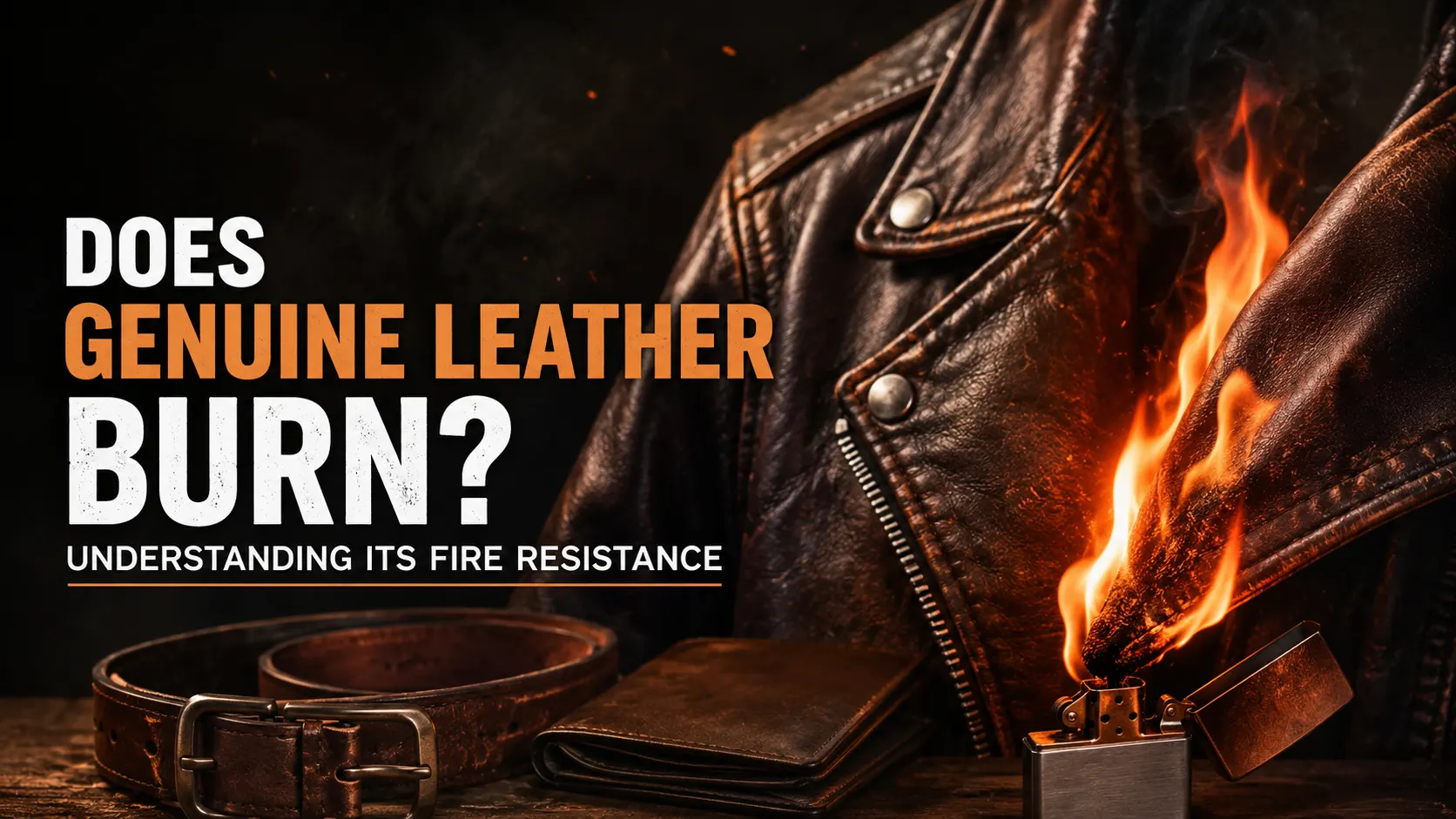
There is no doubt that leather is quite tough. It is known for use in jackets, shoes, bags, belts and even car seats. There have been couches, gloves and wallets made of leather. But what about fire coming into contact with the leather? What if one accidentally sparks their leather gloves when working near a barbecue? An important question pops out of nowhere.
Does leather burn? Well, the answer isn’t as clear-cut as yes or no. Rather, it all depends on several factors that many people do not take time to consider. Therefore, let us dissect it right away in simple language for everybody to understand.
What Happens when Leather Burns?
First, let us give the answer to the question that every person needs to know. Yes, leather can burn. Nonetheless, leather does not burn like paper or lightweight fabric. First of all, leather is derived from animal hides. These hides then go through an extensive process known as tanning. This process involves treatment with oils, chemicals, or plant extracts known as tannins. This changes how the material reacts to heat.
In addition, despite the fact that the leather is tanned, it mainly consists of protein fibers compressed one after another. Proteins are hardly flammable substances. Therefore, they usually smolder first. Smoldering means heating without the ignition of combustion. Thus, leather gives off a very slow flame without any sharp burning. This process is accompanied by a burnt hair scent.
On the other hand, fake leather is very different. It is really just a thin layer of plastic glued onto a woven cloth base. Plastic melts fast once heat hits it. It also drips easily, and that dripping can spread damage further than people expect. Therefore, fake leather can catch fire in just a few seconds under the right conditions. This is exactly why real leather feels safer near heat sources of any kind. It simply reacts much slower than fake versions ever will, and that gap in reaction time matters a lot in real emergencies.
Leather Jackets and How They React to Heat
Next, let’s look at something people deal with daily, which is clothing choices. Real leather jackets show this trait very clearly, and riders often mention this exact point. For instance, say a spark lands on your sleeve by accident while standing near a fire. Or maybe you brush against a hot pan handle while cooking dinner. In most cases, a true leather jacket just gets a small scorch mark from that contact. It will not melt onto your skin at all, which is a huge relief in a painful moment.
This is very different from a polyester jacket in the same situation. Bikers know this fact well from years of daily riding experience. After all, Real leather jackets deal with hot exhaust pipes on a regular basis. They also deal with sparks flying up from the road during long rides. Because of this, a real leather jacket gives them a real layer of extra safety. Still, this does not mean the jacket becomes fully fireproof once worn. It simply means it reacts much slower under stress.
As a result, it stays safer than most fabrics people wear each day without even thinking twice about the risk involved. Many riders also mention that leather holds its shape better after small heat exposure, unlike synthetic jackets that often warp or shrink.
Is Leather Flammable in the First Place
Now, here is where things get more interesting for curious readers. Is leather flammable? Yes, honestly, it is, and there is no point hiding that fact. Anything made from natural fiber can burn given enough heat over enough time. Leather is no different in that basic sense of chemistry. However, flammable does not always mean it catches fire fast. Instead, it simply means fire is possible under the right conditions, given enough exposure.
For example, leather needs far more heat to ignite than cotton does under lab testing. It also needs more heat than most types of polyester fabric commonly used in clothing. In fact, it needs even more heat than most plastics found around a typical household.
On top of that, its natural thickness slows down how fast flame can spread across the surface. Thicker cuts of leather, like those used in work boots or heavy jackets, resist heat even longer than thin leather goods. So while leather technically counts as flammable material by definition, it still sits low on the overall risk scale compared to everyday fabrics people rely on constantly.
Does it Melt? Explaining the fact
This particular question comes up a lot in daily conversation among shoppers and curious readers alike. Can leather melt? The short answer here is no, and this surprises a lot of people the first time they hear it. At least, it does not melt in the way most people picture happening in their heads. Melting usually happens to plastic and man made fabric because those materials are built from polymers. Those polymers are designed to turn into liquid form once heat rises high enough during exposure. Leather simply does not share that kind of internal structure at all.
Instead of melting, leather chars slowly over time as heat continues to build. It curls up at the edges first, almost like old paper does near a flame. Eventually, it turns brittle the longer it sits close to a heat source. You will notice black spots forming steadily on the surface during this process. You will also smell smoke well before any liquid ever shows up nearby.
This turns out to be a real safety advantage for leather users in general. Melted plastic can stick directly to skin and cause deep, painful burns that are hard to treat. Leather, however, just crisps up instead, without any dangerous dripping involved at any point.
Leather Fire Resistance and What It Really Means
Let’s clear up a common mix-up that trips up many first-time buyers. Leather fire resistance does not mean leather can never catch fire under any condition at all. Rather, it means leather resists catching fire better than most common fabrics available today. It also slows down the spread once a flame does eventually start burning through it. This is exactly why welders choose leather gear for daily protective work. Firefighters also trust leather in some parts of their support gear, especially boots and gloves.
Meanwhile, bikers wear thick leather suits for this very same protective reason during long rides. None of this means leather is somehow fully fireproof once purchased, though. Nothing is truly fireproof without a special chemical coating applied during manufacturing.
What leather actually gives you is extra time during a dangerous moment. Even just a few seconds can matter a great deal in a real emergency. This is precisely why gloves and aprons still use thick cowhide leather today, even with so many newer synthetic materials sitting on store shelves right now.
Does Real Leather Catch on Fire Easily
Some people assume leather catches fire just as fast as paper does, simply because it can burn. However, that assumption simply is not true once you look closer at real behavior. Does real leather catch on fire the very second it touches an open flame? Not really, in most everyday situations people actually encounter. Instead, you typically need steady and direct heat exposure for a while first. A quick spark landing briefly on the surface usually just leaves a small dark mark behind.
It does not start a full-blown open flame right away at all in most cases. This behavior is very different from watching thin paper catch fire nearby. Paper ignites almost instantly under fairly mild heat conditions. Cotton behaves in a similarly fast way too, in most common testing situations. Leather, though, has natural oils built directly into its dense fiber structure.
Those oils actively work against fast burning happening in the first place. So overall, leather gives people more time and more real safety than most fabrics worn on a normal day.
Is Leather Fire Resistant Enough for Safety Use
This question comes up constantly among people working genuinely risky jobs every day. Is leather fire resistant enough to trust for real safety-related work tasks? For many industries, yes, it truly is, though some care and training is still needed. For example, welders trust leather aprons on a daily basis during heavy metal work.
Blacksmiths also trust leather gloves during their regular hands-on forging work. Metal workers across many different trades continue using leather gear for protection too. Leather resists flying sparks far better than cotton or blended cloth ever could manage. It does not catch fire quickly at all under most normal working conditions.
It also does not melt onto skin like some synthetic materials sadly tend to do. Because of all this, leather remains a genuinely smart pick for tough, dangerous jobs across many fields. Still, most trained workers pair leather gear with other safety steps as extra backup protection. After all, no single item can offer complete safety entirely on its own in a real accident. Leather simply lowers overall risk during dangerous work, though it never removes all risk completely, and that difference truly does matter.
Testing the Difference Between Real and Fake Leather
Not sure if something is genuine leather or just a cheap synthetic copy sold online? A small burn test can honestly help clear that confusion up fast. That said, always do this kind of test with great care and full caution. Never try it on something you truly value, love, or plan to keep for years. Real leather chars slowly during a simple test like this one. It smells like burnt hair, plain and simple, nothing more complicated than that.
Fake leather, meanwhile, melts fast instead of charring the way real hide does. It curls quickly at the edges within just a few short seconds of contact. It also gives off a strong, sharp smell of burning plastic during the test. Many careful buyers use this exact trick before making bigger purchases like jackets or bags. This helps a lot when shopping for coats, wallets, or even leather couches for the home.
Still, never try this test on something pricey you already own and truly love. However, knowing this simple gap helps shoppers make far smarter buying choices overall, and it helps explain the real value behind a higher price tag on genuine leather goods.
Why Leather Stays a Trusted Choice Even Today
Leather has stood the test of time for very good, practical reasons overall. Simply put, it resists heat far better than most common fabrics found around the average home. It does not melt or drip the way certain plastics sadly tend to do. Because of this trait, it gives workers, riders, and everyday users real extra safety daily. This is honestly not new news at all for most people, either. People have trusted leather for hundreds of years already across many different cultures.
Old craftsmen and workers often used leather near fire and heat sources during daily labor. Today, many industries still choose genuine leather first over cheaper synthetic options available now. Even with so many newer materials sitting on store shelves currently, leather still holds its place firmly in many markets. Its natural strength against fire remains one very big reason behind that lasting trust.
That deep trust has genuinely never gone away, even after so many decades have quietly passed by since leather work first began.
Final Thoughts on Leather and Fire
So, where does all of this information leave us in the end after covering so much ground? Leather is not fireproof, and nobody should ever treat it that way in real life. However, it clearly beats most common materials whenever heat or flame comes dangerously close nearby. To sum it up simply, can leather melt? No, it chars instead of melting away completely, unlike plastic often does under similar heat. It resists fast fire far better than most everyday fabrics people rely on daily. Because of this natural trait, it gives real safety that fake material simply cannot match at all.
Whether you wear leather while riding a motorcycle, work near hot sparks daily, or just happen to own a leather couch at home, this knowledge genuinely helps in practical ways. It helps you choose smart, and more importantly, it helps you stay safe during unexpected moments.
Leather has truly earned its long-standing name as a strong, dependable, and genuinely safe pick overall. Looking for genuine leather pieces built to last? Browse Stegaro’s full collection and find the right style for you. This remains true today, and honestly, it will likely stay true for many more years still ahead as new materials continue to come and go.
FAQs
It is safer than most common fabrics, though it is still not fully safe on its own without care. Leather resists quick fire and does not drip like melted plastic often does under heat. However, long direct contact with an open flame will still damage it badly over time regardless.
No, leather actually needs much more heat than cotton before it will fully ignite into flame. Cotton burns fast once it catches even a small spark or flame nearby. Leather takes far longer to smolder and char before any real open flame ever shows up on the surface.
Welders wear leather gear because it resists flying sparks so well during long hours of metal work. It does not melt onto skin the way some other synthetic materials sadly can under similar heat. Because of this trait, it gives them extra time to react safely before real harm actually happens.
Yes, a careful small burn test can help tell the two materials apart fairly quickly. Real leather chars slowly and smells like burnt hair, plain and simple, during the test. Fake leather melts fast instead and gives off a strong, noticeable plastic smell right away during the same test.
Burning leather can release some fumes, so it is smart to avoid breathing that smoke in directly. The smell is usually like burnt hair, not the harsh chemical smell tied closely to burning plastic or synthetic fabric materials in most cases.