
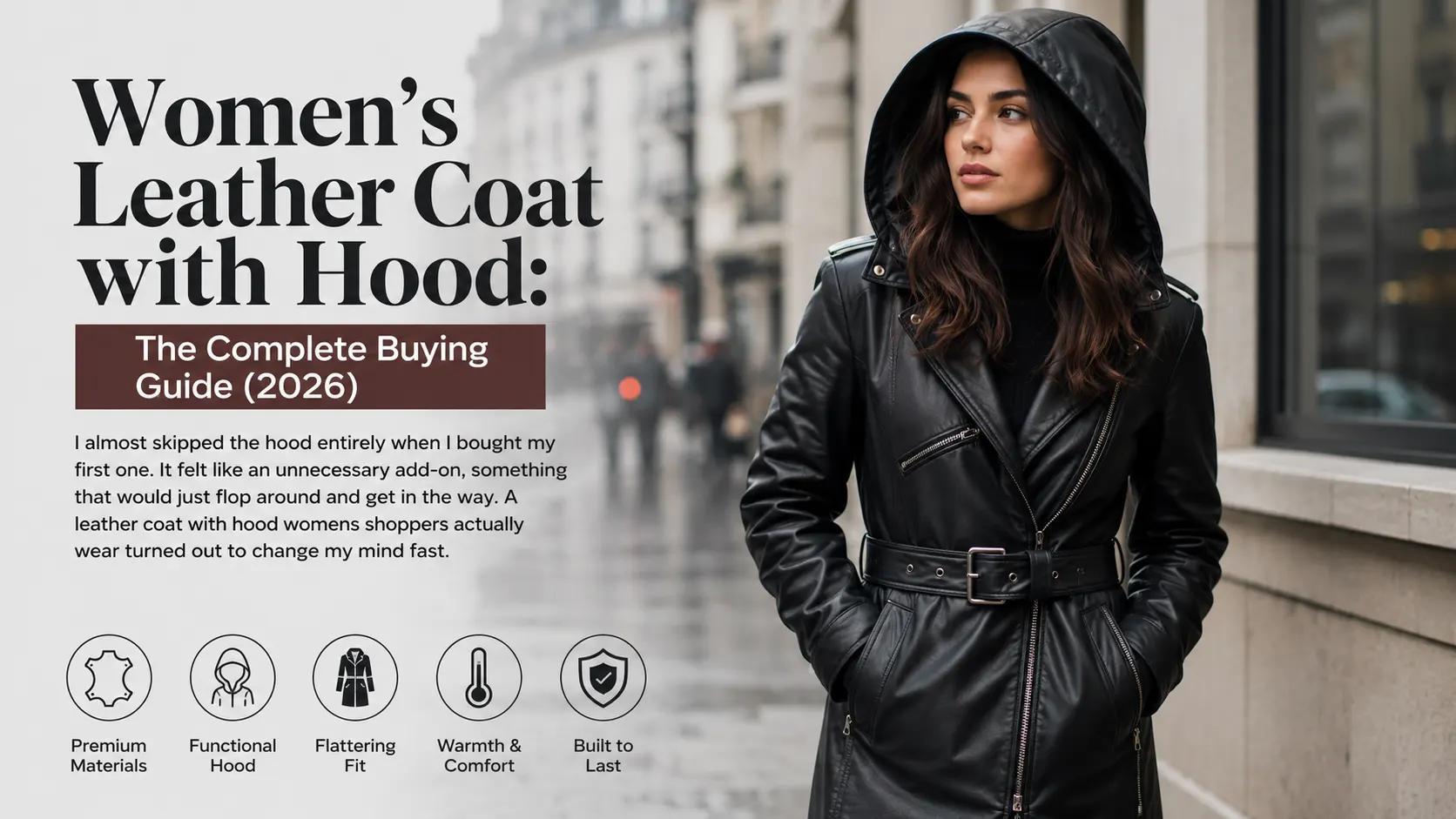
I almost skipped the hood entirely when I bought my first one. It felt like an unnecessary add-on, something that would just flop around and get in the way. A leather coat with hood womens shoppers actually wear turned out to change my mind fast. I hadn’t accounted for how often weather just doesn’t cooperate. This guide walks through everything worth knowing before you buy one. Materials, fit, warmth, hood construction, and the small details that separate a coat you’ll wear for years from one that ends up at the back of the closet.
Why the Hood Changes the Whole Coat
A hood does more than add coverage on a leather coat with hood womens buyers choose for real weather, not just looks. It shifts how the coat handles wind, rain, and those in-between days where a scarf feels like overkill. The tradeoff is usually silhouette. A hooded coat tends to read a little more casual and less tailored than a collared version. That isn’t a downside so much as a different starting point for styling.
Choosing the Right Leather
Leather type affects how the coat feels, ages, and holds up over years of wear. Lambskin is soft and lightweight, which makes the leather coats for women with hoods comfortable for daily wear but a bit less rugged. Cowhide is heavier and tougher, built to last decades if you take care of it. Goatskin sits somewhere in between, offering a balanced texture that works for most everyday coats.
Lambskin works best if you want something that breaks in fast and feels good against a sweater. Cowhide makes more sense if durability matters more than softness. Faux leather is the budget option. It typically lasts a fraction as long and won’t develop the same character over time.
Leather Coats for Women with Hoods: Getting the Fit Right
When you are buying womens black leather coat with hood you need to make sure of the fit. Leather doesn’t stretch the way fabric does, so fit matters from the first try-on. The shoulder seam should sit right at the edge of your shoulder, not sliding down your arm. Sleeves should reach close to the wrist bone. A coat that’s too tight across the chest will always feel restrictive. That doesn’t change much even after the leather softens a little with wear.
Length is where hooded coats for women with hoods differ most from jackets. Coats typically fall below the hip, sometimes closer to mid-thigh, which changes how you layer underneath. Leave room for a sweater or light knit without the coat feeling snug when zipped. Most leather coats for women with hoods are cut with just enough extra room through the shoulders. That makes the layering comfortable rather than tight.
What to Look for in the Hood Itself
Detachable versus fixed. A detachable hood gives you flexibility, letting you wear the coat as a cleaner, collared piece on dry days. A fixed hood keeps a more consistent shape but offers less versatility.
Hood size. It should fit comfortably over a hat or thin hood underneath without looking oversized when down. Too small, and it won’t do its job in real weather.
Lining. A lined hood feels noticeably warmer in genuinely cold conditions, which matters if you live somewhere winters get serious.
Womens Black Leather Coat with Hood: Why Black Still Wins
Color affects versatility more than people expect. A womens black leather coat with hood pairs with nearly everything already in your closet. That makes it the safer first purchase if you’re building a leather-outerwear collection from scratch. Brown and cognac shades offer warmth and character but need a bit more thought around what they’re paired with. If you only plan to own one hooded leather coat, black remains the most defensible choice for everyday versatility.
How Much Should You Spend
Price generally tracks leather grade and construction quality. Budget options under $150 usually mean faux leather or thin genuine leather that won’t last more than a few years. The $300 to $600 range tends to offer the best value. Real lambskin or cowhide, solid hardware, and stitching built to hold up over a decade or more usually show up in this tier. Anything above that usually reflects premium full-grain leather or added craftsmanship rather than dramatically better function.
Styling It Across Seasons
For fall, pair it over a chunky knit with straight jeans and boots. For colder winter days, layer a wool sweater underneath and keep the hood up when the wind picks up. In milder spring weather, a lighter lambskin version works well over a simple tee. Keep the hood down unless a shower rolls through. The coat’s length makes it easy to dress up too. Worn over a midi dress with boots, it lands somewhere between casual and polished.
Caring for It Long Term
Leather care doesn’t change dramatically because of the hood, but a few habits matter. Condition the leather every few months to prevent stiffness and cracking. Pay extra attention to areas where the hood attaches, since that fabric flexes the most. Keep it out of direct sunlight for long stretches to avoid uneven fading. Store it on a padded hanger rather than folded, since folding creates creases that are hard to reverse in leather. If it gets caught in the rain, let it air dry slowly away from direct heat.
Final Thoughts
A leather coat with hood womens shoppers choose well ends up being a practical investment. It earns its place in a cold-weather wardrobe fast. It handles real weather, layers easily across seasons, and holds its shape far longer than most alternatives. Whether you go with black for maximum versatility or a warmer brown tone for character, getting the fit and leather quality right matters more than any single styling choice.
FAQs
Yes. It handles a wider range of weather than a standard leather jacket or coat. That makes it more useful across the whole year, not just cold snaps.
Length, mainly. Coats fall below the hip and offer more coverage, while jackets typically end at the waist. Coats also tend to layer more comfortably over sweaters.
Slightly, since removing it exposes more of the neck and shoulders. Most detachable hoods zip on securely enough that the difference is minor unless conditions are genuinely harsh.
Try the coat on over a sweater or thin jacket before deciding on size. If it fits comfortably over your usual winter layers without pulling, that’s the right fit.
With proper care, a genuine leather coat can last 15 to 25 years or more. It depends on the leather grade and how consistently it’s conditioned and stored.