
Nobody thinks about their jacket until they need it. And by the time you need it, it’s too late to find out the leather was thin or the stitching gave out on impact.
A leather motorcycle jacket does one job: keep your skin off the asphalt. But walk into any mall and you’ll find “biker jackets” that are really just fashion pieces. Thin cowhide, bonded leather, sometimes not even real leather at all. They look the part in a photo. They don’t hold up in a slide.
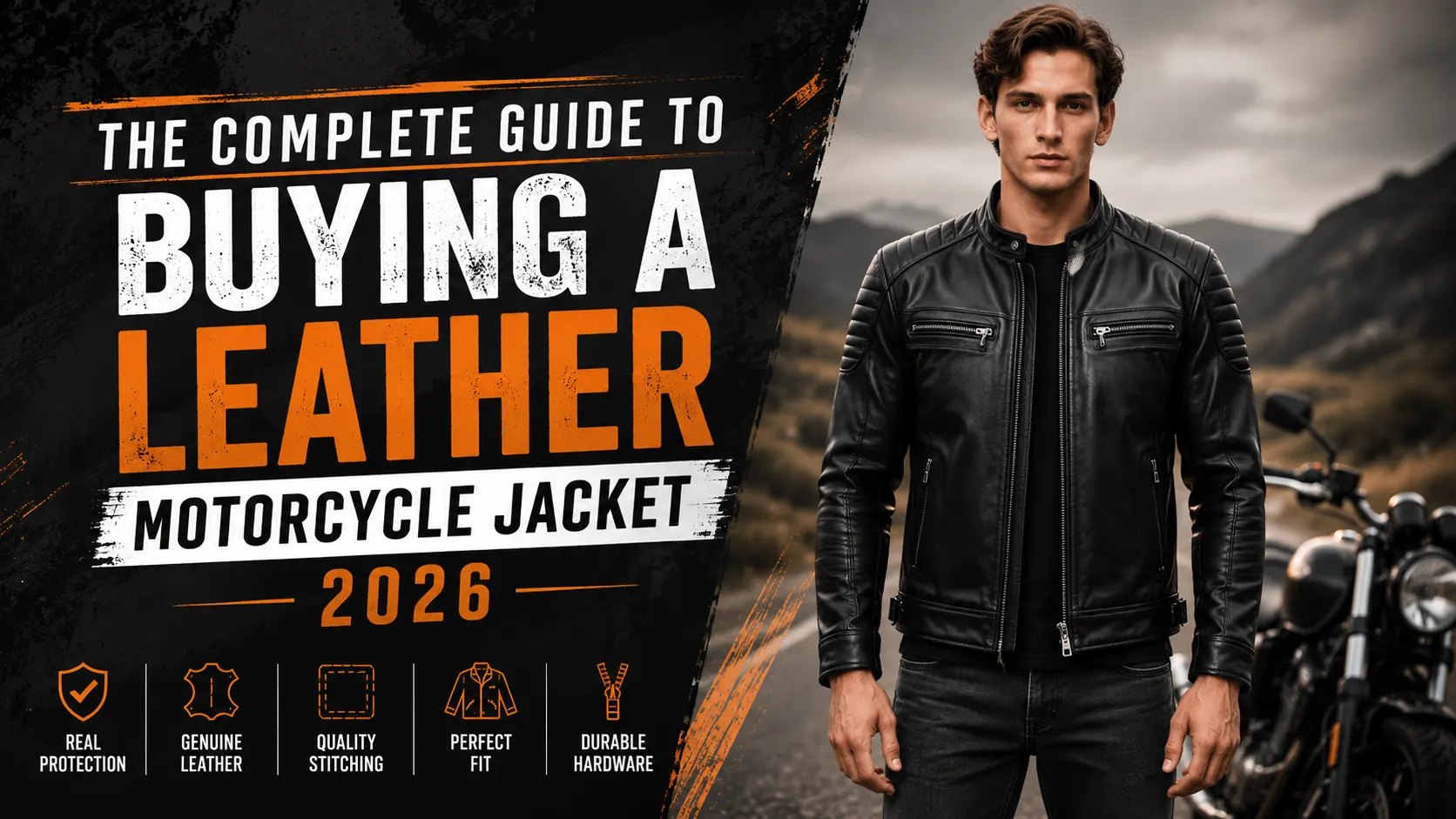
This guide covers how to tell a genuine leather motorcycle jacket apart from something that only looks like one, how a proper motorcycle leather jacket for men should fit, and which features are worth the extra money. No filler, just what we’ve picked up from years of buying, testing, and wearing this gear on actual rides.
Genuine Leather vs. Everything Else
Real motorcycle jackets are made from full-grain or top-grain hide, usually cowhide, sometimes goatskin or kangaroo leather on the pricier end. The tight fiber structure is what makes it grip and hold together instead of shredding when you hit pavement.
Here’s the thing though: “genuine leather” gets thrown around loosely on product pages, and it doesn’t always mean what you think.
Full-grain is the top tier. Nothing sanded off, natural surface intact, ages beautifully. This is what you want if you’re buying once and keeping it for a decade.
Top-grain has been lightly sanded and refinished. Slightly less rugged than full-grain but still solid for daily riding, and usually a bit cheaper.
Bonded or “PU leather” is basically leather scraps glued together with polyurethane. Fine for a fashion jacket, not something you want between you and the road.
Split leather comes from the lower layers of the hide. Thinner, softer, weaker. Common in the budget bin, and it shows.
If a listing won’t tell you the leather grade or thickness, that’s a bad sign. Most decent riding jackets sit somewhere around 1.0mm to 1.4mm.
A few ways to check before you buy: look for uneven grain (real hide is never perfectly smooth), read reviews that mention smell and durability, and check whether the stitching is doubled or triple-stitched at the shoulders, elbows, and back seam. Anything under 1.0mm probably won’t survive a real fall.
Getting the Fit Right
A good moto mens leather jacket sits close to the body, has sleeves that are pre-curved for a riding position, and a back hem that drops slightly lower than a standard jacket. That’s not a style choice. It’s what keeps armor sitting where it’s supposed to and stops the jacket from riding up when you’re leaned over the tank.
Standing in front of a mirror at a store tells you almost nothing. Motorcycle jackets are built for a leaning posture, not a standing one, so try leaning forward and reaching for imaginary bars before deciding it fits.
A few things to check: sleeves should reach slightly past your wrist when your arms are extended, the waist shouldn’t gap when you lean forward, and shoulder seams should sit right on the shoulder, not sag past it. Leave just enough room underneath for a base layer, not a hoodie.
We’ve seen too many riders buy a jacket that felt fine standing around the shop, only to find it rides up and exposes their lower back the first time they’re actually on the bike.
The Protection Features That Actually Matter
A properly built motorcycle leather jacket for men isn’t just leather. It’s leather plus armor plus construction that holds up under stress.
Look for CE-rated armor at the shoulders and elbows, at minimum Level 1, ideally Level 2 if you ride often. Check for a back protector pocket even if the jacket doesn’t come with one installed. Double or bar-tack stitching at the seams matters more than people realize, since that’s where a jacket tends to fail first. Some jackets also add an extra layer of leather at the shoulders specifically for impact zones, which is a good sign the brand actually thought about crash scenarios rather than just aesthetics.
One thing we’ve noticed testing jackets across a few price ranges: the leather quality often isn’t what separates a $150 jacket from a $400 one. It’s the armor. Cheaper jackets tend to ship with soft foam that looks like protection but does very little in an actual impact. Always check for CE certification before assuming the armor is doing anything.
Breaking In a New Jacket
New leather feels stiff, sometimes uncomfortably so, and that’s normal. It’s not a sign of bad quality. If anything, thicker, higher-grade leather takes a little longer to soften up.
Just wear it. Don’t soak it, don’t over-condition it trying to rush the process. A few weeks of regular riding and it starts molding to your body. Most people notice a real difference by the one-month mark.
Keeping It Alive for the Long Haul
A well-made leather jacket can outlast a decade of regular riding, but it needs a little upkeep. Wipe it down with a damp cloth after wet or dusty rides and let it air dry, never near a heater or in direct sun. Condition it every three to four months, focusing on the elbows, shoulders, and collar where it flexes most. Store it on a wide hanger instead of folding it, since folds can crack over time. And when you use cleaning products, make sure they’re made for leather specifically, not whatever’s under the sink.
Small scuffs can usually be handled with a matching leather balm. Anything deeper is worth taking to someone who actually repairs leather for a living.
The Bottom Line
Buying a leather motorcycle jacket right the first time saves you money and, more importantly, keeps you safer. Check the leather grade before anything else. Make sure the fit works for riding position, not standing around. And don’t skip the armor just because the jacket looks good without it.
Whether you’re after a moto mens leather jacket for the daily commute or a heavier motorcycle leather jacket for men built for long trips, the same rule applies: protection and fit first, everything else second.
Take care of it and it’ll only get better with time. The leather softens, develops its own character, and ends up being one of the few pieces of gear that actually gets more comfortable the longer you own it.
FAQs
Leather generally wins on abrasion resistance in a slide. Textile tends to do better in the rain and in hot weather with more ventilation options. A lot of riders end up owning both and picking based on the ride.
Expect somewhere between $200 and $600 for a genuine leather motorcycle jacket with CE-rated armor. If you see something well below that, ask yourself what corner got cut, usually it’s leather thickness or uncertified padding.
Not a good idea. Most fashion jackets skip the armor entirely and use thinner leather that won’t hold up the way riding-specific gear does.
Usually a few weeks of regular wear, with most of the softening happening in the first month.
Somewhere between 1.0mm and 1.4mm. Around 1.2mm tends to be the sweet spot between protection and comfort.
Every three to four months is a good baseline, more often if you’re riding in a hot, dry climate.