

Some jackets look good in photographs. Others have a story worth telling. Shearling jackets manage to do both, which is rather impressive for a garment that began as practical protection against bitter cold.
Long before they appeared in fashion collections and vintage clothing shops, sheepskin garments served people who needed dependable warmth in difficult weather. They sculpted their contemporary character at the dawn of aviation as pilots fought frigid air at heights where regular clothes just didn’t cut it. As time went on, military clothing began to appear in civilian dress, in movies, in music scenes, and in ordinary men’s clothing.
It’s that voyage that makes a vintage shearling jacket mens assortment different from a rack of conventional winter coats. The appeal comes from more than its thick wool, weathered leather, or oversized collar. Each feature has a history behind it, and today we will unfold it in this blog!
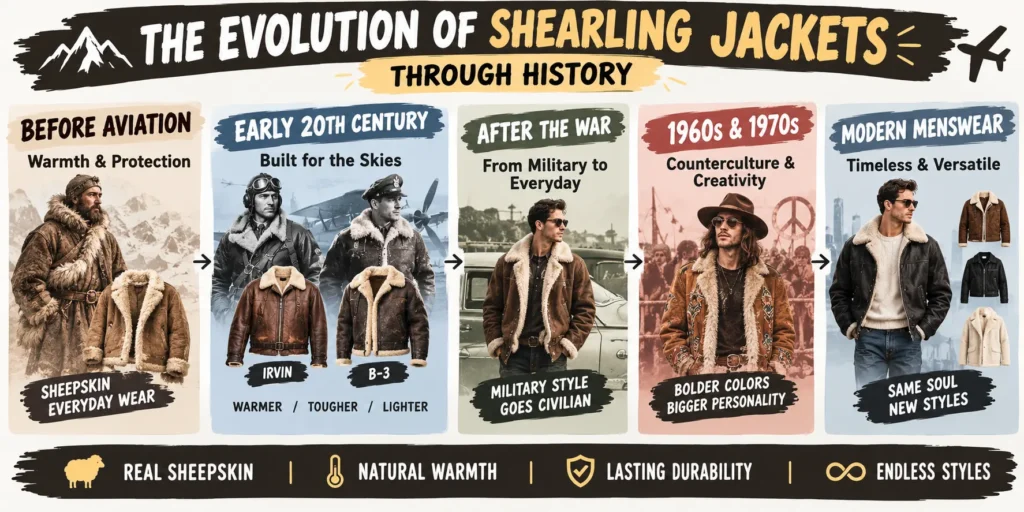
The Evolution of Shearling Jackets Through History
Before Aviation: Sheepskin as Everyday Protection
The story begins long before anyone considered wearing shearling for style.
For generations, people in frigid areas have made clothing, shoes, blankets, and other protective items out of animal hides and wool. A mens sheepskin pilot jacket was especially valuable because the fleece retained warmth, while the sheepskin provided a durable outer material. The specific clothing varied based on the local environment, available resources, and customary ways.
These first outfits were not necessarily the short, leather-faced jackets one sees in the shops today. Some were long coats, sleeveless coverings, or full-length outer garments. Nevertheless, they established the practical idea behind shearling clothing: keep the wearer warm without relying on several separate layers.
Shearling also has a specific meaning. Genuine shearling is a sheepskin that has been tanned with its wool still attached. The wool and leather remain part of the same hide. By contrast, a jacket made from ordinary leather with a separate fleece lining is shearling-lined, not necessarily genuine shearling throughout.
That distinction matters when shopping for a vintage sheepskin jacket mens buyers might mistake it for an original heritage piece. A convincing appearance does not automatically mean the materials or construction match those of traditional shearling garments.
The Early 20th Century: Aviation Changes Everything
The most significant change came with the growth of aviation in the early twentieth century. Open cockpits exposed pilots to frigid winds, while high-altitude flights brought dangerously low temperatures. The normal woolen overcoat would not be enough. The pilots required something warmer but not so bulky as to hinder their movements.
Britain’s Irvin flying jacket became a common sight among Royal Air Force airmen. It was made of leather, with a thick fleece lining, an adjustable belt, a big collar, and the characteristic zippers on the sleeves. These insights helped pilots stay comfortable on challenging flights.
The Type B-3 flying coat was introduced by the US Army Air Corps across the Atlantic on May 8, 1934. The Smithsonian’s National Air and Space Museum says it has shearling insulation in the body and sleeves, a high collar, and treated leather meant to stand up to grease, fuel, mud, and water. It’s quite well built and was used by bomber aircrew in frigid temperatures in the Second World War.
Both the Irvin and B-3 served the same purpose, but their designers gave them distinct features. The Irvin often featured a belted waist and sleeve zippers, while the B-3 stood out for its thick fleece and heavy leather fastenings. Both helped shape the mens sheepskin flight jacket styles still popular in heritage menswear today.
Their bulky build wasn’t a fashion statement back then. It was a practical response to the brutal cold pilots faced in the air.
After the War: Military Clothing Enters Civilian Life
Even after the war, military-inspired attire continued to influence civilian wardrobes. The return of servicemen, a growing interest in practical workwear, and surplus clothes helped to transfer aviation styles into everyday life.
The pilot’s garment had a strong cultural tie, too. It said experience, freedom, and adventure without the wearer feeling the need to explain himself. Fashion, of course, finally took note.
But it was a slow development. Some men liked these jackets for the fact that they were warm and tough. Others liked their rugged appearance. Manufacturers and retailers began offering civilian versions that borrowed the most recognizable features without necessarily following military specifications.
The vintage shearling jacket mens enthusiasts seek today often draws on this period of design history. Thick collars, brown leather, visible buckles, and cream-colored fleece recall the original flying garments, even when the modern jacket has a different cut or construction.
By this stage, shearling had started moving beyond the cockpit. It could be worn on country roads, in city streets, or over ordinary winter clothing. A garment originally designed around the demands of aviation had found a much wider audience.
The 1960s and 1970s: Counterculture Finds Shearling
Shearling’s story did not follow a single route from military equipment to mainstream fashion. Counterculture gave birth to another key branch.
In the 1960s, the Afghan coat, traditionally made from sheepskin in Afghanistan, became a British fashion statement. Often, these jackets were made of a suede-like leather on the surface, fleece on the inside, and decorated with embroidery. Their longer lengths and elaborate finishes made them quite different from military flying jackets.
British retailer Craig Sams helped introduce Afghan coats to the UK in 1966. The Beatles’ public association with the style helped attract attention, and the coat became linked to the era’s bohemian tastes.
During the following decade, shearling and sheepskin garments appeared in a wider variety of colors, lengths, and decorative treatments. The look could be earthy and handmade, oversized and theatrical, or relatively restrained.
This was an important development because it showed that sheepskin clothing could communicate something beyond toughness or military heritage. It can be seen as artistic freedom, individuality, and a willingness to flout traditional codes of dress.
The same material could therefore serve a pilot on a freezing mission and a musician heading to a concert. Their reasons for wearing it were different, but both appreciated its distinctive character.
From Heritage Clothing to Modern Menswear
Later decades brought shearling into increasingly varied wardrobes. Designers reworked familiar aviation details for shorter jackets, longer coats, cleaner lines, and more tailored outfits. Retailers also introduced alternatives using separate fleece linings and synthetic materials.
Today, the vintage shearling coat mens market includes designs inspired by military clothing, countryside outerwear, and retro street style. Some closely resemble historical patterns, while others borrow only a collar, a color combination, or a fleece-trimmed finish.
The evolution continues because the original design remains useful. A generous collar protects the neck, the fleece provides warmth, and the leather gives the garment a substantial feel. Designers can change the proportions without losing the features that made shearling distinctive in the first place.
Famous Pop Culture References of Shearling Jackets
Some jackets deserve their own screen credit. You might forget a character’s dialogue, but that enormous fur collar? That stays with you. Shearling and sheepskin coats have appeared in films and TV shows as everything from practical winter gear to the sort of statement piece that makes you pause the episode and inspect the outfit.
Movie Characters Who Made Shearling Memorable
Bane in The Dark Knight Rises (2012)
Tom Hardy’s Bane doesn’t exactly strike you as a man who spends his mornings worrying about fashion. Yet his enormous, distressed coat became one of the most recognizable parts of his appearance. The long leather outfit, the big collar, and the rough, weathered finish all fit Gotham’s beaten, almost post-apocalyptic vibe well.
Officer K in Blade Runner 2049 (2017)
Ryan Gosling’s Officer K is dressed for a future that appears eternally gray, cold, and a little bit sad. His coat, collar, and weather-beaten finish were true to the bleakness of the movie. The costume’s appeal comes from its restrained colors and unusual proportions rather than flashy decoration.
TV Shows That Gave Shearling Its Own Personality
The rugged appeal of Yellowstone
The world of Yellowstone calls for clothing that can handle long days outdoors, changing weather, and plenty of dust. Shearling and fleece-lined outerwear fit naturally into that setting, particularly alongside denim, work boots, and practical ranch clothing.
The Penny Lane mood of Almost Famous
If oversized sheepskin coats had a musical anthem, Almost Famous (2000) would be a strong contender. Kate Hudson’s Penny Lane is linked to that long, plush, bohemian coat that helped make the character’s wardrobe so memorable.
The Afghan Coat and the Music Scene
The Afghan coat offers a more direct relationship between cultural figures and traditional sheepskin garments. Its popularity in Britain in the 1960s mirrored a wider enthusiasm for international craft, handmade fashion, and countercultural attire.
The Beatles helped bring the style into public view. Their association with Afghan coats made the garment recognizable beyond the communities and specialist shops where it had previously circulated. The longer, decorated coats offered an alternative to the neat, conventional menswear of the period.
That influence carried into the 1970s, when vintage-inspired clothing became an important way to express individuality. A vintage sheepskin jacket mens wardrobe might favour a simple aviation-inspired design, while someone drawn to the counterculture could prefer a longer coat with embroidery and a more relaxed fit.
Neither approach is the definitive way to wear vintage sheepskin coats mens. The history is richer precisely because different communities adopted the material for different reasons.
How Traditional Shearling Jackets Are Made
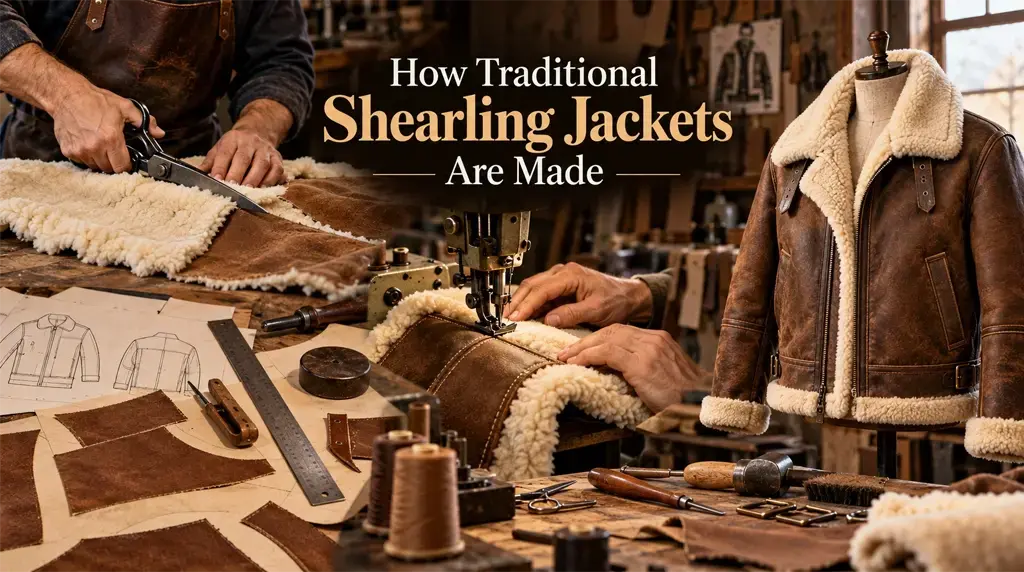
The manufacturing process explains why authentic shearling feels different from a standard leather jacket with a sewn-in lining. It also helps distinguish traditional craftsmanship from modern designs that simply borrow its appearance.
1. Selecting and Preparing the Sheepskin
Traditional shearling is a sheepskin with the wool still attached. There are a number of elements that go into the selection of the hide, such as fleece density, skin condition, thickness, and the intended use of the finished garment.
The skin is then tanned and stabilized for use in clothes. The leather can be colored, treated or finished to provide a desired color and texture depending on the intended result.
This is a tricky stage, since the fleece and leather need to work together. Poorly prepared material might be stiff, patchy, or unpleasant. Natural hides also differ; therefore, little color and texture changes are typical, not evidence of a fault.
2. Cutting the Panels
When the hide is ready, it is cut into pattern pieces for the body, sleeves, collar, and other parts of the jacket. Experienced makers plan the cuts to make effective use of the material while keeping the fleece and leather consistent across visible sections.
A traditional aviation design may require substantial panels, a generous collar, and reinforcements around areas exposed to movement. A shorter contemporary jacket may use a different pattern to reduce bulk and create a closer fit.
The pattern also affects how the jacket hangs. A jacket designed for heavy winter layering needs more room than one intended for mild weather and a lightweight shirt.
3. Sewing and Adding Hardware
The cut panels are joined by stitching appropriate to the thickness and function of the material. Depending on the design, zippers, buckles, straps, pockets, and closures are added to the garment.
Original aircraft coats were frequently more functional. The elevated collar and closing strap helped protect the neck, and there were waist adjustments to optimize the fit. Some British flying coats have unusual zippered sleeves and venting features.
Modern makers may keep, change, or eliminate these characteristics altogether. It doesn’t have to be a faithful historical reproduction, but you can still draw inspiration from an aircraft jacket.
4. Finishing and Quality Checks
Finally, the manufacturer inspects the seams, fasteners, lining, and general structure. The fleece should be reasonably consistent, the sleeves should move comfortably, and the front closure should operate without pulling against the material.
These details are particularly important when comparing mens genuine sheepskin coats with garments made from leather and separate synthetic fleece. The latter may look similar, but the materials and manufacturing methods differ.
For buyers, the useful question is not simply whether a jacket looks old-fashioned. It is whether its construction matches the intended purpose, whether the materials are clearly described, and whether the garment is likely to meet their expectations for warmth and comfort.
Regional Varieties of Shearling Jackets Across the World
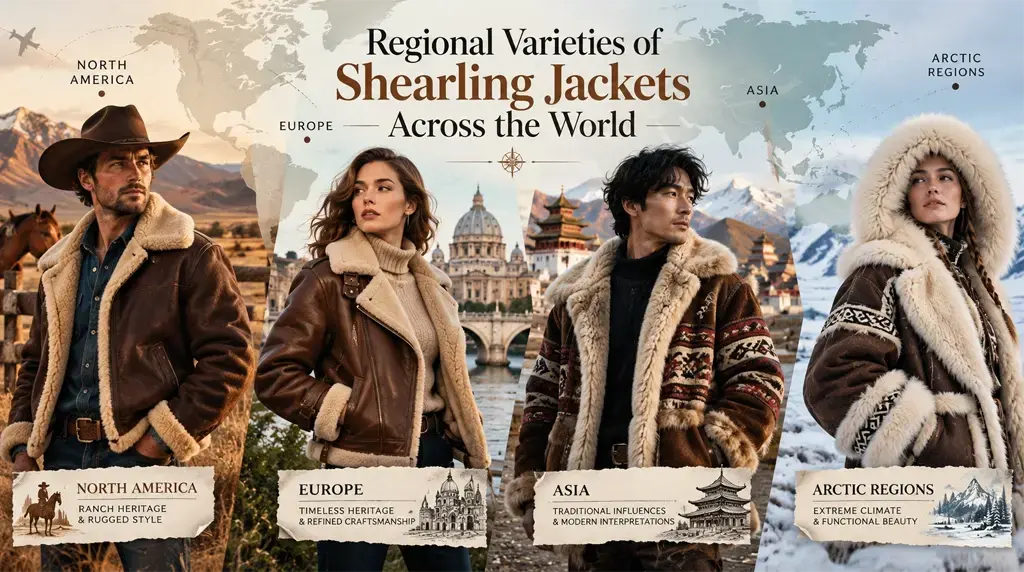
Shearling clothing did not develop in isolation. Different regions used sheepskin according to their climate, available materials, working traditions, and local tastes. Some styles became closely associated with aviation, while others developed from traditional rural clothing.
Britain: The Irvin Flying Jacket
Britain’s Irvin jacket is one of the best-known examples of military shearling design. Its history is closely linked to Royal Air Force pilots in the Second World War.
The high fleece-lined collar, brown leather, adjustable belt, and distinctive sleeve zippers gave it a recognizable appearance. The construction reflected the needs of aircrew rather than the demands of civilian fashion.
That practical origin continues to influence modern aviation-inspired clothing. A mens sheepskin pilot jacket often borrows the raised collar, leather straps, and warm fleece associated with the Irvin, although contemporary versions can differ considerably from the original military design.
The British example also demonstrates why historical details matter. The absence of unnecessary decoration was part of the jacket’s original purpose. Its appeal came from the relationship between its construction and the conditions in which it was worn.
The United States: The B-3 Bomber Jacket
The American B-3 developed around the demands of high-altitude flying. Introduced in 1934, it became particularly associated with bomber crews during the Second World War.
Its thick fleece, substantial leather panels, and broad collar created a recognizable design that has endured in civilian outerwear. Unlike a lightweight fashion jacket, the original B-3 was made for demanding cold-weather conditions.
Today, the mens sheepskin flight jacket remains a popular reference for designers who want a substantial winter garment with aviation heritage. Some variations remain true to the classic details; others are lighter, shorter, or more streamlined.
The distinction is particularly evident when comparing original historical patterns with a modern men’s sheepskin pilot jacket. Both can claim a common lineage, but only detailed study of the materials, structure, and historical standards will tell how closely a given item of clothing fits the original.
Afghanistan: The Embroidered Afghan Coat
The influence of Afghanistan on sheepskin fashion is worth noting, as it is a different tradition from military aviation attire.
Afghan coats are linked to the skills of local sheepskin, especially in Ghazni province. Traditionally, they’ve had fleece linings, sueded leather exteriors, and ornate embroidery. Their lengths and finishes vary, but they often have a more elaborate appearance than the classic flying jacket.
The style reached a wider British audience during the 1960s, when interest in handmade clothing and international craft was growing. Its popularity showed how a traditional garment could enter a new cultural setting and acquire a different meaning.
Unlike the aviation jacket, which is strongly associated with equipment and military service, the Afghan coat became a symbol of artistic expression and countercultural fashion. It is a useful reminder that sheepskin clothing has never belonged to just one style or community.
Northern Europe: Clothing for Severe Winters
In colder parts of northern Europe, sheepskin and wool have long been useful materials for winter clothing. Regional traditions differ, and not every sheepskin garment is a shearling jacket in the modern fashion sense.
Longer coats and substantial winter garments served different needs from the short jackets used by pilots. Their proportions often reflected the importance of covering more of the body in prolonged cold.
These regional differences also influence modern vintage sheepskin coats mens collections. Some designs draw on traditional country clothing, while others take inspiration from military coats or mid-century civilian fashion. The common material does not make them interchangeable; their lengths, fastenings, and construction can produce quite different garments.
A Global Heritage, Not One Single Design
There is no single worldwide pattern for shearling clothing. Britain’s Irvin, America’s B-3, and Afghanistan’s decorated coats developed in different contexts and became popular for different reasons.
That variety is useful when choosing a heritage-inspired jacket. Someone who prefers a straightforward aviation look may favor a shorter, belted design. Another person might prefer the length and decorative details of a traditional coat.
A vintage shearling jacket mens collection can bring these influences together, but buyers should look beyond the word vintage. Ask if the clothing was influenced by a certain historical style, if the materials are genuine, and if the elements of the garment are a reflection of the original design or a current adaptation.
The Role of Shearling Jackets in Fashion History
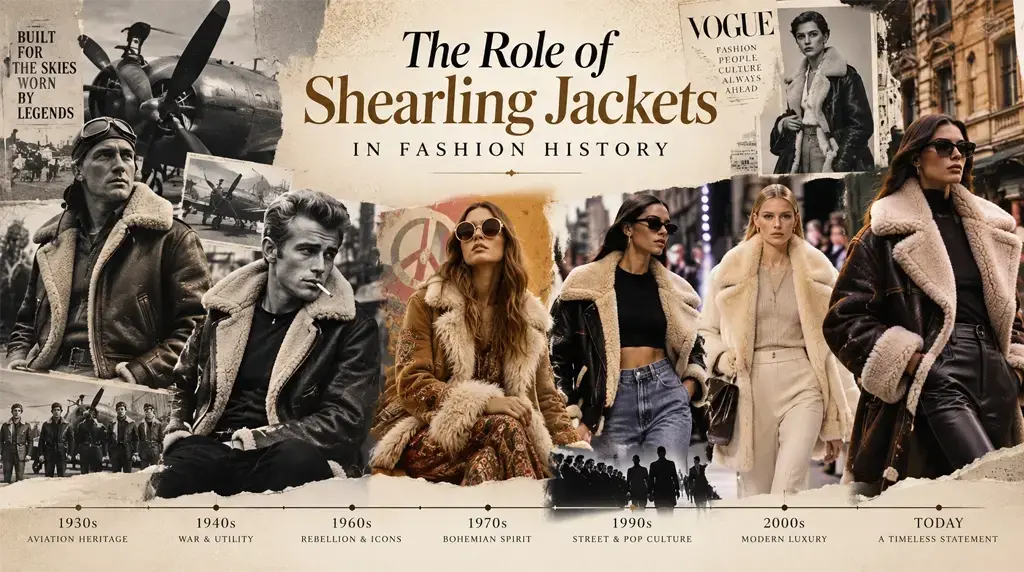
The fashion history of shearling rests on a strange cocktail: a distinct utilitarian role and a look that designers could reinvent for new generations.
From Military Utility to Personal Style
For decades, military gear has affected civilian fashion. Field coats, bomber jackets, flight suits, and combat boots have all made their way into regular outfits in some form.
Shearling took a similar path, but its unique texture allowed it to stand out. The contrast between leather and pale fleece created a recognizable appearance even when designers changed the jacket’s length or cut.
For some wearers, the appeal lies in the aviation connection. For others, it comes from the material’s texture, the generous collar, or the association with older menswear. A vintage shearling coat mens style can therefore suggest heritage without requiring a wearer to dress like a wartime pilot from head to toe.
The result is clothing that can work with jeans and boots just as comfortably as it can complement a more considered winter outfit.
Why Vintage Shearling Still Appeals
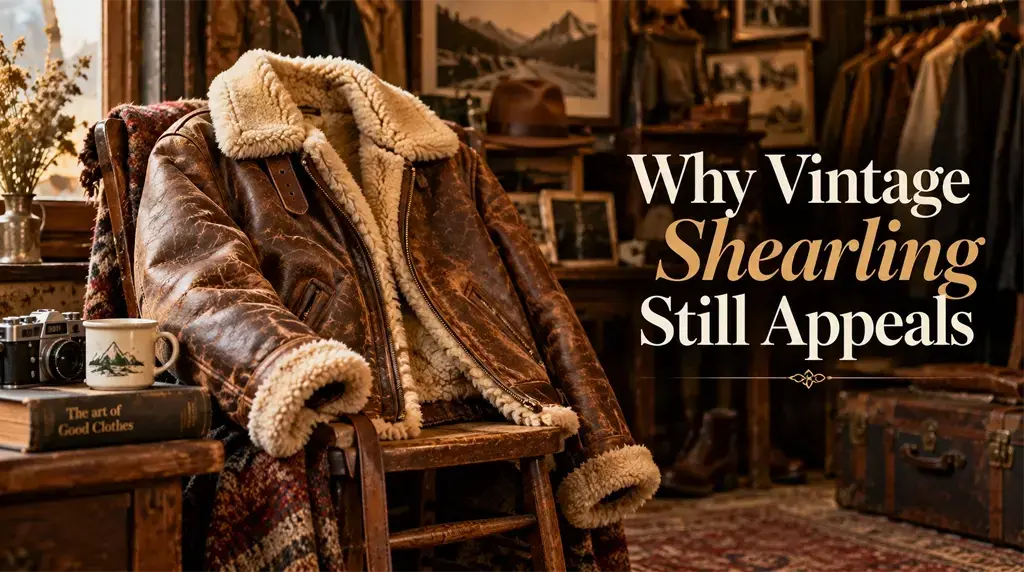
Vintage clothing often attracts people who want something with a sense of history. The exposed construction and design heritage of shearling provide that connection.
An older jacket can have softened leather, faded color, or blemishes from years of wear. These traits can add to its character, yet damage should never be mistaken for quality. Cracked leather, broken seams, and worn fleece can be expensive to fix.
When buying vintage, evaluate the material carefully and look at the fastenings, seams, collar, cuffs, and underarm areas. If the jacket is particularly old, specialist cleaning or restoration may be necessary. Before buying vintage, use our shearling coat buying guide to check material and stitching.
A well-chosen vintage shearling jacket mens piece can become a regular part of a winter wardrobe rather than an item worn once for photographs. Its strongest selling point is not that it looks old, but that its design remains useful.
Shearling in Contemporary Menswear
Modern designers have adapted shearling for different budgets, climates, and personal styles. Traditional brown aviation jackets remain recognizable, but contemporary versions may use black leather, lighter construction, alternative linings, or less prominent collars.
The same variety appears in vintage sheepskin coats mens styles. Longer coats offer more coverage, while shorter jackets can feel easier to wear with everyday clothing. Neither is automatically better; the right choice depends on climate, fit, and how often the garment will be worn. Today’s men’s shearling leather jackets still borrow the collar and fleece of these flight designs.
Is Shearling a Long-Term Wardrobe Investment?
A well-made shearling jacket, if properly cared for, can last for many years. Its durability means it’s attractive to consumers who don’t want to have to replace their winter apparel every year but rather buy fewer pieces that last longer.
But durability is more than the name of the material. Leather quality, tanning process, stitching, fit, storage, exposure to moisture, etc., all contribute to how a jacket matures.
If you are a shopper looking for mens genuine sheepskin coats, the most practical method is to analyze the full coat, its construction, comfort, maintenance, and pricing. Expensive doesn’t equal better craftsmanship, and vintage doesn’t mean that the jacket is old or historically real.
Conclusion: A Piece of History You Can Still Wear
The history of shearling jackets is not simply a story about military clothing becoming fashionable. It’s a story of humans adapting useful materials to varied situations, from pilots fighting freezing weather to craftspeople maintaining regional traditions to designers rewriting familiar details for modern wardrobes.
Fans of today’s vintage shearling jacket mens might find remnants of all these inspirations. Whether you want the traditional flight-inspired look or a longer winter coat, knowing its history helps you go past the surface and choose clothing that meets your needs. Ready to wear one? Here are outfit ideas for shearling jackets.
At Stegaro, we believe good outerwear deserves a second look. The best jacket isn’t always the trendiest or the most expensive. It’s the one whose materials, construction, and design make sense for how you live. Ready to buy? Explore our shearling jacket collection.
FAQs
Both designs reflect different national traditions in military aviation. The British Irvin features an adjustable belt and distinctive sleeve zippers, while the American B-3 uses thick shearling insulation and a large collar.
Many traditional examples are, but the word “vintage” does not guarantee genuine materials. Some modern coats incorporate leather with fleece lining, while others employ synthetic replacements. Before purchase, always inspect the material description and structure.
Keep it away from prolonged moisture, direct heat, and tight storage. Let it dry naturally if it becomes damp. Do not use regular household cleaning products on the leather or fleece. For valuable or particularly old garments, look for a specialist cleaner who has experience with sheepskin.
Yes. Aviation jackets look great with jeans and boots and with simple knitwear, while longer coats provide more protection from the cold. Choose a weight and fit that match your environment, daily lifestyle, and mode of dress.